Music production files grow quickly. Multitrack sessions, sample libraries, virtual instruments, stems, and project backups can fill a computer’s internal storage before you expect it.
The best external hard drives for music production give you practical capacity without compromising workflow. This roundup includes fast portable SSDs for active projects and higher-capacity HDDs for affordable storage, archiving, and backup.
Best 10 External Hard Drives for Music Production Picks for 2026
Best Rugged SSD
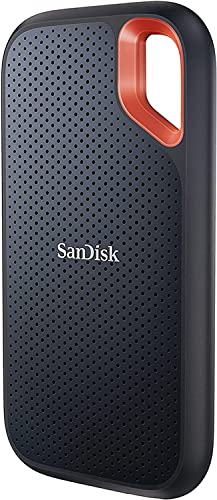
SanDisk Extreme 2TB Portable SSD
- Up to 1,050MB/s read speeds
- IP65 water and dust resistance
- 256-bit AES hardware encryption
Best For: Large music libraries and mobile production
Best Compact SSD

- Up to 600MB/s read speeds
- Pocket-sized SSD design
- USB-C ready with drop protection
Best For: Portable project storage and quick transfers
Best High-Capacity HDD
WD Elements 2TB Portable Drive

- 2TB storage for projects and archives
- Plug-and-play USB expandability
- Portable mechanical hard-drive design
Best For: Music libraries, backups, and archives
Best Budget HDD

- Affordable 1TB storage
- Slim aluminum enclosure
- USB-powered plug-and-play setup
Best For: Basic PC storage on a limited budget
High-Capacity Portable Pick
- 4TB capacity for large music libraries
- Compact, lightweight 2.5-inch enclosure
- Plug-and-play USB 3.2 Gen 1/USB 3.0
Best For: Producers needing substantial portable storage
Compact Budget Pick

- Slim, pocket-friendly 2.5-inch design
- Quiet operation for studio environments
- USB 3.0 with plug-and-play setup
Best For: Mobile producers with smaller libraries
Extra-Capacity Archive Pick

- 5TB capacity for extensive project archives
- Portable 2.5-inch form factor
- Plug-and-play USB 3.2 Gen 1/USB 3.0
Best For: Producers storing large libraries and backups
Best Overall

- 2TB portable capacity
- Backup software with ransomware defense
- Password protection and hardware encryption
Best For: Portable music-project storage with added file security
Best Budget Pick

- Compact, lightweight design
- USB 3.0 with claimed 120MB/s read speed
- Includes USB-C adapter
Best For: Smaller music libraries and portable project storage
Best High-Capacity Pick

- Large 6TB portable capacity
- Backup software with ransomware defense
- Password protection and hardware encryption
Best For: Large sample libraries, recordings, and project archives
Best Rugged SSD – SanDisk Extreme 2TB Portable SSD
For music producers who need fast, dependable storage, the SanDisk Extreme is a strong choice among external hard drives for music production. Its SSD design offers up to 1,050MB/s read speeds, while the compact enclosure adds useful water, dust, and drop resistance for mobile sessions.
Best For: Producers working with large sample libraries, multitrack sessions, and portable studio setups.
Pros:
- Up to 1,050MB/s read and 1,000MB/s write speeds for fast file transfers.
- 2TB capacity provides room for projects, samples, and backups.
- IP65 water and dust resistance plus up to 3-meter drop protection.
- Includes password protection with 256-bit AES hardware encryption.
Cons:
- USB 3.2 Gen 2 performance depends on the host device and other factors.
- Its premium SSD features may be more than needed for basic archive storage.
This is the most performance-focused option in the group, combining high transfer speeds with strong portability and protection. It is especially well suited to producers who regularly move large audio libraries between computers.
Best Compact SSD – SanDisk 1TB Portable Drive
The SanDisk 1TB Portable Drive is a compact SSD option for external hard drives for music production, offering up to 600MB/s read speeds in a pocket-sized design. Its USB-C connectivity and lack of moving parts make it convenient for producers who need straightforward portable storage.
Best For: Home producers and mobile musicians who want quick project transfers in a small drive.
Pros:
- Up to 600MB/s read speeds for moving audio projects and media.
- 1TB capacity suits active projects and everyday storage.
- Pocket-sized design fits easily in small bags.
- Up to 2-meter drop protection and USB-C connectivity.
Cons:
- 1TB offers less workspace than the 2TB options.
- The supplied notes specify drop protection but not water or dust resistance.
This drive prioritizes portability and simple connectivity rather than maximum capacity. It is a practical fit for keeping current sessions, edits, and music files close at hand.
Best High-Capacity HDD – WD Elements 2TB Portable Drive
The WD Elements 2TB is a conventional mechanical drive that offers affordable capacity for external hard drives for music production. Its plug-and-play USB design makes it useful for storing music projects, samples, recordings, and other files when maximum SSD speed is not the priority.
Best For: Producers who need spacious secondary storage for music files and project archives.
Pros:
- 2TB capacity accommodates music, videos, documents, and backups.
- Plug-and-play expandability for compatible computers.
- SuperSpeed USB 3.2 Gen 1 connection with a portable enclosure.
- Compatible with PC and Mac according to the product title.
Cons:
- Mechanical storage is less suited to fast session transfers than the listed SSDs.
- The supplied details identify a 5,400-rpm hard disk rather than solid-state storage.
- USB 3.2 Gen 1 is slower than the SanDisk SSD interfaces.
The WD Elements makes the most sense as a capacity-oriented music archive or backup drive. Choose it when storing more files matters more than achieving the fastest possible project-loading workflow.
Best Budget HDD – Maxone Ultra Slim 1TB Drive
The Maxone Ultra Slim is a budget-friendly mechanical option among external hard drives for music production. Its 1TB capacity, USB 3.0 connection, and slim aluminum enclosure provide a simple way to add storage to a Windows desktop or laptop without an external power supply.
Best For: Budget-conscious producers needing basic extra storage for recordings, projects, or console-compatible files.
Pros:
- 1TB capacity adds useful storage for music files and backups.
- USB 3.0 supports transfer rates up to 5Gbit/s and remains compatible with USB 2.0.
- 0.4-inch-thick aluminum design is slim and lightweight.
- Plug-and-play operation requires no external power supply or software installation.
Cons:
- It is a 5,400-rpm mechanical hard drive rather than an SSD.
- Compatibility details focus on Windows PCs and laptops.
- 1TB provides less capacity than the 2TB WD and SanDisk options.
This Maxone drive is a straightforward choice for adding inexpensive storage to a PC-based setup. Its slim build and USB-powered operation are convenient, though an SSD is a better fit when frequent high-speed session transfers are important.
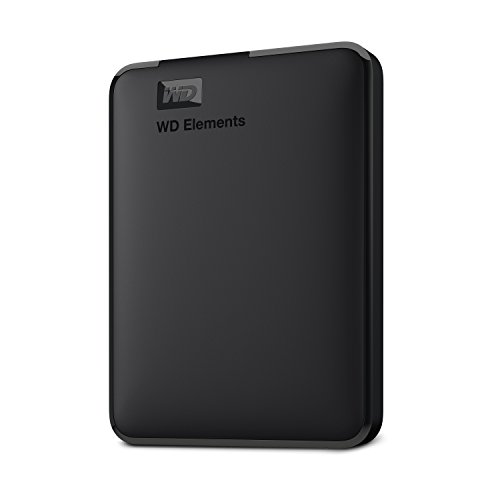
High-Capacity Portable Pick – WD Elements 4TB
For external hard drives for music production, the WD Elements 4TB offers substantial room for sample libraries, project files, recordings, and music archives in a compact portable enclosure. Its plug-and-play USB connection works with both PC and Mac systems.
Best For: Producers who need a large, straightforward portable drive for music files and general media storage.
Pros:
- Generous 4TB capacity for projects, music, and backups
- Compact 2.5-inch design weighs 8.32 ounces
- USB 3.2 Gen 1/USB 3.0 connectivity with plug-and-play setup
- Compatible with Mac and PC platforms
Cons:
- Mechanical hard-drive design may be less convenient for demanding production workflows than an SSD
- Includes USB-A connectivity rather than a dedicated USB-C connection
The WD Elements 4TB is a practical capacity-first option. It is well suited to storing large music collections and project libraries, provided your setup supports USB-A and you do not specifically need solid-state performance.
Compact Budget Pick – UnionSine Ultra Slim 1TB
The UnionSine 1TB is a compact choice for external hard drives for music production when portability and quiet operation matter. Its USB 3.0 interface supports plug-and-play use, while the slim enclosure is designed to fit easily in a pocket or small gear bag.
Best For: Mobile producers who want an affordable, quiet drive for smaller project libraries and music files.
Pros:
- Ultra-slim 0.5-inch portable design
- Quiet JMicron 578 solution for a quieter workspace
- USB 3.0 supports stated read speeds up to 125MB/s and write speeds up to 103MB/s
- Includes a USB 3.0 cable and three-year manufacturer warranty
Cons:
- 1TB capacity is more limited for large sample libraries and extensive archives
- Mechanical 5400 rpm drive is not an SSD
- USB 3.0 may require an adapter for some newer USB-C-only computers
This UnionSine drive makes sense as a portable project drive or secondary music-storage option. Its smaller capacity is the main trade-off, so producers with extensive libraries may need additional storage.
Extra-Capacity Archive Pick – WD Elements 5TB
The WD Elements 5TB is a sensible option among external hard drives for music production if you need extra room for multitrack sessions, sample libraries, recordings, and backups. It uses a portable 2.5-inch enclosure and connects through USB 3.2 Gen 1/USB 3.0 with plug-and-play setup.
Best For: Producers who prioritize maximum portable capacity for music projects and archives.
Pros:
- Large 5TB capacity for extensive music storage
- Portable 2.5-inch enclosure weighing 8.32 ounces
- SuperSpeed USB 3.2 Gen 1 connectivity
- Works with PC and Mac systems
Cons:
- Mechanical hard-drive design is not intended as an SSD replacement
- Supplied details list a USB-A cable, which may require an adapter with newer computers
- Portability and capacity may be more than needed for small project collections
With more capacity than the 4TB version, this WD Elements model is better suited to producers building a sizable archive. It is a straightforward storage solution for files and backups, rather than a specialized high-performance production drive.
Best Overall – WD My Passport 2TB
For external hard drives for music production, the WD My Passport 2TB offers a practical balance of portable storage, backup tools, and file protection. Its compact 2.5-inch design and USB compatibility make it easy to use with a laptop or desktop for storing music projects, samples, and other important files.
Best For: Producers who want dependable portable storage with built-in backup and security features.
Pros:
- 2TB capacity for music, documents, photos, and videos
- Includes device management and backup software with ransomware defense
- Password protection and hardware encryption help secure files
- Compact design, USB connectivity, and a three-year limited warranty
Cons:
- Mechanical hard-drive design may be less responsive than an SSD
- Included cable is USB-A, so some newer devices may require an adapter
The My Passport 2TB is a well-rounded choice for producers who value capacity and data protection in a small package. It is especially appealing for organizing project archives and backups rather than prioritizing maximum transfer performance.
Best Budget Pick – Aiolo Innovation 500GB
The Aiolo Innovation 500GB is a compact, budget-friendly option for external hard drives for music production. With USB 3.0, claimed read speeds up to 120MB/s, and a pocket-friendly design, it can provide convenient storage for smaller project libraries and portable transfers.
Best For: Beginners and mobile producers who need basic, lightweight storage at a lower capacity.
Pros:
- Compact and lightweight portable design
- USB 3.0 supports claimed read speeds up to 120MB/s
- Plug-and-play setup requires no software installation
- Includes USB-A-to-USB-C adapter and three-year manufacturer warranty
Cons:
- 500GB capacity may fill quickly with large sample libraries or multitrack projects
- Mechanical drive is less suited to users seeking SSD-level responsiveness
- Product notes list a two-year warranty in the specifications and three years in the package description
This drive makes sense when portability and low entry cost matter more than maximum capacity. Its 500GB storage is best suited to active projects, smaller libraries, or secondary backups.
Best High-Capacity Pick – WD My Passport 6TB
The WD My Passport 6TB is designed for producers who need substantial space for music projects, samples, recordings, and archives. Its portable 2.5-inch enclosure supports USB connectivity while included backup software, password protection, and hardware encryption add practical safeguards for valuable files.
Best For: Producers with large sample collections, extensive project archives, or multimedia storage needs.
Pros:
- Large 6TB capacity in a portable enclosure
- Includes backup software with ransomware defense
- Password protection and hardware encryption help secure data
- USB transfer rates up to 5Gbps and a three-year limited warranty
Cons:
- Mechanical hard-drive design may not match SSD performance
- USB-A cable may require an adapter with some modern computers
For producers who routinely manage large libraries, the 6TB capacity is the main advantage. It is a strong archive and backup solution, though users seeking the fastest session performance may prefer a solid-state drive.
How We Picked the Best External Hard Drives for Music Production
We focused on the factors that matter in a real studio workflow: connection speed, usable capacity, portability, compatibility, durability, backup features, and overall value. The selection includes portable SSDs for faster transfers and responsive project access, along with HDDs that provide more terabytes at a lower cost.
USB 3.0, USB 3.2 Gen 1, and USB 3.2 Gen 2 drives can work with modern computers, but actual performance depends on the computer port, cable, file sizes, and drive technology. We also considered whether each model is suited to active sessions, sample storage, or backup duty.
Quick Comparison
| Drive type | Best use | Main advantage | Trade-off |
|---|---|---|---|
| Portable SSD | Active sessions and large sample libraries | Fast, quiet, and resistant to movement | Higher cost per terabyte |
| Portable HDD | Archives, backups, and bulk storage | Affordable high capacity | Slower and more sensitive to drops |
| Password-protected HDD | Portable project backups | Added data-security features | May require extra setup or software |
Key Buying Factors for External Hard Drives for Music Production
SSD Versus HDD
An SSD is usually the better choice for recording directly to an external drive, loading demanding sample libraries, or moving large sessions frequently. It has no moving parts, operates quietly, and generally handles travel better. An HDD is often the better value for completed projects, media libraries, and scheduled backups where maximum speed is less important.
Capacity and Headroom
Choose more space than your current library requires. A 500GB or 1TB drive may suit smaller projects, while 2TB is a useful starting point for many producers. Choose 4TB, 5TB, or 6TB when storing extensive samples, multitrack archives, or multiple computer backups. Keep free space available rather than filling a drive completely.
Speed, Ports, and Compatibility
Check your computer’s available ports before buying. USB-C describes the connector, while USB 3.2 Gen 1 and Gen 2 describe different performance tiers. A fast drive cannot exceed the limits of the host port or included cable. Format the drive appropriately for your operating system and backup requirements.
Reliability and Backup Strategy
No external drive should be your only copy of important music. Use one drive for working files and another location for backup, ideally with an automated schedule. Password protection and ransomware-defense software can add useful safeguards, but they do not replace independent backups.
Who Should Buy Which External Hard Drives for Music Production?
- Choose a portable SSD if you need fast session access, quiet operation, frequent travel, or a drive for active production work.
- Choose a 2TB portable HDD if you want affordable storage for projects, stems, and general studio files.
- Choose a 4TB to 6TB HDD if you maintain large sample collections or long-term archives and want the most capacity per dollar.
- Choose a password-protected backup drive if you carry sensitive client sessions or want extra protection for portable backups.
- Choose a 500GB or 1TB model for a compact secondary backup, smaller libraries, or a dedicated transfer drive.
For many producers, the most practical setup combines a fast SSD for current projects with a larger HDD used for backups and archives.