Finding the right polymer clay sets for classrooms means balancing color variety, usable tools, manageable portions, and dependable baking results. A set that works for one child may not offer enough materials or flexibility for a full group.
We selected ten classroom-friendly options ranging from large bulk assortments to simpler beginner kits, so teachers can match the supplies to project size, student age, storage needs, and budget.
Best 10 Polymer Clay Sets for Classrooms Picks for 2026
Most Complete Variety Kit
Shuttle Art 112-Color Polymer Clay Set

- 112 colors plus 20 tools
- Includes 16 accessory types
- Recommended for ages 12+
Best For: Older students and varied jewelry, ornament, and modeling projects
Best Bulk Color Pack
Tomorotec 100-Piece Polymer Clay Set

- 100 pieces in 82 colors
- Individually wrapped portions
- Includes five modeling tools
Best For: Introductory group activities and color-mixing lessons
Best Beginner-Friendly Option
CiaraQ 50-Color Polymer Clay Kit

- 50 colors with 14 tools
- Suitable for ages 4 and up
- Includes storage and accessories
Best For: Beginner classroom projects and younger students
Best Shared Tool Set
Pepy 35-Piece Clay Sculpting Tools
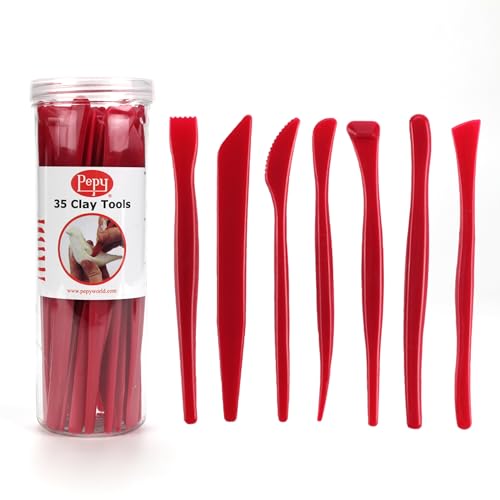
- 35 tools for group use
- Five each of seven shapes
- Works with several clay types
Best For: Shared classroom sculpting stations and tool-focused lessons
Classroom Starter Pick

- 52 individually wrapped colors with tools and accessories
- ASTM D-4236 compliant and recommended for ages 4+
- Storage box supports organized classroom use
Best For: Beginner classroom modeling and school craft projects
Color Variety Choice
Shuttle Art 117-Piece Clay Kit

- 112 clay pieces across 95 unique colors
- Includes five tools and a user manual
- Recommended for ages 12+ due to small parts
Best For: Older students making miniatures and detailed ornaments
Accessory-Rich Option

- 52 colors with 20 grams per block
- Includes 20 tools and 49 jewelry and craft accessories
- Reusable clay supports ornaments and character models
Best For: Jewelry, ornament, and mixed craft classroom projects
Most Color Variety
CiaraQ 60-Color Polymer Clay Kit

- 60 individually wrapped colors
- Includes tools, mold, accessories, and storage
- Reusable clay; bake to harden
Best For: Color-rich classroom projects and beginners
Best All-in-One Bundle
50 Colors Polymer Clay Modeling Kit

- 50 individually wrapped clay colors
- Includes tools, mold, accessories, and tutorial book
- Two-layer plastic storage box
Best For: Structured beginner lessons and group activities
Simple Classroom Starter

- 50 colors for creative modeling
- Includes storage, tools, accessories, and manual
- Oven-bake formula with reusable clay
Best For: Basic classroom sculpture and color activities
Most Complete Variety Kit – Shuttle Art 112-Color Polymer Clay Set
For classrooms needing broad color choice and project flexibility, the Shuttle Art kit is one of the most expansive polymer clay sets for classrooms. It includes 112 colors, sculpting tools, and jewelry and ornament accessories, making it suitable for varied student projects.
Best For: Older students, mixed-media projects, jewelry making, ornaments, and classrooms that need many colors and accessories in one kit.
Pros:
- Includes 112 colors in 0.7-ounce blocks.
- Provides 20 clay tools and 16 types of accessories.
- Non-toxic, non-sticky clay meets listed ASTM and EN71 requirements.
- Supports oven baking and select alternative methods for small pieces.
Cons:
- Recommended for ages 12 and up because of small and sharp components.
- The large accessory assortment may be more than a basic modeling lesson requires.
This is a strong all-in-one option when classroom projects extend beyond simple sculpting. Teachers should plan around the age guidance and supervise baking and accessory use.
Best Bulk Color Pack – Tomorotec 100-Piece Polymer Clay Set
The Tomorotec value pack is a practical choice for classrooms that want many individually wrapped clay pieces at a lower-complexity setup. With 100 pieces in 82 colors, it gives students broad color options while keeping the included tools to a minimum.
Best For: Group color-mixing activities, basic modeling lessons, and classrooms prioritizing a high piece count and individually wrapped portions.
Pros:
- Includes 100 pieces across 82 colors.
- Individually wrapped blocks are convenient for distributing to students.
- Softens when kneaded and is described as non-sticky and non-toxic.
- Includes five creative modeling tools and instructions.
Cons:
- Each block weighs only 0.35 ounce, so individual portions are small.
- Includes fewer tools and accessories than some classroom-oriented kits.
Tomorotec makes sense when color variety and easy portioning matter more than a large tool collection. It is well suited to introductory modeling and color-recognition activities.
Best Beginner-Friendly Option – CiaraQ 50-Color Polymer Clay Kit
CiaraQ is a manageable pick for younger beginners and classroom projects that need a straightforward starter set. It combines 50 colors with 14 tools, instructions, accessories, and a storage case, while the clay remains reusable until baked.
Best For: Beginners ages 4 and up, school projects, sensory activities, and classrooms introducing basic shaping, blending, and color recognition.
Pros:
- Provides 50 individually wrapped 0.7-ounce colors.
- Includes 14 sculpting tools, accessories, instructions, and storage.
- Clay stays soft and reusable until it is baked.
- Meets ASTM D-4236 requirements and contains no wheat, nuts, or peanuts according to the notes.
Cons:
- Has fewer colors than the larger 100- and 112-color kits.
- Oven baking is the recommended hardening method; boiling is not effective.
For classrooms seeking accessible polymer clay sets for classrooms, CiaraQ offers a balanced combination of age range, tools, and project support. Its included storage case can also help keep the smaller color blocks organized.
Best Shared Tool Set – Pepy 35-Piece Clay Sculpting Tools
The Pepy set is not a clay assortment but a dedicated classroom tool pack for shared sculpting stations. It supplies 35 tools—five each of seven shapes—so multiple students can work with the same basic tool types during polymer clay activities.
Best For: Group clay stations, classrooms already stocked with clay, and lessons involving scoring, smoothing, texturing, and shaping.
Pros:
- Includes 35 tools with five of each of seven shapes.
- Designed for groups or classes.
- Works with polymer clay, air-dry clay, pottery clay, and plastilina.
- Plastic construction is described as sturdy for firm clays.
Cons:
- Does not include polymer clay, colors, or baking supplies.
- Provides seven tool shapes rather than a broader accessory assortment.
Choose Pepy as a classroom infrastructure upgrade rather than a complete polymer clay kit. Its duplicate tool quantities can reduce sharing conflicts and support hands-on group instruction.
Classroom Starter Pick – 52-Color Polymer Clay Kit
For classrooms seeking versatile polymer clay sets for classrooms, this kit combines 52 individually wrapped colors with sculpting tools, accessories, and a storage box. Its beginner-friendly format supports projects ranging from simple shapes to jewelry and school crafts.
Best For: Elementary-age learners, beginners, and organized classroom or home projects.
Pros:
- Includes 52 colors, tools, accessories, a manual, and a durable plastic storage box.
- Non-toxic and ASTM D-4236 compliant, with an age recommendation of 4+.
- Clay can be mixed and reused, then hardened by oven baking.
- Supports color recognition, dexterity, hand-eye coordination, and problem-solving activities.
Cons:
- The clay is described as slightly oily and firm, which may require extra conditioning.
- Hair-dryer and boiling methods are intended only for small, thin creations.
With broad color variety and built-in storage, this is a practical all-around choice for introductory classroom modeling. Teachers should plan oven access when students need durable finished pieces.
Color Variety Choice – Shuttle Art 117-Piece Clay Kit
Among polymer clay sets for classrooms, the Shuttle Art kit stands out for its nearly 100 unique colors and extra basic-color pieces. The small 10-gram blocks are suited to detailed ornaments, miniatures, and beginner sculpting activities.
Best For: Older students, color-focused projects, and classrooms making small sculptures or miniatures.
Pros:
- Provides 112 clay pieces in 95 unique colors, plus extra white, black, red, and yellow.
- Includes five sculpting tools and a detailed user manual.
- Conforms to ASTM D-4236, ASTM F2923-20, and EN71 standards and requirements.
- Individually packed pieces total 39.2 ounces of clay.
Cons:
- Recommended for ages 12 and above because of small parts and sharp objects.
- The small 0.35-ounce blocks may be less suitable for large classroom sculptures.
- Oven baking is recommended, so classroom access to an oven may be necessary.
This set offers the widest color selection of the three, making it useful for lessons involving color matching and small-scale design. Its age restriction and small components make supervised use with older students the better fit.
Accessory-Rich Option – 52-Color Oven-Bake Clay Set
This accessory-rich option is one of the more hands-on polymer clay sets for classrooms, pairing 52 colors with 20 sculpting tools and 49 decorative components. It is designed for students and beginners who want to turn clay work into ornaments, jewelry, and character models.
Best For: Craft lessons that combine sculpting with jewelry, ornament, and accessory-making projects.
Pros:
- Includes 52 colors with 20 grams per block.
- Provides 20 sculpting tools and 49 accessories, including beads, hooks, rings, pins, and key rings.
- Clay remains reusable until heated and is described as easy to stretch, shape, and carve.
- Supports color recognition, creativity, dexterity, and hand-eye coordination.
Cons:
- Small accessory parts are not suitable for children under 3.
- Finished pieces require oven baking to harden.
- The set has a one-year warranty, shorter than some comparable kits.
For classrooms planning project-based craft stations, the accessory assortment adds more finished-product possibilities than a clay-only kit. It is especially useful when students can work on both modeling and wearable or decorative crafts.
Most Color Variety – CiaraQ 60-Color Polymer Clay Kit
For classrooms seeking broad color options, the CiaraQ kit is a versatile choice among polymer clay sets for classrooms. It includes 60 individually wrapped clay blocks, tools, a silicone mold, accessories, instructions, and a storage case for organized project time.
Best For: Color-mixing activities, beginner sculpture projects, and classrooms that want a large variety of shades.
Pros:
- Includes 60 colors in 0.70-ounce blocks for extensive color selection.
- Clay stays soft until baked and can be reused before hardening.
- Includes 14 sculpting tools, a silicone mold, accessories, instructions, and portable storage.
- ASTM D-4236 compliant and free of wheat, nuts, and peanuts, according to the supplied notes.
Cons:
- Oven baking is recommended, so classroom access to an oven may be necessary.
- Small parts require supervision and are not suitable for children under 3.
With the largest color count of these options and a substantial accessory bundle, this kit is well suited to guided classroom activities. Teachers should plan for oven use and age-appropriate handling.
Best All-in-One Bundle – 50 Colors Polymer Clay Modeling Kit
This 50-color set is a practical option for educators comparing polymer clay sets for classrooms. Its individually wrapped clay, two-layer storage box, sculpting tools, silicone mold, accessories, and tutorial book create a ready-to-use starting point for group activities.
Best For: Introductory modeling lessons, parent-child activities, and classrooms needing a packaged starter set.
Pros:
- Provides 50 vibrant colors that are described as easy to shape and blend.
- Includes 20 clay tools, a silicone mold, accessories, and a tutorial book.
- Individually wrapped pieces support grab-and-go distribution.
- ASTM D-4236 compliant and free of wheat, nuts, and peanuts, according to the supplied notes.
Cons:
- The supplied details conflict on the exact tool count, listing both 20 tools and 5 sculpting tools.
- Oven baking is recommended and boiling is not effective.
- Small parts mean it is not intended for children under 3.
This kit balances color variety with classroom-friendly extras, though buyers may want to verify the included tool count. Its storage case and individual wrapping can simplify setup and cleanup.
Simple Classroom Starter – 50-Color Oven-Bake Clay Kit
For teachers wanting a straightforward option, this kit offers a useful mix of color and core supplies among polymer clay sets for classrooms. It contains 50 clay pieces, modeling tools, accessories, an instruction manual, and a two-layer storage box.
Best For: Basic sculpture assignments, color-recognition activities, and mixed-age beginner groups.
Pros:
- Includes 50 colors described as non-sticky and easy to model.
- Comes with a storage box, creative modeling tools, accessories, and a user manual.
- Supports oven baking, with hair-dryer heating noted for small 1- to 2-inch pieces.
- Made without wheat, nuts, or peanuts and stated to meet ASTM D-4236 standards.
Cons:
- The notes do not specify the exact number of sculpting tools or accessories.
- Boiling is not an effective molding method.
- Small parts require supervision and are not intended for children under 3.
This is a compact, classroom-ready starter set with the essential materials for beginner modeling. Its 50-color range is useful, while teachers should prepare for the recommended oven-baking step.
How We Picked These Polymer Clay Sets for Classrooms
We focused on the factors that matter most in shared learning environments: the number of colors, total pieces, included sculpting tools, portion sizes, ease of storage, and suitability for beginners. We also considered whether each kit is labeled non-toxic, non-sticky, or designed for oven baking. Because classroom projects vary widely, the list includes both high-count bulk packs and more compact kits for smaller groups or individual workstations.
Product descriptions can change, so teachers should confirm the latest package contents, age guidance, and baking instructions before ordering. Polymer clay should be used with appropriate supervision, especially when an oven or heat source is involved.
Quick Comparison
- Best for maximum color variety: Tomorotec 100PCS Polymer Clay Value Pack, with 82 colors in a bulk-oriented package.
- Best for tools and accessories: Shuttle Art 112 Colors Kit, which combines a broad color selection with sculpting tools and accessories.
- Best for larger all-in-one organization: Shuttle Art 117 PCS Kit, featuring 95 unique colors plus tools.
- Best for straightforward beginner projects: CiaraQ 50-Color and 60-Color kits, which offer accessible assortments for kids and beginners.
- Best for a dedicated tool supply: Pepy’s 35-piece sculpting tool set, useful when a classroom already has clay but needs more shaping tools.
Key Buying Factors for Polymer Clay Sets for Classrooms
Color Range and Quantity
More colors give students room to experiment without mixing every shade from a limited palette. However, color count alone is not enough. Check how much clay is provided per color and whether the kit includes duplicates or very small blocks. For a class, multiple identical colors can be more useful than a large selection with only one small piece of each.
Tools, Accessories, and Cleanup
Included cutters and sculpting tools reduce the need for separate purchases, but a class may still need extra tools so students do not have to share constantly. Look for kits with resealable packaging or compartments, and plan for work surfaces, wipes, storage bags, and labels.
Safety and Baking Requirements
Choose products with clear safety labeling and age guidance. Non-toxic labeling is helpful, but students should still avoid eating the clay, wash their hands afterward, and work under supervision. Confirm the required oven temperature and baking time, and reserve baking for an adult or trained supervisor.
Budget and Classroom Size
Calculate the cost per student rather than comparing only the package price. A smaller kit may suit a demonstration or rotating station, while bulk packs are usually more practical for repeated projects. Buying extra clay can also prevent a single damaged or misplaced block from interrupting a lesson.
Who Should Buy Which Polymer Clay Sets for Classrooms?
Choose a high-count bulk pack such as the Tomorotec set when many students need varied colors or the class will complete several projects. Select a Shuttle Art kit when you want a broad assortment with tools and accessories included. CiaraQ’s 50- and 60-color options are sensible for beginner groups, compact classrooms, or teachers introducing polymer clay for the first time.
If your classroom already owns plenty of clay, the Pepy tool set can add useful shaping options without buying another large assortment. The remaining 50- and 52-color kits are practical choices for teachers prioritizing a simple, colorful starter supply. Whichever set you choose, match the quantity to your roster, store colors in labeled containers, and test-bake a small sample before scheduling a full class project.