Choosing the right stabilizer can make shaky footage look polished, cinematic, and far more professional. The best camera gimbals help you capture smooth motion while keeping your setup balanced and easy to handle.
In this roundup, we focus on versatile options for mirrorless cameras, compact rigs, and even smartphones, so you can match the gimbal to your shooting style and payload needs.
Best 10 Camera Gimbals Picks for 2026
Pro Mirrorless Pick
DJI RS 4 Camera Gimbal for Canon, Sony, Nikon, Fujifilm

- Native vertical shooting for quick social content
- 3 kg payload for mainstream mirrorless setups
- Teflon-coated axes for smoother balancing
Best For: mirrorless creators who need fast vertical switching and strong payload support
Value-Feature Pick
FeiyuTech SCORP-C Camera Gimbal for DSLR and Mirrorless

- Supports many popular DSLR and mirrorless combinations
- Integrated handle for upright and underslung shooting
- 10-13 hour battery with 18 W fast charging
Best For: creators who want a versatile feature set and comfortable handling
Smart Compact Pick
DJI RS 4 Mini Combo Camera Gimbal with Tracking

- Auto axis locks speed up setup
- Tracking module helps frame solo shots
- Works with cameras and smartphones
Best For: solo creators who want portable tracking and quick vertical shooting
Hybrid Creator Pick
FeiyuTech SCORP Mini 2 Gimbal Kit with AI Tracking

- Works with cameras, smartphones, and action cams
- Built-in AI tracking without app dependency
- Lightweight kit includes fill light and carrying case
Best For: creators who want a portable all-in-one gimbal kit for mixed devices
Phone Creator Pick
DJI Osmo Mobile 7 3-Axis Phone Gimbal

- 3-axis stabilization for smooth phone video
- Built-in tripod and foldable design
- ActiveTrack 7.0 plus 10-hour runtime
Best For: Solo phone creators who want a portable gimbal with tracking
Mirrorless Run-and-Gun Pick

- Auto axis locks speed up setup
- Supports cameras and phones up to 2 kg
- Fast vertical switch for social content
Best For: Mirrorless shooters who want quick setup and flexible framing
All-in-One Tracking Pick
FeiyuTech SCORP Mini-3-Pro Gimbal

- Works with cameras, phones, compact, and action cams
- AI Tracking 4.0 reaches up to 18 m
- Detachable handle doubles as a remote control
Best For: Multi-device creators who want tracking and remote operation
Ultra-Compact Travel Pick
DJI RS 3 Mini for Mirrorless Cameras
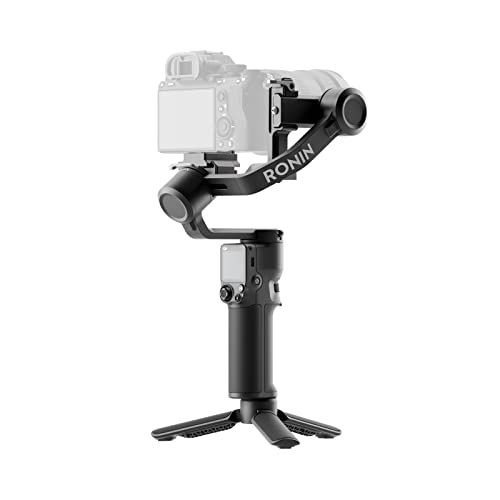
- 795g lightweight design for travel-friendly use
- Supports up to 2 kg camera and lens setups
- Native vertical shooting and Bluetooth shutter control
Best For: Travel shooters and mirrorless creators
Pro Workflow Upgrade
DJI RS 5 for Heavier Camera Rigs
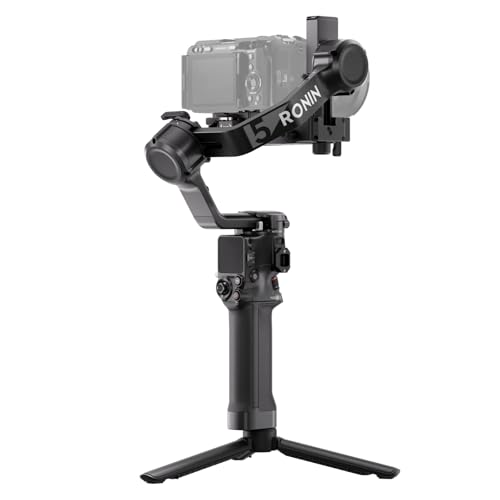
- Supports tested payloads up to 3 kg
- Enhanced tracking for people, vehicles, or pets
- Fast charging and long standby runtime
Best For: Filmmakers and creators with heavier rigs
Renewed Budget-Friendly Pick
DJI RS 3 Mini Renewed for Mirrorless Cameras
- 795g lightweight body for easier travel use
- Supports up to 2 kg camera setups
- Bluetooth shutter control and native vertical shooting
Best For: Buyers wanting a renewed lightweight gimbal
Pro Mirrorless Pick – DJI RS 4 Camera Gimbal for Canon, Sony, Nikon, Fujifilm
If you want a camera gimbal built for efficient solo shooting, the DJI RS 4 keeps the workflow straightforward with native vertical switching, smoother Teflon-coated axes, and a 3 kg payload. It’s aimed at mirrorless creators who need a stable 3-axis setup and quick mode changes without extra accessories.
Best For: mirrorless shooters who want fast vertical content creation and dependable payload support
Pros:
- 2nd-gen native vertical shooting with no additional accessories needed
- Teflon-coated axis arms help reduce friction while balancing
- 3 kg payload supports mainstream mirrorless camera and lens combinations
- Joystick mode switch makes PF, PTF, and FPV changes quick
Cons:
- Battery grip extension is sold separately
- Not water resistant
Overall, the RS 4 is a practical camera gimbal for creators who value efficient setup, vertical output, and solid accessory compatibility through the RSA port.
Value-Feature Pick – FeiyuTech SCORP-C Camera Gimbal for DSLR and Mirrorless
The FeiyuTech SCORP-C is a feature-heavy camera gimbal for photographers and filmmakers who want flexible handling and multiple shooting modes. Its integrated hanging handle, Arca quick release plate, and 10-13 hour runtime make it a practical choice for long sessions and varied camera setups.
Best For: users who want a versatile gimbal for DSLR and mirrorless cameras with strong control features
Pros:
- Compatible with many mainstream Sony, Canon, Nikon, Panasonic, and Fujifilm camera/lens combinations
- Integrated hanging handle supports upright and underslung shooting
- Includes AB trajectory memory, flash mode, panoramic, time-lapse, and vertical shooting
- 10-13 hour runtime with 18 W fast charging support
Cons:
- Payload is lower than heavier-duty gimbals at 5.5 lbs
- Best suited to supported camera lists rather than very heavy rigs
For buyers comparing camera gimbals, the SCORP-C stands out for its mix of comfort-focused handling and useful creative modes at a relatively approachable capability level.
Smart Compact Pick – DJI RS 4 Mini Combo Camera Gimbal with Tracking
The DJI RS 4 Mini Combo is a lightweight camera gimbal built for fast setup, intelligent tracking, and easy switching between horizontal and vertical shooting. With support for cameras and smartphones, it’s a flexible option for creators who work across different devices and need a compact stabilizer.
Best For: solo creators and mobile-focused shooters who want tracking and quick vertical conversion
Pros:
- Auto axis locks help the gimbal get ready in about 1 second
- RS Intelligent Tracking Module helps keep subjects framed
- Supports cameras and smartphones with a 2 kg payload
- Fast vertical switch makes mobile-friendly content easier to create
Cons:
- Lower payload than full-size camera gimbals
- Not water resistant
This is a smart pick if you want a compact stabilizer that emphasizes speed, tracking, and portability over maximum load capacity.
Hybrid Creator Pick – FeiyuTech SCORP Mini 2 Gimbal Kit with AI Tracking
The FeiyuTech SCORP Mini 2 Kit is a compact camera gimbal for creators who want broad device support in a lightweight package. It adds built-in AI tracking, a 1.3-inch touch screen, and a wireless fill light, making it well suited to mixed camera, smartphone, and action-camera shooting.
Best For: creators who want a lightweight all-in-one gimbal for cameras, phones, and action cams
Pros:
- Supports mirrorless cameras, smartphones, DSLR cameras, and action cameras
- Built-in AI tracking works without connecting to an app
- Includes a wireless fill light, extension rod, carrying case, and other accessories
- 1.3-inch touch screen and five-way joystick simplify control
Cons:
- 1.2 kg payload is lower than larger camera gimbals
- Best for lighter camera setups rather than heavier rigs
For flexible content creation, the SCORP Mini 2 offers a strong mix of portability, device compatibility, and built-in tracking tools in one kit.
Phone Creator Pick – DJI Osmo Mobile 7 3-Axis Phone Gimbal
If you want camera gimbals for mobile shooting, the DJI Osmo Mobile 7 is built for fast, steady content creation on iPhone and Android. Its 3-axis stabilization, foldable design with built-in tripod, and lightweight 300 g body make it easy to carry, set up, and use for longer sessions.
Best For: Solo creators, vloggers, and live streamers who want a lightweight phone gimbal with tracking and tripod convenience.
Pros:
- 3-axis stabilization for smooth, steady phone footage
- Foldable design with built-in tripod for easier solo filming
- ActiveTrack 7.0 and ShotGuides help with tracking and quick edits
- Up to 10 hours of runtime with USB-C phone charging support
Cons:
- Limited to cellphone and iPhone compatibility
- Max weight recommendation is 300 g
- DJI Mimo app availability may require downloading from DJI’s website
Overall, this is a practical choice if you want a portable phone stabilizer that focuses on easy setup, subject tracking, and all-day flexibility. It suits creators who value convenience more than advanced camera rig support.
Mirrorless Run-and-Gun Pick – DJI RS 4 Mini Camera Gimbal
For creators comparing camera gimbals for mirrorless kits, the DJI RS 4 Mini focuses on speed, balance, and quick shooting changes. It supports cameras and smartphones up to 2 kg, adds auto axis locks for faster setup, and switches from horizontal to vertical in about 10 seconds.
Best For: Mirrorless shooters, solo videographers, and mobile-first creators who need a lightweight camera stabilizer with fast setup.
Pros:
- Auto axis locks help it get ready in about 1 second
- Supports up to 2 kg and works with cameras plus smartphones
- Vertical shooting switch is quick for social-friendly content
- Responsive Follow Mode and intelligent tracking support dynamic scenes
Cons:
- Not water resistant
- Heavier than a phone-only gimbal at 1030 g
- Requires the DJI Ronin app from DJI’s website for best experience
This is a strong option if you need a compact gimbal that can move between mirrorless and phone workflows without slowing you down. It is especially appealing for creators who shoot fast-paced scenes and vertical content.
All-in-One Tracking Pick – FeiyuTech SCORP Mini-3-Pro Gimbal
If you need camera gimbals that can handle more than one setup, the FeiyuTech SCORP Mini-3-Pro is built as a four-in-one stabilizer for mirrorless cameras, compact cameras, smartphones, and action cameras. It combines a 2 kg payload, detachable remote handle, and AI Tracking 4.0 for flexible solo shooting.
Best For: Creators who want one gimbal for multiple devices, remote control, and long-distance tracking.
Pros:
- Supports mirrorless cameras, smartphones, compact cameras, and action cameras
- AI Tracking 4.0 offers up to 18 m tracking distance and 0.003 s response time
- Detachable handle works as a remote control for solo or distant operation
- 2 kg payload and modular design support quick horizontal-to-vertical switching
Cons:
- Not water resistant
- Heavier than smaller phone-only stabilizers at 1 kg
- Includes many accessories, which may be more than some users need
Overall, this model stands out for creators who want maximum versatility in a single stabilizer. It is a good fit when you need tracking, flexible handling, and support for several camera types.
Ultra-Compact Travel Pick – DJI RS 3 Mini for Mirrorless Cameras
If you want camera gimbals that stay easy to carry without giving up core stabilization features, the DJI RS 3 Mini is built for exactly that balance. At 795g, it’s a strong fit for travel, low-angle shooting, and social-first vertical content, while still supporting camera and lens setups up to 2 kg.
Best For: Travel shooters and mirrorless creators who want a lightweight gimbal with native vertical shooting and Bluetooth shutter control.
Pros:
- Ultra-light 795g body makes it easier to shoot for longer sessions.
- Supports camera loads up to 2 kg for a wider range of setups.
- Bluetooth shutter control simplifies photo and video capture.
- Native vertical shooting is useful for social media content.
Cons:
- Requires the DJI Ronin app for activation and full functionality.
- Not water resistant.
Overall, the RS 3 Mini is a practical choice if portability matters as much as stabilization. It focuses on the essentials creators need for everyday shooting and quick vertical framing.
Pro Workflow Upgrade – DJI RS 5 for Heavier Camera Rigs
Among camera gimbals aimed at more demanding setups, the DJI RS 5 stands out for smoother balancing, faster workflow, and more advanced tracking tools. It supports tested payloads up to 3 kg and adds features like automated axis locks, a briefcase handle, and touchscreen-based intelligent tracking for more efficient shooting.
Best For: Filmmakers and creators using heavier camera rigs who want faster setup, tracking, and low-angle handling.
Pros:
- Enhanced Intelligent Tracking can frame and follow people, vehicles, or pets.
- 2nd-gen automated axis locks speed up storage and shooting setup.
- Fine-tuning knobs and Teflon interlayers help with precise balancing.
- Up to 14 hours of standby time with fast one-hour charging.
Cons:
- Heavier and larger than compact travel-oriented gimbals.
- Not water resistant.
For users with more serious camera setups, the RS 5 is a workflow-focused option that emphasizes speed and control. It’s especially compelling if you value tracking and quick transitions between scenes.
Renewed Budget-Friendly Pick – DJI RS 3 Mini Renewed for Mirrorless Cameras
If you’re comparing camera gimbals and want the RS 3 Mini’s core features at a renewed value, this version keeps the same lightweight, travel-friendly formula. It weighs 795g, supports camera and lens combinations up to 2 kg, and includes Bluetooth shutter control plus native vertical shooting for quick content creation.
Best For: Buyers who want a renewed lightweight gimbal with mirrorless-friendly support and vertical shooting.
Pros:
- Lightweight 795g design is easy to carry on the go.
- Handles up to 2 kg of camera and lens weight.
- Bluetooth shutter control makes capture simpler.
- Native vertical shooting works well for social video.
Cons:
- Renewed unit includes a 90-day limited warranty.
- Not water resistant.
This renewed RS 3 Mini gives you the same portability-focused feature set as the original, with a lower-commitment buying angle. It makes sense if you want the form factor and performance without paying for a brand-new unit.
How We Picked These Camera Gimbals
We focused on stabilization quality, payload capacity, portability, battery performance, mounting flexibility, and features that genuinely help in real-world shooting. For Camera Gimbals, the best choice is not always the biggest model; it is the one that fits your gear and shooting workflow without constant rebalancing or fatigue.
Quick Comparison: Which Type Fits Your Setup?
Broadly, these picks break into three groups: full-size mirrorless gimbals for heavier camera bodies and lenses, compact travel-friendly gimbals for lighter rigs, and smartphone gimbals for creators who want pocketable stability. If you move between setups, a lighter model may be more practical than a higher-capacity option you only use occasionally.
Key Buying Factors for Camera Gimbals
Payload and Camera Size
Always check the tested payload against your actual camera, lens, microphone, and any accessory weight. A gimbal that is near its limit may still work, but balance becomes more difficult and battery life can suffer.
Axis Design and Motor Strength
Most modern three-axis systems handle walking shots, pans, and handheld movement well. Stronger motors matter more if you use larger lenses, add accessories, or want faster movement without drift.
Weight and Ergonomics
If you shoot for long periods, every ounce matters. Smaller Camera Gimbals are easier to travel with, but larger units may offer better handling for heavier rigs. Consider grip shape, folding design, and whether you will need an extended handle or support arm.
Control Features and Workflow
Useful extras include quick-release plates, automated balance aids, tracking modes, touchscreen controls, and app support. These features do not replace good balancing, but they can save setup time and expand what you can shoot solo.
Battery Life and Charging
Look for enough runtime to cover your typical shooting day, plus convenient charging options. If you film events, travel content, or long interviews, battery endurance can be just as important as stabilization performance.
Who Should Buy Which Camera Gimbals?
Choose a full-size mirrorless gimbal if you need maximum flexibility for interchangeable-lens cameras. Pick a compact model if you value portability, travel ease, and faster setup. Go with a smartphone gimbal if most of your content is captured on a phone and you want simple, lightweight stabilization. The best option is the one that matches your gear today, while leaving a little room for future upgrades.