Choosing the right field monitor for directors can make live switching, camera shading, and on-set decision-making faster and more accurate. The best options balance brightness, inputs, screen size, and portability without adding unnecessary complexity.
Below, we’ve narrowed the field to 10 practical picks for different production workflows, from compact HDMI monitors to larger broadcast-ready director displays.
Best 10 Field Monitor for Directors Picks for 2026
Director Multiview Pick
21.5" Mega 22S4 Daylight Multiview Monitor
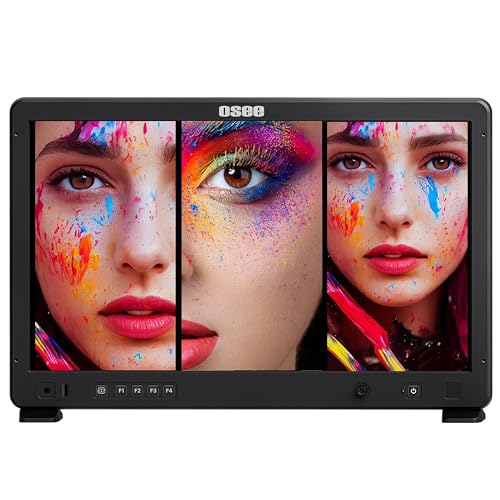
- 1500 nits with included sun hood for outdoor visibility
- Single through quad split-screen plus PIP/PBP modes
- 3 HDMI and 3 SDI inputs with pro exposure tools
Best For: Directors needing a bright multiview monitor for multi-camera sets
Portable Touch Monitor Kit
F6 Pro 5.5" 1600-nit Touch Field Monitor Kit

- 1600-nit touchscreen with pinch-to-zoom control
- Includes battery, carry case, sunshade, and tilt arm
- Waveform, false color, peaking, and 32 custom LUTs
Best For: Portable rigs and filmmakers who want a bright touch monitor with extras
Broadcast Multiview Value
ATEM156 15.6" 4-HDMI Director Monitor

- 4 HDMI inputs and outputs for switcher workflows
- 15.6-inch IPS panel with 1080p resolution
- Peaking, false color, and pixel-to-pixel tools
Best For: Indoor live broadcast setups using ATEM Mini or similar switchers
High-Brightness Compact Monitor
NEEWER F700 7" 2000-nit Touch Monitor

- 2000-nit 7-inch touchscreen with auto backlight control
- 4K HDMI loop in/out plus headphone monitoring
- Waveform, vectorscope, LUT uploads, and HDR tools
Best For: Outdoor crews needing a compact monitor with strong exposure tools
Quad-Signal Carry-On
ATEM156-CO 15.6" 4 HDMI Broadcast Monitor

- 4 HDMI inputs/outputs for multi-camera monitoring
- 15.6-inch IPS screen with 1080p resolution
- Peaking, false color, and pixel-to-pixel tools
Best For: Directors and live crews needing portable multi-input monitoring
Daylight Touch Monitor
FEELWORLD LUT11S 10.1" 2000nit HDR

- 2000 nit touchscreen stays visible in daylight
- SDI and dual HDMI with 4K 60Hz support
- Up to 50 custom 3D LUTs for on-set preview
Best For: Outdoor directors and solo shooters needing a bright touch monitor
Broadcast Field Briefcase
P173-9HSD-CO 17.3" SDI HDMI Monitor

- 17.3-inch 1080p display for larger on-set viewing
- 3G-SDI, HDMI, composite, and component inputs
- Includes tally lights and focus-assist tools
Best For: Crews wanting a large broadcast-style monitor with tally support
Quad-Split Director Monitor
FEELWORLD ATEM156 15.6" quad-split monitor

- Four HDMI inputs with loop outputs
- Quad, dual, single, and PiP views
- 15.6" IPS FHD panel with peaking and false color
Best For: Live directors and streamers needing multi-source HDMI monitoring
Ultra-Bright Broadcast Monitor
ANDYCINE C215S 21.5" 1000-nit monitor

- 1000-nit screen for bright locations
- HDMI and 3G-SDI with pro scopes
- Factory color calibration and 3D LUT support
Best For: Bright studio or outdoor production needing a large pro monitor
Versatile SDI Director Monitor
ANDYCINE C173S 17.3" SDI monitor

- HDMI, 3G-SDI, AV, and YPbPr inputs
- Peaking, markers, freeze, and zoom tools
- Tally light plus built-in audio monitoring
Best For: Live production crews needing a flexible mid-size director monitor
Director Multiview Pick – 21.5" Mega 22S4 Daylight Multiview Monitor
If you need a field monitor for directors that can handle multi-camera work, the osee Mega 22S4 is built around exactly that use case. Its 21.5-inch screen, 1500-nit brightness, and split-screen viewing make it easier to judge multiple sources at once, whether you are on a commercial set, live production, or an outdoor shoot.
Best For: Directors and production teams who need a bright multiview monitor with HDMI and SDI flexibility.
Pros:
- 1500-nit panel is daylight viewable and includes a sun hood for outdoor use.
- Supports single, dual, triple, quad, PIP, and PBP split-screen monitoring.
- 3x HDMI and 3x 3G-SDI inputs give you broad source compatibility.
- Includes waveform, vectorscope, false color, anamorphic de-squeeze, and focus peaking.
Cons:
- Large 21.5-inch body is less compact than smaller on-camera monitors.
- At 9.5 kg, it is not the lightest option for frequent transport.
The Mega 22S4 makes sense when monitoring real estate and signal flexibility matter more than portability. For director-led setups that need bright, accurate, multi-source viewing, it covers the core bases well.
Portable Touch Monitor Kit – F6 Pro 5.5" 1600-nit Touch Field Monitor Kit
For a compact field monitor for directors or camera operators who want a small on-rig display, the FEELWORLD F6 Pro keeps things straightforward. The 5.5-inch touch screen, 1600-nit brightness, and included battery kit make it a practical option for outdoor work and fast-moving productions.
Best For: Small camera rigs and filmmakers who want a bright touch monitor with extra accessories included.
Pros:
- 1600-nit brightness helps the screen stay usable outside.
- Touch interface supports pinch-to-zoom for quick framing checks.
- Includes a battery, carry case, sunshade, tilt arm, and Mini HDMI cable.
- Offers waveform, false color, peaking focus, vectorscope, and up to 32 custom LUTs.
Cons:
- 5.5-inch screen is smaller than many director-focused monitors.
- Single-screen form factor is less suited to multiview workflows.
This is a good fit if you want a portable monitor that supports exposure and focus tools without adding much bulk. It is especially attractive as a kit thanks to the bundled accessories and power options.
Broadcast Multiview Value – ATEM156 15.6" 4-HDMI Director Monitor
If your field monitor for directors needs to sit near a switcher or live streaming setup, the SEETEC ATEM156 is a simple broadcast-oriented choice. It pairs a 15.6-inch IPS panel with four HDMI inputs and outputs, so you can preview sources and route video in a straightforward production workflow.
Best For: Live broadcast and ATEM Mini setups that need basic multiview monitoring on a larger screen.
Pros:
- Four HDMI inputs and outputs support multi-view use with switchers.
- 15.6-inch IPS display offers 1920 x 1080 resolution and wide viewing angles.
- Includes peaking focus, false color, and pixel-to-pixel tools.
- Comes with a V-mount battery plate and power adapter.
Cons:
- 250-nit brightness is low compared with daylight-viewable monitors.
- No touchscreen control or advanced multiview modes listed.
This monitor is best when you want a familiar broadcast layout and HDMI routing rather than high brightness or premium portability. It is a practical fit for controlled indoor environments and switcher-based productions.
High-Brightness Compact Monitor – NEEWER F700 7" 2000-nit Touch Monitor
The NEEWER F700 is a strong compact field monitor for directors who need high brightness in a small package. Its 7-inch touchscreen, 2000-nit panel, and full suite of exposure tools make it well suited for outdoor shooting, handheld builds, and camera-side monitoring.
Best For: Directors and operators who want a bright 7-inch monitor with strong focus and exposure tools.
Pros:
- 2000-nit brightness and auto backlight control help in changing light.
- Supports 4K HDMI loop in and out for flexible camera monitoring.
- Includes waveform, vectorscope, histogram, zebras, false color, and HDR tools.
- Offers up to 60 custom 3D LUT uploads plus multiple power options.
Cons:
- 7-inch size may be small for director-style group viewing.
- Requires separate accessories for some power and mounting setups.
For crews that value brightness and tool depth over screen size, the F700 is an efficient option. It gives you a lot of monitoring control without taking over the rig.
Quad-Signal Carry-On – ATEM156-CO 15.6" 4 HDMI Broadcast Monitor
If you need a field monitor for directors that can keep multiple cameras and sources visible at once, the SEETEC ATEM156-CO is built for that workflow. Its 15.6-inch IPS panel, 4 HDMI inputs/outputs, and focus tools make it a practical choice for studio switching, live multi-camera shoots, and on-set monitoring.
Best For: Directors and live production teams who need quad-source HDMI monitoring in a portable carry-on format.
Pros:
- 4 HDMI inputs and outputs support multi-camera setups and loop-through to other devices.
- Includes peaking focus, false color, pixel-to-pixel, and other monitoring tools for sharper shooting.
- 15.6-inch 1920 x 1080 IPS display provides a full-size viewing area with 170-degree viewing angle.
- V-mount battery plate and 12V DC input add flexible power options on location.
Cons:
- 250 nit brightness is modest for harsh daylight use.
- Battery is not included.
- Large carry-on monitor design is less compact than smaller director monitors.
Overall, this is a strong pick if your directing setup depends on seeing multiple HDMI feeds at once and you want a larger monitor with practical assist functions. It favors production control and connectivity over ultra-portable brightness.
Daylight Touch Monitor – FEELWORLD LUT11S 10.1" 2000nit HDR
The FEELWORLD LUT11S is a compact field monitor for directors who want a bright, touch-controlled display they can actually use outdoors. With 2000 nit brightness, HDR monitoring, SDI plus dual HDMI connectivity, and custom 3D LUT support, it is designed for fast decision-making on set and in daylight.
Best For: Directors, focus pullers, and solo operators who need a bright touchscreen monitor for outdoor production.
Pros:
- 2000 nit brightness helps the image stay visible in direct sunlight.
- Touchscreen interface makes it quick to access monitoring functions.
- Supports SDI I/O, dual HDMI inputs, and 4K 60Hz HDMI signal handling.
- Loads up to 50 custom 3D LUTs for previewing a graded look on set.
Cons:
- 10.1-inch screen is smaller than larger director-style monitors.
- Native resolution is 1920 x 1200 rather than full 4K.
- Best suited to camera-side monitoring rather than a large village-style display.
For directors who prioritize visibility and speed, the LUT11S offers a strong mix of brightness, touch control, and professional video features. It stands out most when you need dependable field use in changing light.
Broadcast Field Briefcase – P173-9HSD-CO 17.3" SDI HDMI Monitor
For directors who want a larger field monitor for directors with traditional broadcast connections, the SEETEC P173-9HSD-CO focuses on size, input flexibility, and on-set coordination. Its 17.3-inch 1080p display, 3G-SDI and HDMI connectivity, and included tally kit make it well suited to multi-person production environments.
Best For: Directors and production teams who want a large carry-on monitor with SDI, HDMI, and tally support.
Pros:
- 17.3-inch screen gives a bigger viewing area for director and crew monitoring.
- 3G-SDI, HDMI, composite, and component I/O support a wide range of video sources.
- Includes tally lights and tally kit for clearer on-set recording status.
- Focus assist, check field, image freeze, and safe frame tools support accurate monitoring.
Cons:
- 400 nit brightness is useful, but not as strong as high-bright daylight monitors.
- Bulky carry-on form factor is less convenient for minimal setups.
- Primarily aimed at production monitoring rather than touchscreen convenience.
This model makes sense when your workflow needs a larger screen and broad signal compatibility more than maximum portability. It is a solid broadcast-style option for crews that value tally coordination and familiar monitoring tools.
Quad-Split Director Monitor – FEELWORLD ATEM156 15.6" quad-split monitor
If you need a field monitor for directors that keeps multiple camera feeds visible at once, the FEELWORLD ATEM156 is built around quad-split HDMI monitoring with flexible multi-view options. It supports four HDMI inputs and loop outputs, making it a practical fit for live switching, streaming, and studio work where quick visual decisions matter.
Best For: Directors and streamers who want a compact 15.6-inch quad-view monitor for HDMI-based live production.
Pros:
- Quad-split display for up to four DCI/UHD 4K HDMI signals.
- Four HDMI loop outputs for passing signals through to a switcher.
- Supports dual-view, single-image, and picture-in-picture layouts.
- 15.6-inch IPS panel with 1920 x 1080 resolution and 170° viewing angle.
Cons:
- Brightness is 250 cd/m², so it is less suited to very bright outdoor use.
- HDCP-protected input signals require an external splitter to strip HDCP.
This is a sensible choice if your priority is flexible HDMI monitoring rather than high brightness or SDI connectivity. The included peaking and false color tools add helpful image checks, while the aluminum housing and VESA mounting support make it easier to integrate into a director’s setup.
Ultra-Bright Broadcast Monitor – ANDYCINE C215S 21.5" 1000-nit monitor
The ANDYCINE C215S is a field monitor for directors that leans into visibility and image analysis, with a 21.5-inch screen rated at 1000 nits for brighter shooting environments. It combines HDMI and 3G-SDI I/O with professional tools like waveform, RGB parade, vector scope, and 3D LUT loading, which makes it a strong fit for production setups that need more than a basic preview display.
Best For: Teams working in bright studios or outdoor conditions who need a large, high-brightness director’s monitor with pro video scopes.
Pros:
- 1000-nit brightness for stronger visibility in bright environments.
- Dual HDMI and dual 3G-SDI I/O for flexible device compatibility.
- Includes waveform, RGB parade, vector scope, focus assist, false color, and 3D LUT loading.
- Factory CALMAN color calibration for consistent color reproduction.
Cons:
- Large 21.5-inch form factor is less compact than smaller field monitors.
- Weighs 10.58 lbs, so it is not the lightest portable option.
For directors who prioritize image accuracy and daylight usability, this monitor brings a lot to the table. The aluminum case and protective corners add durability, while VESA support and multiple mounting points help it slot into desktop, rig, or stand-based workflows.
Versatile SDI Director Monitor – ANDYCINE C173S 17.3" SDI monitor
If you want a field monitor for directors with broad input compatibility, the ANDYCINE C173S offers HDMI, 3G-SDI, AV, and YPbPr support in a 17.3-inch desktop-friendly package. Its 1920 x 1080 panel, 400 cd/m² brightness, and built-in focus and framing tools make it a practical choice for live events and production monitoring.
Best For: Directors who need a mid-size monitor with HDMI and SDI inputs plus useful on-screen focus and framing tools.
Pros:
- Supports HDMI, 3G-SDI, AV, and YPbPr inputs.
- Includes peaking focus assist, center marker, screen marker, image freeze, and zoom tools.
- Built-in speakers, 3.5mm headphone jack, and tally light for live monitoring.
- Aluminum shell with adjustable bracket and included sunshade.
Cons:
- 400 cd/m² brightness is solid, but not as high as ultra-bright models.
- Single HDMI port may be limiting for some workflows.
This model is a balanced option when input flexibility matters more than extreme brightness or oversized screen space. The tally light and rugged build make it especially useful for live production environments where quick cueing and dependable monitoring are important.
How We Picked the Best Field Monitor for Directors
We focused on features that matter in real production environments: daylight visibility, reliable HDMI and SDI connectivity, screen size, touch control, multi-view support, and physical build quality. Because a Field Monitor for Directors is often used in fast-moving setups, we also favored models that are easy to transport, mount, and operate.
Brightness, resolution, and I/O flexibility were weighted heavily, since those factors affect both usability on location and compatibility with switchers, cameras, and video assist workflows.
Quick Comparison: What Matters Most
Smaller 5.5-inch and 7-inch models are usually best when mobility and close-up camera-side monitoring matter most. Larger 15.6-inch, 17.3-inch, and 21.5-inch displays are better for directors who need a clearer shared view of multi-camera production, program monitoring, or a carry-on broadcast station. If you work outdoors, prioritize higher nit ratings. If you run mixed camera and switcher setups, look for HDMI plus SDI inputs and outputs.
Key Buying Factors for a Field Monitor for Directors
Brightness and Viewing Conditions
For indoor studios, moderate brightness can be sufficient. For outdoor or daylight use, look for 1000 nits or higher to maintain visibility without relying on a hood or shade.
Inputs, Outputs, and Signal Workflow
HDMI-only monitors can work well for compact rigs, but directors often benefit from SDI support, loop-through output, and multi-input layouts. These features make it easier to integrate cameras, switchers, and recorders in one signal chain.
Screen Size and Resolution
Larger screens make it easier to judge framing, focus, and multiview layouts from a distance. Higher resolution helps text overlays, waveforms, and fine image detail stay readable.
Monitoring Tools
Waveform, false color, LUT support, zebra, and peaking are valuable for exposure and focus checks. If the monitor will be used by a director, these tools can improve confidence during live calls and shot review.
Portability and Mounting
Consider whether you need a lightweight on-camera monitor, a desktop-style director display, or a carry-on monitor with a case. Battery support, V-mount options, and a sturdy chassis can make a big difference in the field.
Who Should Buy Which Field Monitor for Directors?
If you need a compact, high-brightness monitor for camera-side work, choose a smaller touchscreen model with strong daylight performance. If you’re building a director position for live switching, a 15.6-inch or larger monitor with multiple inputs is usually the better fit. For multi-camera events, broadcast control rooms, and portable production kits, larger SDI/HDMI displays with multiview support offer the most practical balance of visibility and workflow speed.
In short, the best Field Monitor for Directors is the one that matches your viewing distance, signal format, and operating environment—not just the one with the highest specs on paper.