If you’re trying to preserve negatives, slides, or old home movies, the right scanner can make the difference between a usable digital copy and a frustrating retake. The best film scanners for archiving balance resolution, color accuracy, and ease of use.
Below, we focus on practical picks for different needs and budgets, from simple all-in-one models to more advanced 35mm scanners built for serious archiving work.
Best 10 Film Scanners for Archiving Picks for 2026
All-in-One Memory Saver
Magnasonic FS71 24MP Film Scanner

- 24MP scans for film and slides
- Works with 35mm, 110, 126, and Super 8
- Standalone use with 5" LCD and HDMI
Best For: Home archiving with minimal setup
Easy Batch Digitizer

- Supports 135mm, 110mm, and 126mm film
- Saves directly to SD/SDHC cards
- One-touch editing for quick digitizing
Best For: Fast, simple home scanning
Pro Slide Archivist
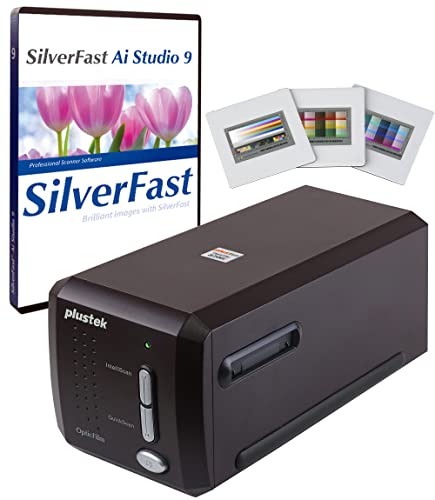
- 7200 resolution for 35mm slides
- Includes SilverFast 9 Ai Studio
- IT8 target supports calibration
Best For: Quality-focused 35mm slide archiving
Compact Family Scanner
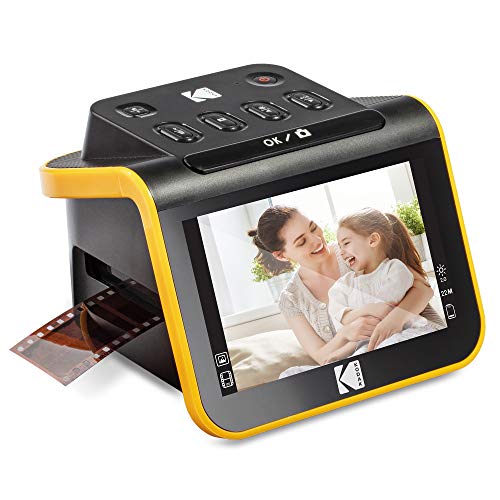
- 22MP scanner with 5" LCD preview
- Supports 135, 110, 126, and 50mm slides
- Saves directly to SD cards
Best For: Compact home slide and negative digitizing
Professional 35mm Archiving
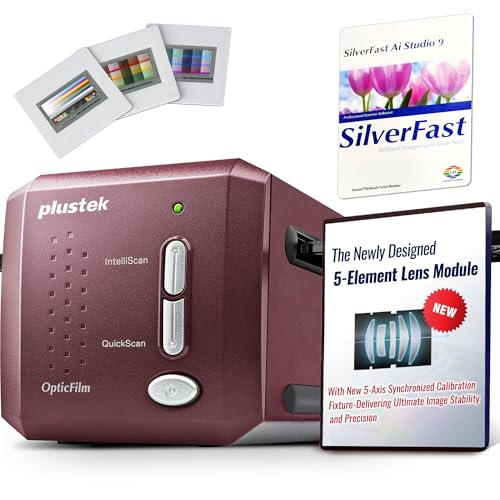
- 7200 dpi optical resolution
- 5-axis factory calibration
- Infrared dust and scratch removal
Best For: Serious 35mm film archiving with restoration-focused workflow
Multi-Format Easy Transfer
KODAK SCANZA Film & Slide Scanner
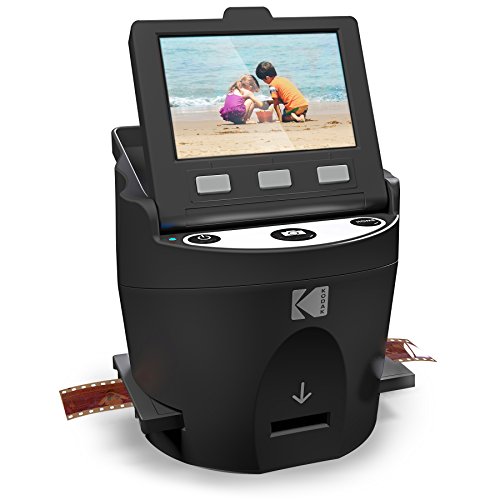
- Supports several vintage film formats
- Built-in 3.5-inch LCD screen
- Simple one-touch scan and save
Best For: Quick home archiving of mixed legacy film formats
High-Volume Batch Archiving

- Auto batch scans up to 60 frames
- True RGB CCD for color accuracy
- Magic Touch dust and scratch removal
Best For: Large 35mm filmstrip archiving with batch efficiency
Easy Home Archiver
35mm Film & Slide Scanner with LCD

- Standalone scanning with no computer required
- 2.4-inch LCD and TV-out viewing
- Quick feeder and SD-card saving for batch work
Best For: Beginners digitizing 35mm film and slides at home
High-Detail Scanner
Plustek OpticFilm 8100 7200 DPI

- 7200 DPI and 48-bit output for detailed scans
- CCD sensor and bundled software for editing
- Mac and Windows support with carry bag included
Best For: Archiving 35mm film with a focus on high-resolution detail
Speed-Boost Archive Choice

- 38% faster scanning with 7200 DPI capture
- Infrared dust and scratch removal built in
- SilverFast SE Plus 9 and QuickScan Plus included
Best For: Users archiving 35mm film who want speed and cleanup tools
All-in-One Memory Saver – Magnasonic FS71 24MP Film Scanner
If you want film scanners for archiving that keep the process simple, the Magnasonic FS71 is built around speed and convenience. It converts 35mm, 110, 126, and Super 8 film, plus 135/126/110 slides, into 24MP JPEGs without requiring a computer.
Best For: Families and home users who want a straightforward, standalone scanner for preserving mixed film and slide collections.
Pros:
- Scans several common film and slide formats, including Super 8, 35mm, 110, and 126.
- 5″ LCD lets you preview scans on the unit or output to a TV or monitor via HDMI.
- No computer, software, or driver setup is required for operation.
- Fast-loading trays help complete each scan in under 5 seconds.
Cons:
- SD card is not included, so storage must be added separately.
- Minimum system requirements list Windows 7, which may matter if you plan to connect to a PC.
The FS71 is a practical pick if your priority is archiving a lot of older media quickly with minimal setup. It favors ease of use over advanced editing, which makes it a strong fit for basic home preservation.
Easy Batch Digitizer – KODAK Slide N Scan Max
For buyers comparing film scanners for archiving, the KODAK Slide N Scan Max focuses on speed and a smoother workflow. It supports 135mm, 110mm, and 126mm film, handles slides and negatives, and saves directly to SD/SDHC cards without needing a computer.
Best For: Users who want a simple, fast scanner for digitizing mixed slides and negatives at home.
Pros:
- Supports 135mm, 110mm, and 126mm film formats.
- Direct SD saving keeps the workflow computer-free and portable.
- One-touch editing simplifies resize, conversion, and image adjustments.
- 13MP sensor with 22MP interpolation produces up to 4208 x 3120 output.
Cons:
- SD/SDHC support is limited to 32GB cards.
- Does not list support for Super 8 film.
This model is a good fit if you want an easy consumer scanner that can move through old media efficiently. Its strongest advantage is convenience, especially when you do not want to rely on a computer for every scan.
Pro Slide Archivist – Plustek OpticFilm 8300i Ai
If you need film scanners for archiving with a stronger emphasis on image quality control, the Plustek OpticFilm 8300i Ai is the most specialized option here. It is designed for 35mm slides and uses bundled SilverFast 9 Ai Studio plus Quick Scan Plus, along with calibration and advanced correction tools.
Best For: Serious slide archiving where software tools, calibration, and higher-resolution scanning matter most.
Pros:
- 7200 resolution and CCD sensor support detailed 35mm slide scanning.
- Bundled SilverFast 9 Ai Studio adds advanced processing tools and workflows.
- Includes an IT8 calibration target for more accurate color calibration.
- USB setup works on Windows and Mac, with included support resources.
Cons:
- Focused on 35mm slides, so it is less versatile than all-in-one scanners.
- Requires more software involvement than simple standalone models.
This is the most capable choice for users who care about scanning control and calibration rather than quick convenience. It makes the most sense when you want to build a higher-quality digital archive from 35mm slide originals.
Compact Family Scanner – KODAK Slide N Scan 22MP
The KODAK Slide N Scan 22MP is a practical choice if you want film scanners for archiving with a compact footprint and simple controls. It handles 135, 110, and 126 negatives plus 50mm slides, and lets you preview and edit on its 5″ LCD before saving to SD card.
Best For: Home users who want a compact, easy-to-use scanner for everyday slide and negative digitizing.
Pros:
- Supports multiple common formats, including 135, 110, 126, and 50mm slides.
- 22MP output and a 5″ LCD make previewing and scanning straightforward.
- Direct SD card saving keeps the process computer-free.
- Includes film holders, a cleaning brush, USB, and HDMI cables.
Cons:
- SD or SDHC card is not included.
- Does not list support for Super 8 film.
This scanner is well suited to general home archiving where convenience matters more than advanced editing. Its blend of compact design, included accessories, and onboard viewing makes it approachable for older family collections.
Professional 35mm Archiving – Plustek OpticFilm 9000i Ai
For film scanners for archiving, the Plustek OpticFilm 9000i Ai is built for users who want high-detail 35mm digitization with a workflow geared toward restoration. Its 7200 dpi optical resolution, infrared dust removal, and factory calibration make it a strong fit when preserving negatives and slides with consistent, repeatable results matters.
Best For: Photographers, studios, and serious film enthusiasts archiving 35mm negatives and slides.
Pros:
- True optical resolution up to 7200 dpi for fine film grain and detail.
- 5-axis factory calibration helps keep scans stable and consistent.
- SilverFast iSRD uses infrared data to help remove dust and scratches.
- Includes SilverFast Ai Studio, QuickScan Plus, and an IT8 calibration target.
Cons:
- Built for 35mm film only, so it is not a multi-format solution.
- Requires a compatible 64-bit Windows or supported macOS system.
Overall, this is a specialized archiving scanner for users who prioritize image quality, calibration, and restoration tools over broad film-format support. The faster scan engine also helps when you have a sizeable 35mm archive to digitize.
Multi-Format Easy Transfer – KODAK SCANZA Film & Slide Scanner
The KODAK SCANZA is a practical pick for film scanners for archiving if you want a fast, standalone way to turn older negatives and slides into JPEG files. With a built-in 3.5-inch LCD, one-touch buttons, and included adapters, it is aimed at simple home digitizing rather than high-end manual workflows.
Best For: Home users who want a simple scanner for 35mm and selected vintage film formats.
Pros:
- Converts 35mm, 126, 110, Super 8, and 8mm film to JPEG.
- Built-in 3.5-inch LCD with adjustable brightness and tilt.
- One-touch scan and save controls keep operation simple.
- Includes film inserts, adapters, USB power, HDMI, AC adapter, and cleaning brush.
Cons:
- Not compatible with film types outside the listed supported formats.
- SD card is not included and supports up to 128GB only.
For basic archiving jobs, this scanner focuses on speed and convenience more than advanced editing or calibration. It makes sense if you want an easy way to preserve mixed family film collections without a complicated setup.
High-Volume Batch Archiving – Pacific Image PowerFilm Plus
For film scanners for archiving large 35mm collections, the Pacific Image PowerFilm Plus stands out for automatic batch scanning and true color capture. It is designed for users who need to process many film strips efficiently, with support for up to 60 frames per batch and software tools that help reduce cleanup time.
Best For: Users digitizing large batches of 35mm negatives or positives on Mac or PC.
Pros:
- Automatic batch scanning handles up to 60 frames per batch.
- True RGB linear array CCD supports accurate color reproduction.
- Magic Touch software helps with dust and scratch removal.
- Scans 2.15 times faster than its predecessor for larger archives.
Cons:
- Designed for filmstrips, so it is not a broad multi-format scanner.
- Requires 4 GB RAM and 50 GB or more free disk space.
This is a strong archive scanner if speed and batch efficiency matter more than compact size or general-purpose use. Its workflow is especially appealing when you are converting a long run of 35mm strips and want to keep the process moving.
Easy Home Archiver – 35mm Film & Slide Scanner with LCD
This is a practical choice for film scanners for archiving if you want a simple standalone unit for 35mm negatives and slides. It converts images to digital JPEGs, lets you preview on the built-in LCD, and supports Positive, Negative, and B&W modes without needing a computer.
Best For: Beginners and hobbyists digitizing 35mm negatives and framed slides at home.
Pros:
- Standalone operation with no computer required.
- 2.4-inch LCD screen plus TV-out for larger viewing.
- Quick slide feeder helps process bigger collections faster.
- Saves directly to SD card and supports USB transfer.
Cons:
- Limited to 35mm negatives and slides.
- SD card support is up to 32GB and must be FAT32 formatted.
- Lower-resolution 1800 DPI sensor compared with dedicated high-end scanners.
Overall, this model is best when convenience matters more than maximum scan detail. It keeps the workflow straightforward for home archiving and makes it easy to view, save, and transfer scans with minimal setup.
High-Detail Scanner – Plustek OpticFilm 8100 7200 DPI
If you want film scanners for archiving with a stronger focus on image detail, the Plustek OpticFilm 8100 is built for 35mm negatives and slides at 7200 DPI. It uses a CCD sensor and 48-bit output, and it comes bundled with scanning and image-processing software for Mac and Windows.
Best For: Users archiving 35mm film who want high-resolution scans and software support for editing.
Pros:
- 7200 DPI resolution for detailed 35mm digitizing.
- 48-bit output and CCD sensor for higher-end capture.
- Includes Plustek QuickScan and SilverFast SE Plus software.
- Supports Mac and Windows, with a carry bag included.
Cons:
- Only works with 35mm negatives and slides.
- Requires a computer connection and driver setup.
- More specialized than a standalone scanner with screen.
This is a strong pick if scan quality is your top priority and you don’t mind a more computer-dependent workflow. The bundled software and high-resolution spec make it well suited to careful archival projects.
Speed-Boost Archive Choice – Plustek OpticFilm 8300i SE
For film scanners for archiving where speed and cleanup tools matter, the Plustek OpticFilm 8300i SE adds a 38% scan speed increase and built-in infrared dust and scratch removal. It scans 35mm negatives and slides at up to 7200 DPI and includes SilverFast SE Plus 9 plus QuickScan Plus.
Best For: Film owners who want faster 35mm archiving with dust and scratch cleanup tools.
Pros:
- 38% faster scan speed than the previous model.
- 7200 DPI resolution with 3.91 Dmax dynamic range.
- Infrared channel and iSRD dust/scratch removal support.
- Includes SilverFast 9 SE Plus and Quick Scan Plus software.
Cons:
- Still limited to 35mm film strips and slides.
- Requires a computer-based workflow.
- Best results depend on using the included software tools.
This model stands out when you have a larger archive and want to save time on both scanning and cleanup. It combines high resolution with software features designed to handle fragile, dust-prone film more efficiently.
How We Picked the Best Film Scanners for Archiving
For this roundup of Film Scanners for Archiving, we prioritized real-world usability over spec sheet hype. That means looking at supported film formats, optical detail, scanning speed, ease of handling, software support, and whether the scanner is a good fit for long-term digital preservation.
We also favored models that serve clear buyer types: quick family-photo conversion, higher-quality 35mm digitizing, and batch workflows for larger collections.
Quick Comparison
In broad terms, all-in-one scanners are best for convenience, while dedicated 35mm scanners usually deliver better detail and color control. If you have mixed media such as slides, negatives, and Super 8, a versatile unit may be the simpler choice. If your priority is maximum image quality from 35mm film, a dedicated scanner is usually the better path.
Key Buying Factors for Film Scanners for Archiving
Resolution and True Detail
Higher DPI numbers can help, but the more important question is whether the scanner produces clean, usable detail without excessive noise or softness. For serious archiving, look for a model that can resolve grain and fine text clearly from your film originals.
Film Format Support
Match the scanner to your collection. Some models handle 35mm negatives and slides only, while others also support 110, 126, Super 8, and 8mm. If your archive is mixed, format flexibility can save time and money.
Batch Scanning and Workflow
If you have hundreds of frames, auto-feeding and batch scanning matter more than flashy extras. Faster workflows reduce fatigue and make it realistic to finish larger archiving projects.
Color Correction and Software
Good software can improve exposure, dust handling, and color balance. For older film, this can be as important as hardware quality, especially if your originals have faded or shifted color over time.
Ease of Use and File Output
Simple controls, built-in previews, and straightforward USB transfer are helpful for beginners. Also check whether the scanner saves files in a format that works well for editing and storage, such as high-quality JPEG or TIFF where supported.
Who Should Buy Which Film Scanners for Archiving?
If you want the easiest route for mixed family media, choose an all-in-one scanner with a screen and broad format support. If you care most about image quality from 35mm negatives or slides, a dedicated Plustek-style scanner is often the stronger choice. If you’re digitizing a large archive, prioritize batch scanning and workflow speed over extra convenience features.
In short, the best scanner is the one that fits your film types, volume, and quality expectations. For most buyers, that means balancing simplicity now with enough detail and software support to avoid re-scanning later.