If you’re digitizing family albums, slides, or stacks of old prints, the right scanner can save hours and preserve more detail. The best photo scanners for Windows balance image quality, speed, and simple software.
Below, we’ve narrowed the field to 10 reliable picks for different needs, from fast batch scanning to compact flatbeds for occasional use.
Best 10 Photo Scanners for Windows Picks for 2026
Fast Photo Batch Scanner
Epson FastFoto FF-680W High-Speed Duplex Photo and Document Scanner

- Scans up to 36 photos at once
- Captures back-of-photo notes with duplex scanning
- Includes wireless and USB connectivity
Best For: Windows users digitizing large photo collections quickly
Simple USB Scanner
Canon CanoScan LiDE 300 Scanner (PDF, AUTOSCAN, Copy, Send)

- Auto Scan Mode detects what you're scanning
- 2400 x 2400 dpi optical resolution
- Compact USB-powered design
Best For: Windows users needing an easy scanner for photos and documents
Fast Feed Photo Scanner
Plustek Photo Scanner ePhoto Z300

- Scans 4x6 photos in about 2 seconds
- Supports common photo sizes up to 8x10
- Includes auto crop, deskew, and enhancement tools
Best For: Windows users scanning large photo stacks one at a time
High-Detail Photo Scanner

- 4800 dpi optical resolution
- Restores faded photos with Easy Photo Fix
- USB powered with scan-to-cloud support
Best For: Windows users prioritizing photo detail and restoration
Speedy Flatbed Pick
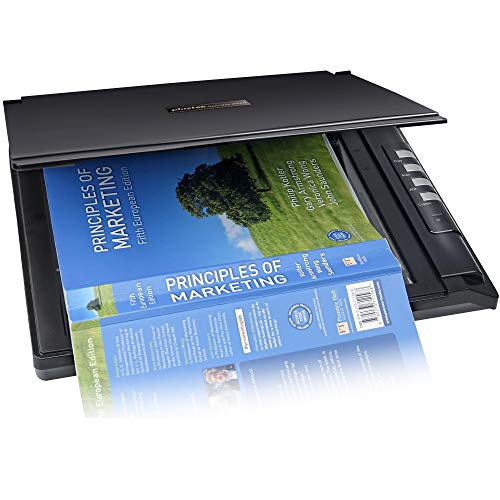
- 3-second scans at 300 dpi color
- Editable, searchable PDF support
- Auto rotate, deskew, and crop tools
Best For: Quick Windows scanning with simple one-touch controls
Detail-Focused Flatbed

- 4800 dpi optical resolution for detail
- Easy Photo Fix restores faded photos
- USB-powered and lightweight for portability
Best For: High-detail Windows scanning of photos, artwork, and books
Ultra-Slim Everyday Choice
Canon CanoScan LiDE 400 Slim Scanner

- 4800 x 4800 dpi resolution for detailed photo scans
- USB Type-C carries both power and data
- Auto scan mode and EZ buttons simplify use
Best For: Windows users who want a slim, dependable photo-and-document scanner
Photo Restoration Pick
Epson Perfection V39 II Flatbed Photo Scanner

- 4800 dpi optical resolution for detailed photo scans
- Easy Photo Fix restores faded colors with one click
- USB-powered and compact for simple Windows setups
Best For: Windows users restoring old photos and scanning mixed originals
Archival-Ready Photo Bundle
AMBIR Photo Scanner with Cleaning Kit

- 300/600 DPI options for flexible scan quality
- Auto crop and deskew improve scan cleanup
- Includes cleaning kit and organizing software
Best For: Users archiving printed photos and wanting cleanup tools included
Fast Photo Batch Scanner – Epson FastFoto FF-680W High-Speed Duplex Photo and Document Scanner
If you want photo scanners for windows that can turn a big pile of prints into digital files fast, the Epson FastFoto FF-680W is built for speed and convenience. It can scan thousands of photos quickly, handle batches of up to 36 photos at once, and even capture writing on the back in a single pass.
Best For: Windows users digitizing large photo collections who want fast batch scanning with wireless convenience.
Pros:
- Scans photos as quickly as 1 photo per second at 300 dpi.
- Batch-scan up to 36 photos at a time for higher productivity.
- Duplex scanning captures the image and handwritten notes on the back.
- Includes auto enhancement, color restoration, red-eye reduction, de-skew, crop, and rotate.
Cons:
- Higher-end feature set is more than some casual users need.
- Designed around photo volume, so it may be overkill for light scanning jobs.
- Requires Windows 7 minimum system support.
Overall, this is the strongest fit when speed matters most and you need a scanner that can handle a serious photo backlog without slowing you down.
Simple USB Scanner – Canon CanoScan LiDE 300 Scanner (PDF, AUTOSCAN, Copy, Send)
For shoppers comparing photo scanners for windows, the Canon CanoScan LiDE 300 is a straightforward USB model for basic photo and document digitizing. Auto Scan Mode detects what you’re scanning, and the compact design keeps it easy to place on a desk.
Best For: Windows users who want a simple, low-cost scanner for photos, receipts, and documents.
Pros:
- Auto Scan Mode automatically detects what you are scanning.
- 2400 x 2400 dpi optical resolution for detailed scans.
- USB connectivity keeps setup simple.
- Compact and lightweight design fits easily on a desk.
Cons:
- Single-sheet capacity means manual feeding one item at a time.
- Not built for high-volume batch scanning.
- Windows 7 minimum system requirement only, based on supplied specs.
This is a practical pick if you mainly need dependable scanning without extra complexity. It focuses on basic image capture rather than speed or advanced batch handling.
Fast Feed Photo Scanner – Plustek Photo Scanner ePhoto Z300
If your priority is moving old prints into digital form quickly, this Plustek model stands out among photo scanners for windows. It scans 4×6 photos in about 2 seconds, supports several common photo sizes, and is designed for one-by-one feeding rather than a flatbed workflow.
Best For: Windows users who want fast one-by-one photo scanning for family archives.
Pros:
- Scans a 4×6 photo in about 2 seconds at 300 dpi.
- Supports 3×5, 4×6, 5×7, and 8×10 photo sizes.
- Can digitize about 1,000 photos in one afternoon, according to the supplied notes.
- Includes image enhancement tools to improve faded photos.
Cons:
- Single-sheet capacity means you feed photos one at a time.
- Resolution tops out at 600 dpi, which may not suit every archiving need.
- Requires Windows 7 or later and software download for latest support.
It is a strong option when you care more about speed and ease than flatbed versatility. The simple feed-in design makes large photo projects more manageable.
High-Detail Photo Scanner – Epson Perfection V39 Color Photo & Document Scanner with Scan-to-Cloud & 4800 Optical Resolution, Black
For people looking at photo scanners for windows and wanting detail over speed, the Epson Perfection V39 is a solid photo-first option. Its 4800 dpi optical resolution, scan-to-cloud support, and built-in tools for restoration make it useful for preserving prints, albums, and artwork.
Best For: Windows users who want high-resolution scans and photo restoration features.
Pros:
- 4800 dpi optical resolution for detailed photo scans.
- Easy Photo Fix helps restore color in faded photos.
- High-rise removable lid makes it easier to scan books and albums.
- USB powered, so no AC adapter is required.
Cons:
- Single-sheet capacity limits it to one item at a time.
- Not intended for fast batch scanning of large photo piles.
- Best suited to careful scanning rather than high-volume workflows.
This model makes the most sense when image quality and preservation matter more than speed. It is a thoughtful choice for home archiving and photo cleanup tasks.
Speedy Flatbed Pick – Plustek OpticSlim 2700
If you want photo scanners for windows that keep things simple, the Plustek OpticSlim 2700 is a compact flatbed option with quick 3-second scans at 300 dpi color. It’s a practical choice for users who want straightforward photo and document digitizing with one-touch controls and Windows TWAIN support.
Best For: Home users who want a fast, easy flatbed scanner for photos and everyday files on Windows.
Pros:
- Scans quickly, with 3-second capture at 300 dpi color.
- Built-in PDF button helps create editable and searchable PDFs.
- Auto rotate, deskew, and crop features help clean up images.
- Four one-touch buttons simplify copy, scan, PDF, and custom tasks.
Cons:
- Flatbed design is better for single items than large batches.
- Minimum system requirement starts at Windows 7, so it may not suit every older setup.
For buyers who value speed and simple operation over bulk scanning, this Plustek model is a solid Windows-friendly flatbed. Its included image-processing tools add convenience when you want photos to look cleaner with less manual editing.
Batch Photo Feeder – Canon imageFORMULA RS40
For photo scanners for windows that prioritize batch work, the Canon imageFORMULA RS40 uses an automatic feeder to scan photos and documents efficiently. It can handle old and new photos in different sizes, making it a strong fit when you need to digitize stacks instead of scanning one print at a time.
Best For: Users who want to process many photos and mixed paper items quickly on Windows.
Pros:
- Automatic feeder supports fast scanning at up to 40 items per minute.
- Scans both sides through the feeder with one button press.
- Handles photos, Polaroids, receipts, cards, IDs, and documents of various sizes.
- Bundled software includes photo enhancement, red-eye correction, and face smoothing.
Cons:
- Uses an auto feeder, so it is less suited to delicate items that need flatbed handling.
- Color depth is listed at 8 bpp, which may matter for users focused on image-editing flexibility.
The RS40 is the most productivity-focused option here if your goal is to clear a large pile of prints fast. Its Windows compatibility, included TWAIN driver, and editing software make it a strong all-around scanning workflow tool.
Detail-Focused Flatbed – Epson Perfection V19 II
If image quality is the priority in photo scanners for windows, the Epson Perfection V19 II stands out with 4800 dpi optical resolution. It’s a compact flatbed scanner built for photos, artwork, and books, and it includes tools for restoring faded prints and generating searchable files.
Best For: Users who want higher-detail photo scans and a compact Windows-ready flatbed.
Pros:
- 4800 dpi optical resolution supports detailed photo enlargements.
- Easy Photo Fix helps restore color to faded photos with one click.
- High-rise removable lid makes it easier to scan books and photo albums.
- USB-powered, lightweight design is easy to move and store.
Cons:
- Standard sheet capacity is 1, so it is not designed for batch scanning.
- Letter-sized scans are listed as fast as 10 seconds, but it is still a single-item workflow.
For photographers and family archivists who want more detail from each scan, this Epson is the strongest quality-first choice. Its combination of high resolution, photo restoration tools, and compact design makes it a useful everyday flatbed for Windows.
Ultra-Slim Everyday Choice – Canon CanoScan LiDE 400 Slim Scanner
Canon CanoScan LiDE 400 Slim Scanner, 7.7" x 14.5" x 0.4", Document & Photo Scanner, Black
Check Price On AmazonIf you want a practical photo scanner for Windows that stays out of the way, the Canon CanoScan LiDE 400 is built for simple desktop use. It scans photos and documents at up to 4800 x 4800 dpi, includes one-cable USB Type-C power and data, and adds useful image fixes like color restore and dust removal for older prints.
Best For: Windows users who want a slim, reliable scanner for photos, documents, and occasional multi-page PDFs.
Pros:
- High 4800 x 4800 dpi resolution for detailed photo scans
- USB Type-C cable handles both data and power
- EZ buttons and auto scan mode make basic tasks fast
- Includes color restore and dust removal for improved image cleanup
Cons:
- Only supports a single sheet at a time
- Maximum paper size is limited to letter size
- Best suited to flat originals rather than stacks of prints
The LiDE 400 is a strong fit if you value speed, compact size, and easy Windows compatibility. Its slim build and photo enhancement tools make it especially appealing for home users digitizing prints and documents without needing a bulky setup.
Photo Restoration Pick – Epson Perfection V39 II Flatbed Photo Scanner
The Epson Perfection V39 II is a straightforward photo scanner for Windows users who want good detail and easy upkeep for old prints. It offers 4800 dpi optical resolution, one-touch scanning, and Easy Photo Fix color restoration, making it a practical option for scanning photos, artwork, books, and everyday documents.
Best For: Home users who want a compact flatbed scanner for restoring and digitizing photos on Windows.
Pros:
- 4800 dpi optical resolution for clear, detailed scans
- Easy Photo Fix helps restore faded color with one click
- High-rise removable lid is helpful for thicker originals
- USB-powered design keeps setup simple and portable
Cons:
- Listed resolution is 300 dpi in the detailed specs
- Single-sheet flatbed design means one item at a time
- Not aimed at high-volume scanning workflows
This model makes sense if your priority is restoring photos rather than scanning in bulk. For Windows users who want a compact flatbed with cleanup tools and easy operation, it covers the essentials well.
Archival-Ready Photo Bundle – AMBIR Photo Scanner with Cleaning Kit
The AMBIR Photo Scanner is aimed at users who want to digitize printed photos quickly while keeping delicate originals protected. With 300 or 600 DPI options, auto crop and deskew, and software for restoring and organizing images, it is a focused choice for Windows and Mac users building a photo archive.
Best For: People who want a photo-focused scanner bundle for organizing and cleaning up printed memories.
Pros:
- 300/600 DPI scanning gives you flexible quality options
- Auto crop and deskew help produce cleaner scans
- Includes a photo cleaning kit and protective carrier sheet
- Software supports restoring, tagging, and organizing photos
Cons:
- Photo-only design is less versatile than document scanners
- Single USB connection keeps it simple but not especially advanced
- Heavier than the ultra-light alternatives in this roundup
If you are focused on archiving photos rather than general office scanning, this bundle offers useful extras beyond the hardware itself. The cleaning kit and organization tools make it a thoughtful pick for careful photo preservation on Windows.
How We Picked These Photo Scanners for Windows
We focused on models that work well for common Windows workflows, with an emphasis on scan quality, speed, ease of setup, and photo-specific features like auto crop, deskew, and restoration tools. We also considered whether a scanner is better for single photos, mixed documents, or large archive projects.
Quick Comparison
In general, fast-feed models are best if you have boxes of prints to process quickly, while flatbed scanners are better when you want more control over delicate photos and higher-detail scans. Compact slim scanners make sense if desk space is tight, but they usually trade off speed or batch convenience.
Key Buying Factors for Photo Scanners for Windows
Scan Speed Vs. Image Quality
For large photo collections, speed matters because the biggest time cost is often feeding and organizing images. If quality is the priority, look for strong optical resolution and good color handling. Many Photo Scanners for Windows advertise high DPI, but the real value is in clean scans with accurate tone and sharp detail.
Flatbed, Feed, or Hybrid Design
Flatbed scanners are safer for fragile or curled photos and usually give you more control over placement. Feed-style scanners are far faster for stacks of standard prints. Hybrid models can be the best compromise if you need one device for both photos and paperwork.
Software and Windows Compatibility
Make sure the scanner includes stable Windows drivers and simple software for organizing files, cropping, and saving to common formats. Features like one-touch scanning, PDF support, and cloud export can make a big difference in day-to-day use.
Resolution and Photo Enhancements
Higher resolution helps when you plan to enlarge images, restore old prints, or preserve fine detail. Auto crop, deskew, dust reduction, and color correction are especially helpful when scanning older photos that are faded, crooked, or slightly damaged.
Who Should Buy Which Photo Scanners for Windows?
Choose a fast duplex or auto-feed scanner if you have a large backlog and want the quickest path to digitizing. Pick a flatbed model if your photos are delicate, mounted, or unusually sized. If you only scan occasionally, a slim compact scanner may offer the best mix of value and convenience. For most buyers, the best Photo Scanners for Windows are the ones that match your archive size, desk space, and patience level—not just the highest specs on paper.