Choosing the right pottery tools can make early clay projects easier, cleaner, and more enjoyable. The best beginner sets combine essential shaping, carving, smoothing, and detailing tools without overwhelming new makers.
We compared 10 pottery tool kits for beginners across tool selection, organization, versatility, and overall practicality for hand-building, polymer clay, air-dry clay, and basic pottery work.
Best 10 Pottery Tool Kits for Beginners Picks for 2026
Most Versatile
57-Piece Ceramic Clay Tools Set

- 57 tools cover many clay techniques
- Double-sided stainless steel and wood tools
- Portable plastic case included
Best For: Beginners wanting maximum variety
Simple Starter Pick
Kemper 7-Piece Pottery Tool Kit

- Compact seven-piece format
- Lightweight 5.4-ounce design
- Straightforward pottery-focused kit
Best For: Beginners who prefer a simple set
Comfortable Essentials
S&E Teacher's Edition 8-Piece Set

- Eight double-sided tools
- Smooth wooden handles
- Covers core shaping and sculpting tasks
Best For: Students and beginners learning fundamentals
Best Organized Set

- 12 tools for varied clay projects
- Works across multiple clay types
- Canvas zippered case included
Best For: Beginners needing an organized, versatile kit
Reliable Starter Set
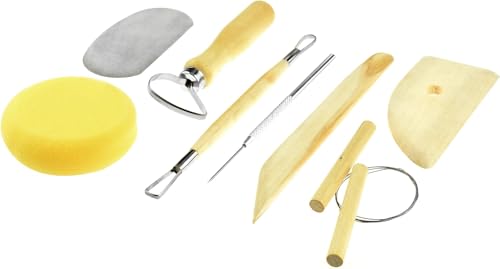
- Eight tools for cutting, shaping, carving, and smoothing
- Steel and hardwood construction
- Includes a zippered storage pouch
Best For: Beginners seeking a compact kit for clay, wax, or soap
Best for Everyday Use
Augernis 44-Piece Clay Tool Set
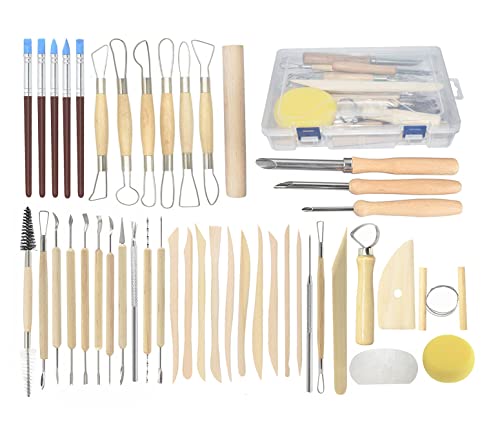
- 44 tools for carving, modeling, cutting, and smoothing
- Double-sided designs expand tool options
- Plastic case supports carrying and organization
Best For: Beginners exploring multiple clay and sculpting techniques
Essential Hand Tools

- Core tools for trimming, smoothing, and detail work
- Combines wood, metal, rubber, and sponge tools
- Lightweight design for beginners
Best For: New ceramic artists learning fundamental pottery techniques
Most Complete Kit
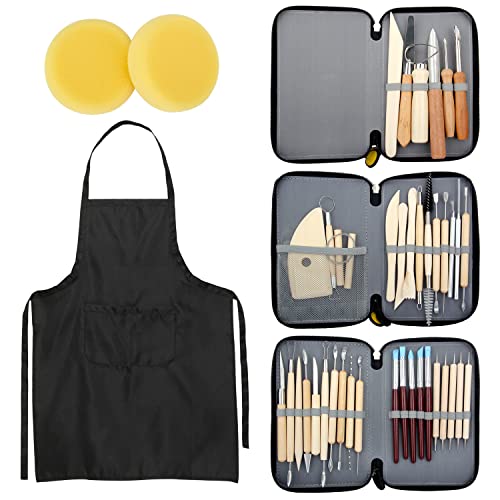
- 42 pieces cover carving, shaping, cutting, and smoothing
- Double-sided designs expand the available tool options
- Zip-up case keeps tools organized for storage or classes
Best For: Beginners seeking the broadest all-in-one selection
Best Basic Set

- Covers essential carving, cutting, trimming, and smoothing tasks
- Double-ended tools save space while adding usable shapes
- Lightweight pouch keeps the set organized
Best For: Beginners wanting a compact core tool collection
Best Versatile Set

- Supports hand building, decorating, and wheel throwing
- Includes cutters, ribs, scrapers, knives, styluses, and a sponge
- Canvas zippered case keeps the mixed tool collection together
Best For: Beginners exploring multiple pottery techniques
Most Versatile – 57-Piece Ceramic Clay Tools Set
For beginners comparing pottery tool kits for beginners, this 57-piece set offers an unusually broad selection for exploring different clay techniques. Its double-sided tools cover detailing, shaping, cutting, smoothing, embossing, and dotting, while the included plastic case keeps the collection portable.
Best For: Beginners and hobbyists who want a large, versatile assortment for pottery, polymer clay, and detailed sculpting.
Pros:
- Includes 57 tools with varied shapes and double-sided designs.
- Stainless steel tips and hardwood handles are designed for durability and grip.
- Plastic case supports storage, cleaning, and transport.
- Supports techniques ranging from carving and trimming to dotting and embossing.
Cons:
- The large assortment may be more than a beginner needs for basic projects.
- The set is heavier than the smaller alternatives at 1.4 pounds.
This is the strongest choice when variety matters most. Beginners can experiment with many techniques without immediately needing additional specialty tools.
Simple Starter Pick – Kemper 7-Piece Pottery Tool Kit
If you prefer a compact approach to pottery tool kits for beginners, the Kemper set provides seven tools without the bulk of a larger collection. Its lightweight 5.4-ounce design is practical for newcomers who want a straightforward kit for getting started.
Best For: Beginners seeking a compact, uncomplicated seven-piece pottery tool kit.
Pros:
- Focused seven-piece format is easy to manage.
- Lightweight at 5.4 ounces.
- Made specifically as a pottery tool kit.
Cons:
- Includes fewer pieces than the other kits in this roundup.
- The supplied notes do not specify individual tools or included storage.
The Kemper kit is best suited to shoppers who value simplicity over a broad range of sculpting accessories. Its limited piece count can make the first purchase less overwhelming.
Comfortable Essentials – S&E Teacher's Edition 8-Piece Set
The S&E Teacher’s Edition is a manageable option for shoppers evaluating pottery tool kits for beginners. It includes eight double-sided tools with smooth wooden handles, giving new users a focused selection for smoothing, cleaning, carving, shaping, and sculpting.
Best For: Beginners, hobbyists, and students who want comfortable wooden tools for core clay techniques.
Pros:
- Eight double-sided tools provide multiple working ends.
- Smooth wooden handles are designed for comfortable holding.
- Useful for smoothing, cleaning, carving, shaping, and sculpting.
- Suitable for beginners through professional users.
Cons:
- Offers fewer pieces than the 57-piece collection.
- The supplied notes do not mention a storage case.
This set strikes a practical balance between variety and simplicity. Its comfortable wooden handles and core tool shapes make it a sensible choice for learning foundational techniques.
Best Organized Set – U.S. Art Supply 12-Piece Kit
For beginners who want pottery tool kits for beginners that also support several clay types, this 12-piece U.S. Art Supply set covers common pottery and modeling tasks. It includes cutting, scraping, ribbon, needle, loop, rib, and sponge tools, plus a canvas zippered case for storage and transport.
Best For: Beginners, students, and hobbyists working with pottery, air-dry clay, polymer clay, Das, or plasticine.
Pros:
- Includes 12 tools for cutting, scraping, shaping, detailing, and smoothing.
- Works with several clay and modeling materials.
- Canvas zippered case keeps the tools organized and portable.
- Includes a wire clay cutter, needle tool, loop tool, ribbon tool, and sponge.
Cons:
- Has fewer pieces than the largest set in this roundup.
- The supplied details identify the set as kid-oriented, which may not suit every adult user.
This is a well-rounded middle-ground option for beginners who want more than a basic kit but do not need 57 pieces. The canvas case adds useful organization for classes, studios, or travel.
Reliable Starter Set – SE 8-Piece Pottery Tool Kit
If you’re looking for pottery tool kits for beginners, this compact SE set covers the essentials for cutting, shaping, decorating, trimming, and smoothing clay. Its steel tools and hardwood handles make it a practical choice for home projects or portable use.
Best For: Beginners who want a compact, versatile kit for clay, wax, or soap projects.
Pros:
- Includes eight tools for cutting, carving, shaping, decorating, and trimming.
- Made with steel and hardwood for durable everyday use.
- Comes with a zippered storage pouch for organization and portability.
Cons:
- Eight pieces provide fewer tool options than larger sets.
- The notes do not specify the individual tool dimensions or full pouch layout.
This is a straightforward starter kit for artists who value durability and portability over a large selection of specialty tools.
Best for Everyday Use – Augernis 44-Piece Clay Tool Set
Among pottery tool kits for beginners, this 44-piece Augernis set stands out for its broad selection of tools for carving, modeling, cutting, scraping, brushing, and smoothing. The included plastic case also makes the extensive collection easier to carry and organize.
Best For: Beginners who want many tool shapes for pottery, polymer clay, wax, and detailed hobby work.
Pros:
- Offers 44 tools for a wide range of modeling and sculpting tasks.
- Double-sided designs provide different shapes and functions.
- Includes smooth wooden handles and a portable plastic case.
- Supports fine detailing with lightweight tools measuring 4.8 to 8.2 inches.
Cons:
- The large number of pieces may be more than a beginner needs at first.
- The notes do not identify every tool included in the set.
Choose this kit if variety is your priority and you want room to explore different techniques as your skills develop.
Essential Hand Tools – 9-Piece Wooden Pottery Kit
This pottery tool kit for beginners focuses on core hand tools for trimming, smoothing, shaping, and detail work. It combines wooden tools with metal implements, a sponge, and a wire clay cutter for a balanced introduction to basic pottery tasks.
Best For: New ceramic artists who want a lightweight set of fundamental tools for shaping and finishing clay.
Pros:
- Includes a potter’s rib, modeling tool, ribbon tool, sponge, needle tool, loop tool, scraper, and wire cutter.
- Solid wood handles have smooth surfaces that are easy to clean.
- Corrosion-resistant metal components are designed to resist breaking.
- Soft rubber-tip functionality can help remove fingerprints and surface marks.
Cons:
- The supplied notes list eight named components while describing the set as nine pieces.
- It offers a more focused selection than a large multi-piece sculpting set.
This lightweight kit is a sensible starting point for basic ceramic work, especially when you prefer essential tools over an extensive assortment.
Most Complete Kit – 42-Piece Pottery Tool Set
For beginners comparing pottery tool kits for beginners, the Blisstime 42-piece set stands out for its broad selection and organized storage. It covers carving, shaping, cutting, scraping, smoothing, and modeling, making it suitable for exploring different clay techniques without buying tools individually.
Best For: Beginners who want a large all-in-one kit for home, studio, or pottery classes.
Pros:
- Includes 42 pieces for a wide range of clay tasks.
- Double-sided tools provide additional carving and modeling options.
- Stainless steel tips, wood and rubber handles, and a zip-up storage case support durability and organization.
Cons:
- Some metal parts are sharp and require careful handling.
- Tools should not be soaked for long periods and need to be dried before storage.
This is a strong choice if variety and portability matter most. Its extensive tool selection may be more than a first-time user needs, but the included case makes the collection easier to manage.
Best Basic Set – 18-Piece Clay Sculpting Kit
The 18-piece set is a practical starting point for shoppers looking at pottery tool kits for beginners. It focuses on core tools for carving, cutting, trimming, modeling, chipping, and smoothing, while its double-ended designs help provide useful functionality without taking up much storage space.
Best For: Beginners who want essential clay tools in a compact, lightweight kit.
Pros:
- Includes the basic tools needed for common pottery and sculpting tasks.
- Double-ended tools offer multiple shapes and sizes in a space-saving design.
- Stainless steel and wood construction comes with a large-capacity zippered pouch.
Cons:
- Its 18-piece selection is less extensive than larger kits.
- Sharp metal parts require care to avoid scratches.
- Tools should be dried promptly after cleaning rather than soaked for more than 1.5 hours.
Choose this kit when you prefer a focused assortment over a large collection. It offers a straightforward way to build basic skills and can also handle materials such as polymer clay, fondant, dough, wax, and soap.
Best Versatile Set – 23-Piece Ceramic Modeling Kit
This 23-piece set is a versatile option among pottery tool kits for beginners, combining hand-building and wheel-oriented accessories in a canvas zippered case. Its assortment includes cutters, ribs, scrapers, knives, loop and ribbon tools, styluses, modeling tools, carving tools, and a sponge.
Best For: Beginners and developing crafters who want tools for hand building, decorating, and wheel throwing.
Pros:
- Broad assortment supports cutting, shaping, carving, molding, trimming, and decorating.
- Includes specialized pieces such as a wire clay cutter, wood rib, fettling knife, and sponge.
- Made with carbon steel, stainless steel, wood, metal, and plastic components in a zippered canvas case.
Cons:
- The set includes many tool styles, which may be more than a complete beginner immediately needs.
- Some tools are intended for medium-duty work rather than heavy-duty clay processing.
This set is appealing for learners who want to try several pottery techniques instead of focusing on one task. Its mix of hand-building and wheel-related tools also leaves room to expand as skills develop.
How We Picked the Best Pottery Tool Kits for Beginners
We focused on starter sets that cover the core tasks beginners are most likely to perform: cutting clay, shaping surfaces, adding texture, refining edges, and creating small details. Sets were also considered for handle comfort, tool variety, storage, portability, and suitability for different clay types.
A larger piece count is not automatically better. We gave more weight to useful tool coverage and practical organization than to duplicate or highly specialized accessories. Kits that can support both simple hand-building and craft projects offer better long-term value for most new users.
Quick Comparison
| What to Compare | Best Choice For | Why It Matters |
|---|---|---|
| Compact 7–12-piece sets | First-time users | Provide essential tools without unnecessary extras |
| 18–44-piece sets | Experimenting with techniques | Offer more textures, tips, and detailing options |
| Large organized kits | Shared studios and hobby groups | Make it easier to keep many tools together |
| Wooden-handle tools | Frequent sculpting | Can provide a familiar, controlled grip |
Key Buying Factors for Pottery Tool Kits for Beginners
Tool Selection
Look for a combination of pointed modeling tools, loop or wire tools, flat shaping tools, ribs, scrapers, and cutting accessories. These cover most beginner tasks more effectively than a set filled with similar detail tips.
Material and Handle Design
Wooden handles are comfortable for many sculpting applications, while plastic handles may be lighter and easier to clean. Metal working ends should be firmly attached and free from sharp flaws that could snag clay or scratch surfaces unintentionally.
Storage and Portability
A case or compartmentalized pouch helps prevent lost tools and keeps pointed accessories safely contained. This is especially useful if you work at a kitchen table, attend classes, or move supplies between home and a studio.
Clay Compatibility
Most general-purpose kits work with air-dry clay, polymer clay, and basic ceramic clay, but the best choice depends on your projects. Confirm that tools are suitable for wet clay and clean them promptly, particularly after using clays that can harden around joints or textured surfaces.
Piece Count Versus Value
Choose a smaller set if you are learning fundamental techniques or have limited storage. A larger kit makes sense when you want to explore carving, dotting, texturing, and miniature work without buying individual tools immediately.
Who Should Buy Which Pottery Tool Kits for Beginners?
Newcomers Learning Basic Techniques
Choose a compact set with dependable shaping, cutting, and smoothing tools. It will be easier to learn what each tool does and identify which accessories you may want to upgrade later.
Craft Hobbyists Using Multiple Clay Types
A medium or large kit is more practical if you switch between polymer clay, air-dry clay, and ceramic projects. Extra detailing and texture tools expand the types of projects you can attempt.
Students, Clubs, and Shared Workspaces
Prioritize high piece counts, cases, and clearly organized storage. A comprehensive kit can give several users access to common tools, though shared tools should be cleaned and inspected regularly.
Experienced Makers Adding a Backup Set
Look for a focused kit that fills gaps in your existing supplies rather than paying for another collection of basic tools. Handle style, specialized tips, and portability may matter more than total piece count.