Choosing the right printer for sculpture prototyping comes down to detail, size, surface quality, and workflow. The best machine should capture fine texture cleanly while handling the scale of your concept work.
Below, we focus on options that suit professional modeling, iteration, and presentation-ready prototype output, from high-resolution resin systems to fast large-format FDM machines.
Best 10 Professional 3D Printer for Sculpture Prototypes Picks for 2026
Precision Resin Pick
Ultra-Precise Resin for Fine Sculpture Detail

- 161 OptiZone engine with 86,000+ zone calibration
- ±2μm Z-axis accuracy for stable layering
- Amber Screen Pro rated for 6,000+ hours
Best For: Detailed sculpture prototypes needing tight tolerances
Multicolor Large-Format Pick
Large-Format Color Prototyping Machine

- Prints up to 16 colors with multiple CFS units
- 350 × 350 × 350 mm build volume for bigger parts
- Dual AI cameras and auto-leveling add workflow support
Best For: Large multicolor sculpture mockups and presentation prototypes
Maximum-Scale Industrial Pick
Massive Industrial Prototype Builder

- Enormous 1000 × 1000 × 1000 mm build envelope
- Fully enclosed industrial FDM design
- Dual extruders with up to 350°C nozzle temperature
Best For: Oversized sculpture prototypes and full-scale models
Large-Detail Resin Pick
High-Detail Large Resin Printer
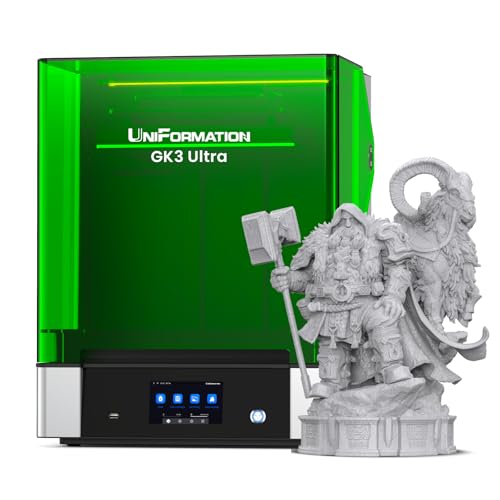
- 16K LCD with 20 × 26μm pixels for sharp detail
- 300 × 160 × 300 mm build volume for bigger models
- Heating and auto resin feeding support long prints
Best For: Large detailed sculpture prototypes and resin production runs
Multi-Color Pro Builder
Creality K2 Pro Combo for high-detail, multi-material prints
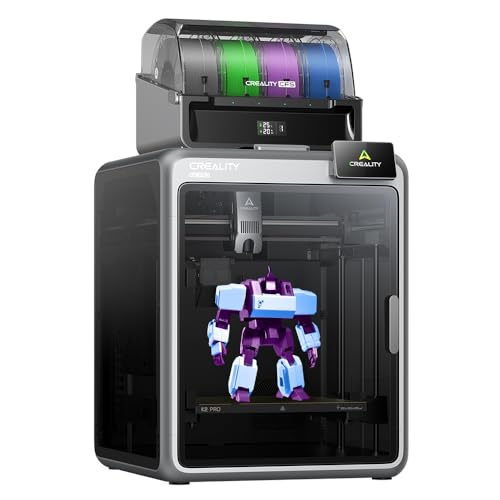
- Up to 16-color printing with CFS
- Heated chamber up to 60°C
- Dual AI cameras for print monitoring
Best For: studios and makers needing multicolor prototypes with advanced material support
Large-Format Studio Workhorse
Prusa XL 2-Toolhead for complex prototypes
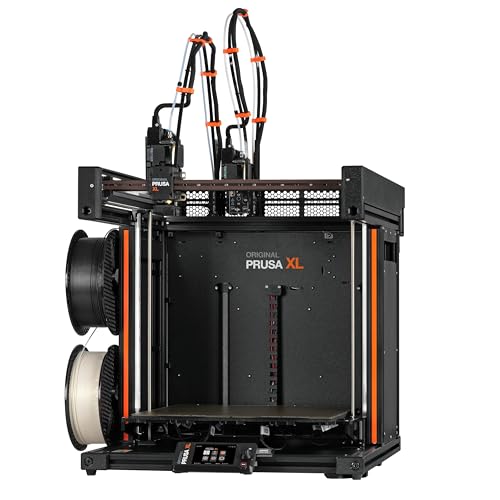
- Dual toolhead system for multi-material printing
- Large 14.17 in build volume
- Segmented heated bed helps reduce warping
Best For: studios and engineering teams that need large, multi-material prototypes
Fast High-Heat Creator
QIDI PLUS4 for durable prototype parts

- Prints up to 600 mm/s
- Chamber heating up to 65°C
- 370°C hotend supports high-temp materials
Best For: users who need fast, durable prototypes with advanced filaments
Fast Multi-Color Prototype Pick
Snapmaker U1 Multi-Color Speed Printer

- 4 toolheads with 5-second swapping
- Up to 5x less waste on color changes
- 270 x 270 x 270 mm build volume
Best For: Fast multi-color sculpture prototypes and mixed-material models
Large-Format Production Pick
Sovol SV08 MAX Large-CoreXY Printer
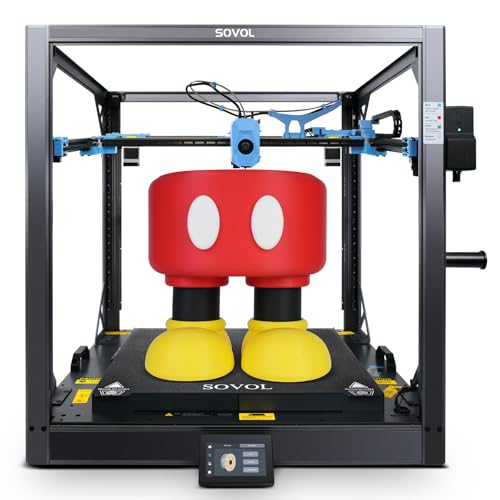
- Up to 500 x 500 x 500 mm build volume
- 700 mm/s speed with CoreXY motion
- 300°C hotend for wide material support
Best For: Oversized sculpture prototypes and full-scale workshop prints
Thermal-Control Pro Pick
QIDI Max4 Combo Heated Chamber Printer
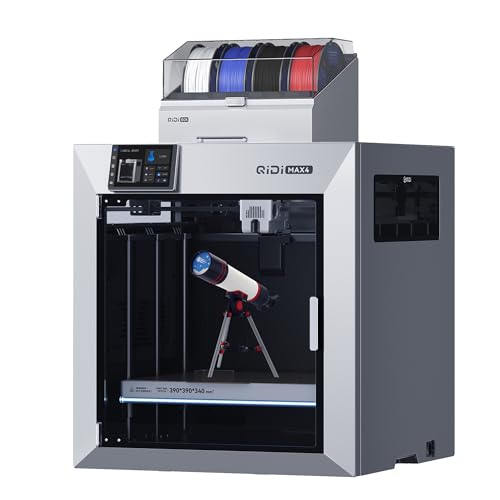
- 390 x 390 x 340 mm build volume
- 65°C heated chamber for harder materials
- Up to 16 colors with QIDI BOX
Best For: Large, accurate sculpture prototypes with advanced materials
Precision Resin Pick – Ultra-Precise Resin for Fine Sculpture Detail
If you need a professional 3D printer for sculpture prototypes, the Reflex 2 is built for crisp surface quality and tight dimensional control. Its 161 OptiZone Light Engine, 86,000+ zone calibration, and C5 Grade ±2μm Z-axis module are aimed at producing flat, consistent layers with fewer visible artifacts.
Best For: Studios and labs that need highly detailed resin prototypes, tight tolerances, and repeatable finishing quality.
Pros:
- 161 OptiZone Light Engine with 86,000+ zone calibration for uniform exposure
- C5 Grade Z-axis module with ±2μm repeat positioning accuracy
- Die-cast unibody base helps reduce vibration and improve stability
- Amber Screen Pro is rated for 6,000+ hours of use
Cons:
- Resin workflow is better suited to detailed prototypes than very large sculptures
- Optional temperature control may be needed for some high-viscosity materials
Overall, this model focuses more on precision and surface quality than sheer build size, which makes it a strong choice when sculpture prototypes need fine features and clean sidewalls. It fits best in a professional workflow where consistency matters more than speed or volume.
Multicolor Large-Format Pick – Large-Format Color Prototyping Machine
The K2 Plus Combo is a practical option if your professional 3D printer for sculpture prototypes needs color capability and a large build area. With support for up to 16 colors through multiple CFS units, plus a 350 × 350 × 350 mm volume, it is built for bigger models and multicolor presentation pieces.
Best For: Large sculpture mockups, presentation prototypes, and shops that want multicolor printing without separate paint work.
Pros:
- Prints in up to 16 colors with multiple CFS units
- Large 350 × 350 × 350 mm build volume
- 600 mm/s max speed with 30,000 mm/s² acceleration
- Dual AI cameras help monitor failures and assist with real-time oversight
Cons:
- FDM finish will not match the fine surface detail of a resin printer
- Multicolor and heated-chamber features add setup complexity
For sculptural prototypes that need volume, speed, and visual impact, this machine offers a strong mix of automation and size. It is less about ultra-fine surface texture and more about building large, complex concepts efficiently.
Maximum-Scale Industrial Pick – Massive Industrial Prototype Builder
Wietech 3D Fast Printing Speed Industrial Grade 3D Printers MD-1000D - MINGDA Technology Co
Check Price On AmazonFor a professional 3D printer for sculpture prototypes at very large scale, the MD-1000D is built around an enormous 1000 × 1000 × 1000 mm build envelope. It is an enclosed industrial FDM machine intended for full-sized large parts, molds, models, fixtures, and functional prototypes.
Best For: Huge sculpture prototypes, full-scale models, and industrial shops that need maximum build volume.
Pros:
- Massive 1000 × 1000 × 1000 mm print volume
- Fully enclosed industrial design for large parts
- HIWIN linear guides and custom CNC parts support precision
- Dual extruders and up to 350°C nozzle temperature expand material options
Cons:
- Extremely large machine footprint and very heavy at 1113 pounds
- FDM process is better for big forms than ultra-fine sculptural detail
This is the most scale-focused machine in the group, and it makes sense when the prototype itself is the priority. If your workflow centers on oversized sculptural forms rather than fine ornamental detail, the MD-1000D delivers unmatched capacity.
Large-Detail Resin Pick – High-Detail Large Resin Printer
The GK3 Ultra is aimed at users who want a professional 3D printer for sculpture prototypes with both detail and capacity. Its 16K LCD, 300 × 160 × 300 mm build volume, and stable Z-axis architecture make it a strong fit for larger resin models that still need crisp surface definition.
Best For: Large resin sculpture prototypes, multi-part production runs, and studios printing in colder environments.
Pros:
- 16K LCD with 20 × 26μm pixel size for sharp detail
- Large 300 × 160 × 300 mm build volume
- KK60 module and ±0.003mm repeat positioning accuracy support stable printing
- Built-in heating and auto resin feeding help long prints run smoothly
Cons:
- Resin handling and auto-feeding add workflow steps compared with simpler printers
- Large resin prints still require careful cleanup and post-processing
Among large-format resin options, this one balances size, detail, and convenience features well. It is especially appealing if you want sculpture prototypes with fine texture and a cleaner long-print workflow.
Multi-Color Pro Builder – Creality K2 Pro Combo for high-detail, multi-material prints
If you need a professional 3D printer for sculpture prototypes that can handle both visual appeal and tougher engineering materials, the Creality K2 Pro Combo is built for that mixed workflow. Its multicolor system, fast CoreXY-style performance, and heated chamber make it a strong fit for prototypes that need presentation-ready finishes and reliable structural output.
Best For: studios and makers who want multicolor prototype models, heated-chamber material support, and fast turnaround.
Pros:
- Supports up to 16 colors through the CFS system for more presentation-ready sculpture prototypes.
- Dual AI cameras help monitor nozzle flow and catch print failures like spaghetti or empty-bed issues.
- Active chamber heating up to 60°C helps reduce warping with materials like ASA and PPA.
- Hardened steel nozzle and direct drive extrusion are suited to abrasive engineering filaments.
Cons:
- Multicolor workflow adds complexity compared with a single-material machine.
- Size and weight suggest it is better suited to a dedicated workspace.
- Some users may not need the advanced chamber and filament-management features for simple models.
Overall, this is a capable option if your sculpture prototypes need color, speed, and support for advanced materials in one platform. It is especially appealing when the prototype is both a visual piece and a functional test print.
Large-Format Studio Workhorse – Prusa XL 2-Toolhead for complex prototypes
The Original Prusa XL 2-Toolhead is a professional 3D printer for sculpture prototypes when you need large-scale output and multi-material flexibility. Its dual tool system, CoreXY motion, and segmented heated bed are designed for complex prints that must stay accurate across a wide build area.
Best For: engineering teams, studios, and advanced makers printing large prototypes with multiple materials or soluble supports.
Pros:
- Dual toolhead system supports seamless material switching for complex prints and soluble supports.
- Large 14.17 × 14.17 × 14.17 in build volume suits bigger sculpture prototype parts.
- Segmented heated bed helps reduce warping and improve first-layer adhesion on large prints.
- CoreXY motion provides stable, accurate printing for demanding multi-material workflows.
Cons:
- Larger footprint and 63.4 lb weight make it less portable than smaller desktop printers.
- Transport packaging requires some parts to be installed after delivery.
- Its advanced multi-tool setup may be more machine than casual users need.
For sculpture prototyping at a serious scale, the XL stands out for build size, material switching, and workflow support. It is a strong choice when accuracy and reliability matter more than keeping the printer compact.
Fast High-Heat Creator – QIDI PLUS4 for durable prototype parts
If your sculpture prototypes need speed, heat management, and support for demanding materials, the QIDI PLUS4 is a practical professional 3D printer to consider. It combines a large build area, active chamber heating, and a high-temperature hotend to handle more technical prototype materials with less warping risk.
Best For: users who want a fast, easy-to-operate printer for larger prototype parts in high-temp filaments.
Pros:
- Print speed up to 600 mm/s for faster prototype turnaround.
- Active chamber heating up to 65°C helps improve print quality on high-temperature filaments.
- 370°C hotend supports materials including PPS-CF, PPA-CF/GF, ABS, ASA, PC, and PA.
- Fully automatic leveling, remote monitoring, and filament break detection make operation easier.
Cons:
- Multi-color printing depends on a separate QIDI BOX accessory that is not included.
- Its strengths are focused more on performance than on decorative multicolor output.
- The printer is still a substantial machine, so it needs dedicated space.
For prototype work that prioritizes speed, thermal stability, and wide material compatibility, the PLUS4 is easy to justify. It is especially useful when you want a fast first version before refining a sculpture design.
Fast Multi-Color Prototype Pick – Snapmaker U1 Multi-Color Speed Printer
If you want a professional 3D printer for sculpture prototypes that can move from concept to polished multi-color presentation pieces quickly, the Snapmaker U1 is built around speed and material efficiency. Its four toolheads keep filaments preloaded, so color and material changes happen in about 5 seconds instead of lengthy purge cycles.
Best For: Designers and professionals who need fast multi-color prototype prints with minimal waste.
Pros:
- 4-toolhead SnapSwap system cuts filament change time to about 5 seconds.
- Up to 5x less filament waste and up to 5x faster multi-color printing.
- Supports multi-material combinations like PETG+TPU and PLA+TPU for mixed-function prototypes.
- Smart calibration, vibration compensation, and automatic first-layer tuning help with reliable output.
Cons:
- Build volume is smaller than the largest large-format competitors at 270 x 270 x 270 mm.
- Best results will depend on dialing in multi-material workflows and slicer setup.
For sculpture prototypes that need color, material contrast, and a clean workflow, the U1 stands out more for efficiency than sheer size. It is a strong fit when presentation quality and reduced waste matter as much as print speed.
Large-Format Production Pick – Sovol SV08 MAX Large-CoreXY Printer
For a professional 3D printer for sculpture prototypes that needs to handle oversized forms without giving up speed, the Sovol SV08 MAX is aimed squarely at large-format production. Its huge build space and high-speed CoreXY motion make it useful for full-scale mockups, oversized props, and industrial-size concept pieces.
Best For: Makers and studios printing large sculpture prototypes, props, and full-scale parts.
Pros:
- Massive up to 500 x 500 x 500 mm build volume for large one-piece prints.
- Up to 700 mm/s printing speed and 40,000 mm/s² acceleration.
- Eddy current sensor leveling and pressure-sensing calibration support first-layer accuracy.
- 300°C hotend handles a broad material range, including PLA, TPU, PETG, ABS, ASA, and nylon composites.
Cons:
- Very large and heavy machine, so it needs real workshop space.
- Heated chamber support is only reserved for a future add-on module.
The SV08 MAX is built for users who care more about scale and throughput than compact convenience. If your sculpture prototypes are too large for standard machines, this is the most ambitious option in the group.
Thermal-Control Pro Pick – QIDI Max4 Combo Heated Chamber Printer
If your priority is a professional 3D printer for sculpture prototypes with strong thermal control and high surface quality, the QIDI Max4 Combo is a compelling choice. Its 65°C heated chamber, large build volume, and multi-material expansion make it well suited to bigger concept models and detailed parts that benefit from stable printing conditions.
Best For: Professionals printing large, accurate sculpture prototypes with advanced materials.
Pros:
- 390 x 390 x 340 mm build volume handles large prototypes in one piece.
- 65°C active heated chamber helps reduce warping on demanding materials.
- Up to 800 mm/s speed with closed-loop X/Y motors for fast, stable printing.
- QIDI BOX support enables up to 16-color and multi-material printing.
Cons:
- Polar Cooler is not included and must be purchased separately.
- Multi-color capability depends on pairing with the optional QIDI BOX.
For sculpture prototypes that need controlled heat, strong first-layer adhesion, and a path to advanced materials, the Max4 Combo is very capable. It is especially appealing when you want one machine to cover both large single-piece prints and future multi-color workflows.
How We Picked the Best Professional 3D Printer for Sculpture Prototypes
For a Professional 3D Printer for Sculpture Prototypes, we prioritized print quality, reliable motion control, usable build volume, material flexibility, and features that reduce setup time and failed prints. We also looked for machines that can support both rough form studies and refined presentation prototypes.
Quick Comparison
Resin printers are usually the best choice for fine surface detail, crisp edges, and miniature texture capture. Large-format FDM printers are better when you need bigger maquettes, faster concept iteration, or structural prototypes. Multi-toolhead and multicolor systems can also help when you want segmented assemblies, material contrasts, or faster production with less waste.
Key Buying Factors for a Professional 3D Printer for Sculpture Prototypes
Detail and Surface Finish
For sculptural work, layer visibility and edge fidelity matter. High-resolution resin machines excel at skin, fabric, organic forms, and intricate ornamentation. If you need post-processing-friendly surfaces, look for stable Z-axis control and a consistent light engine or extrusion system.
Build Volume
Large sculptures and scaled maquettes demand room to print bigger sections with fewer seams. Check the usable build area, not just the headline size, especially if you plan to print parts in one piece or reduce assembly time.
Speed Without Losing Accuracy
Fast printers are useful for iterative modeling, but speed only helps if dimensions stay dependable. Look for systems with rigid frames, advanced leveling, and chamber control if you work with tall forms or engineering-grade filaments.
Material and Workflow Fit
Choose resin for fine detail and FDM for large, durable, or cost-conscious prototypes. Multi-material or toolchanging printers are worth considering if your sculpture pipeline uses supports, internal structures, or mixed materials for presentation models.
Who Should Buy Which Professional 3D Printer for Sculpture Prototypes?
Pick resin if your priority is highly detailed sculptural surfaces and display-quality prototypes. Choose large-format FDM if you need bigger concept models, faster turnaround, or stronger parts for handling and fit checks. Select a multi-toolhead or multicolor printer if your workflow benefits from reduced waste, faster material changes, or more complex prototype builds.
If your studio needs one machine to cover most tasks, the best all-around choice is usually the printer that balances resolution, chamber control, and dependable automation rather than chasing speed alone.