The right tufting frame keeps fabric evenly stretched, protects your hands and tools, and makes rug making more consistent. Whether you are starting with a compact tabletop setup or building larger wall art and floor rugs, frame size and construction matter.
These 10 options cover wooden and aluminum designs, compact desktop kits, adjustable frames, and extra-large floor-standing setups. Use the guide below to match frame dimensions, mounting style, and included accessories to your workspace and projects.
Best 10 Wooden Tufting Frames Picks for 2026
Best Space-Saving Pick

- Angled tacks simplify cloth installation
- Anti-puncture strips improve handling safety
- Compact pine frame includes C-clamps
Best For: Compact tabletop rug and textile projects
Best Expandable Option
Cozytuft Professional Aluminum Frame

- Expands from 45 to 67 inches
- Warp-resistant aluminum construction
- Protective guards and drum-tight tension system
Best For: Large, varied, and professional rug projects
Best Adjustable Frame
Cozytuft Aluminum Tabletop Frame

- Adjusts from 1 to 35 inches wide
- Guarded tack strips support even tension
- Clamps securely to a tabletop
Best For: Flexible, space-saving tabletop tufting
Best Traditional Wooden Frame
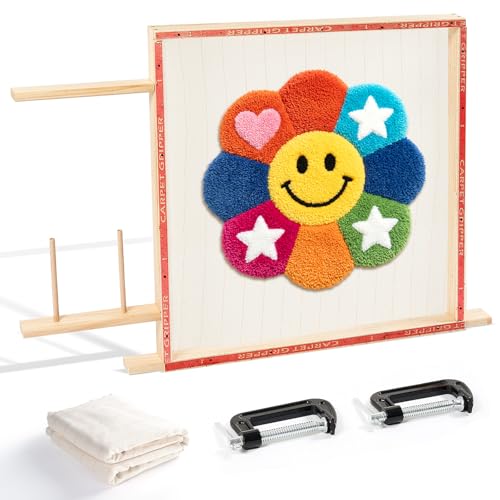
- Smooth, high-density wooden boards
- Includes G-clamps and tufting cloth
- Supports multiple fiber-art techniques
Best For: Tabletop rug making and beginner projects
Best Extra-Large Frame
Kerty 70-Inch Aluminum Tufting Frame

- Supports work up to 72 by 59 inches
- Adjustable upper and lower sections
- Vertical design is built for stability
Best For: Large rugs, blankets, and oversized textile projects
Best Adjustable Pick
Jangker 27.5-Inch Rug Tufting Frame

- Adjustable tension system
- Smooth handcrafted wood
- 27.5-inch working area
Best For: Medium-sized rug, upholstery, and textile projects
Best for Oversized Rugs
Large Floor-Standing Tufting Frame

- 78.7-by-59-inch working area
- Solid polished pine construction
- Includes cloth, tack strips, and hardware
Best For: Oversized rugs and spacious studio projects
Best Space-Saving Pick – Cozytuft 29.5" Tabletop Frame
If you want wooden tufting frames for a compact workspace, this 29.5-inch Cozytuft model is designed for tabletop rug making. Its angled tack system, anti-puncture strips, and included C-clamps aim to simplify setup while keeping the cloth taut.
Best For: Beginners and experienced crafters who need a space-saving frame for rugs, tapestries, embroidery, or punch-needle projects.
Pros:
- Uniformly angled tacks make installation direction easy to identify.
- Anti-puncture strips cover sharp tips and help prevent fabric slippage.
- New Zealand pine is sanded, knot-free, and designed to resist cracking and warping.
- Six corner brackets and two C-clamps provide a secure tabletop setup.
Cons:
- The 29.5-inch size is less suitable for especially large rugs.
- Its wooden construction may require more care around humidity than an aluminum frame.
This is a practical choice when portability and straightforward assembly matter more than maximum project size. The protective tack design is particularly useful for newcomers who want a safer introduction to tabletop tufting.
Best Expandable Option – Cozytuft Professional Aluminum Frame
Among wooden tufting frames and larger studio alternatives, this adjustable aluminum model stands out for its expandable format. It adjusts from 45 to 67 inches, offering more flexibility for projects ranging from small pieces to large area rugs.
Best For: Serious hobbyists and professional rug makers who need a large, adjustable frame for varied project sizes.
Pros:
- Modular design adjusts from 45 to 67 inches.
- Aluminum alloy is designed to resist warping and support high-speed tufting.
- Full-length pin guards and corner caps cover sharp grippers.
- Dual back braces and metal pin bars help maintain drum-tight fabric tension.
Cons:
- It is a larger investment in workspace than a compact tabletop wooden frame.
- Assembly may take some attention despite the included instructions and video guide.
This frame is a strong alternative if you have outgrown smaller wooden tufting frames. Its adjustable size and rigid aluminum construction make it better suited to changing project demands and larger rug work.
Best Large Wooden Frame – BESGEER 35.5" Rug Tufting Frame
This BESGEER frame is one of the more substantial wooden tufting frames for tabletop use, measuring 35.5 by 35.5 inches. It includes assembly hardware and two 3-inch G-clamps, giving you a ready-to-use foundation for rug making and other textile crafts.
Best For: Crafters who want a roomy wooden tabletop frame for rugs, tapestries, punch-needle work, embroidery, or sewing.
Pros:
- 35.5-inch square working area accommodates a variety of fabric sizes.
- Included G-clamps attach the frame to many standard tables.
- Polished high-density wood has a smooth surface for comfortable handling.
- Nail strips are designed to hold the fabric securely.
Cons:
- The larger footprint needs more table and storage space.
- The notes do not specify protective covers for the nail strips.
Choose this model when you want a larger wooden platform without moving to a freestanding studio frame. Its included clamps and broad square format make it a versatile choice for mixed textile projects.
Best Protected Nail Design – 31.5" Wooden Tabletop Frame
This 31.5-inch wooden tabletop frame offers a traditional nail structure with added rubber strips for protection. For shoppers comparing wooden tufting frames, it combines a manageable square size with accessories and instructions intended to make installation approachable.
Best For: Tufting enthusiasts who want a medium-size wooden frame with covered nail edges for tabletop use.
Pros:
- Rubber strips help shield users from nail contact.
- Rubber protection also helps hold fabric in place.
- Dense wood is polished smooth and designed for long-term use.
- Includes accessories, instructions, and access to installation videos.
Cons:
- The traditional nail system requires careful installation with all nails facing outward.
- The 31.5-inch format may not suit very large rugs.
- Its 10-pound weight is worth considering for frequent repositioning.
This frame is a sensible middle-ground option for tabletop tufting. Its rubber protection addresses a common concern with nail-based frames, while the 3-inch clamp compatibility keeps it suitable for many standard tables.
Best Adjustable Frame – Cozytuft Aluminum Tabletop Frame
If you need wooden tufting frames but want a lighter, adjustable alternative, the Cozytuft aluminum tabletop frame offers a flexible workspace for small samples through medium-sized projects. Its clamp-on design helps save floor space while keeping the fabric taut.
Best For: Crafters who want an adjustable, space-saving frame for coasters, wall hangings, samples, and medium pillow covers.
Pros:
- Adjusts from 1 to 35 inches wide for different project sizes.
- Guarded tack strips help maintain drum-tight fabric tension.
- Aluminum construction resists warping and moisture.
- G-clamps provide a stable tabletop setup without needing floor space.
Cons:
- Requires a table edge suitable for the included G-clamps.
- Assembly uses screws and a hex key rather than tool-free knobs.
The Cozytuft is a practical pick when adjustability and compact storage matter more than having a traditional fixed wooden frame. Its protective features and aluminum build also make it appealing for shared or family spaces.
Best Traditional Wooden Frame – BESGEER Rug Tufting Frame
Among wooden tufting frames, the BESGEER stands out as a practical tabletop option with a traditional wood construction. It includes assembly hardware, G-clamps, tufting cloth, and an instruction manual, making it a convenient starting point for rug-making projects.
Best For: Beginners and hobbyists looking for a traditional wooden frame for rugs, punch needle, embroidery, sewing, or tapestry work.
Pros:
- High-density wooden boards have a polished, smooth surface.
- Two 3-inch G-clamps secure the frame to a table edge.
- Nail strips hold tufting cloth in place.
- Designed for tufting guns, punch needles, sewing, embroidery, and tapestry.
Cons:
- The approximately 29.5-by-29.5-inch size may limit larger rug projects.
- Wooden construction is less adjustable than a resizing frame.
The BESGEER is a straightforward choice if you prefer the familiar feel of wood and want a kit with key accessories included. Its practical size suits tabletop crafting, though larger designs may require a bigger frame.
Best Extra-Large Frame – Kerty 70-Inch Aluminum Tufting Frame
For projects that outgrow standard wooden tufting frames, the Kerty aluminum frame provides a substantially larger working area. Its adjustable upper and lower sections accommodate cloth sizes up to 72 by 59 inches, while the vertical design is intended to stay steady during use.
Best For: Experienced crafters and beginners who need a large, floor-standing setup for rugs, blankets, or other oversized textile projects.
Pros:
- Offers a maximum working size of 72 by 59 inches.
- Adjustable upper and lower sections accommodate different cloth sizes.
- Aluminum construction is designed for durability and stability.
- Suitable for tufting, punch needle, embroidery, sewing, and blanket making.
Cons:
- At 26.3 pounds, it is less portable than a small tabletop frame.
- Its large vertical footprint requires more dedicated workspace.
- Assembly is required, even though accessories and instructions are included.
The Kerty is the strongest fit when project scale is the deciding factor. It trades compactness for a broad, adjustable work surface and a stable vertical format suited to large textile pieces.
Best Adjustable Pick – Jangker 27.5-Inch Rug Tufting Frame
If you want wooden tufting frames with a manageable working area, the Jangker model offers a 27.5-inch rectangular surface for rugs, tapestries, upholstery, and other textile projects. Its adjustable tension system and polished wooden construction make it a practical option for both beginners and experienced makers.
Best For: DIY crafters and furniture makers who need an adjustable, medium-sized frame for rugs, upholstery, or textile work.
Pros:
- Adjustable tension system helps support consistent tufting patterns.
- Handcrafted wood construction has a smooth, manually polished surface.
- Designed for straightforward assembly and multiple applications, including tufting guns and punch needles.
- Offers a 27.5-inch working area for varied project sizes.
Cons:
- The rectangular working area may be limiting for oversized rugs.
- Its listed weight of 5.66 kg may make frequent repositioning less convenient.
The Jangker is a balanced choice among wooden tufting frames when adjustable tension and simple setup matter more than maximum working size. It is especially suitable for home workshops and medium-scale projects.
Best Ergonomic Option – XDTIME 31.5-Inch Tufting Frame
Among wooden tufting frames, the XDTIME stands out for its solid hardwood construction, adjustable corner brace, and included table-clamping setup. The 31.5-inch format provides more room than compact frames while remaining suitable for tabletop crafting or a freestanding floor arrangement.
Best For: Makers who want a sturdy, adjustable frame for extended tufting sessions and projects ranging from wall hangings to larger rugs.
Pros:
- Thick, moisture-resistant hardwood is designed to resist warping and tension deformation.
- Adjustable L-shaped corner brace is intended to support a more comfortable working posture.
- Pre-drilled parts, connectors, and included G-clamps enable tool-free assembly.
- Compatible with tufting guns, punch needles, and manual textile tools.
Cons:
- The listed product dimensions are larger than the 31.5-inch working-size description, so available workspace should be checked carefully.
- At 10.13 pounds, it is less portable than lighter frame options.
The XDTIME is a strong fit if stability and working comfort are priorities. Its clamping hardware and adjustable design add flexibility, while the hardwood frame is built for repeated use.
Best for Oversized Rugs – Large Floor-Standing Tufting Frame
For large-scale work, these wooden tufting frames provide a spacious 78.7-by-59-inch working area in a floor-standing format. This kit includes tufting cloth, carpet tack strips, instructions, and hardware, making it a practical starting point for oversized rugs and detailed textile projects.
Best For: Beginners, studios, and experienced crafters creating oversized rugs, large patterns, tapestries, or other floor-based textile projects.
Pros:
- Generous 78.7-by-59-inch area accommodates oversized rugs and detailed designs.
- Solid pine construction has a smooth, polished, burr-free surface.
- Includes tufting cloth, carpet tack strips, instructions, and installation hardware.
- Supports rug tufting, punch needle, tapestry, embroidery, and sewing projects.
Cons:
- Its very large footprint requires substantial floor or studio space.
- As a floor-standing frame, it is less convenient for compact work areas or frequent storage.
This is the most suitable choice for makers who need maximum working space rather than portability. The included materials and one-year manufacturer warranty add practical value for larger home or studio projects.
How We Picked These Wooden Tufting Frames
We focused on the factors that most affect day-to-day tufting: frame dimensions, material, adjustability, fabric retention, workspace requirements, and included accessories. The selection includes compact wooden frames for beginners, tabletop models for small studios, and larger adjustable or floor-standing frames for oversized rugs.
Because product bundles can vary, check the current listing for the exact tufting cloth, tack strips, rubber or anti-puncture protection, stand components, and hardware included before ordering.
Quick Comparison
| Frame type | Best for | Main advantage | Watch for |
|---|---|---|---|
| Small wooden tabletop | Beginners and small designs | Compact, accessible, and usually simple to assemble | Limited rug size and table-space requirements |
| Medium tabletop | Regular hobby projects | Good balance of working area and portability | May still require a sturdy table or stand |
| Adjustable aluminum | Frequent makers | Flexible sizing and durable construction | Often costs more than basic wood frames |
| Large floor-standing | Oversized rugs and wall art | More working area and improved access | Needs significant floor space and storage room |
Key Buying Factors for Wooden Tufting Frames
Size and Project Scale
Measure both your intended rug and the available workspace. Frames around 27.5 to 35.5 inches suit small and medium projects, while extra-large models are better for broad designs. A larger frame is not automatically better if it makes fabric loading, movement, or storage difficult.
Frame Material and Rigidity
Wooden frames are popular for their straightforward design and accessible price. Look for solid joints and a frame that stays square under fabric tension. Aluminum frames can be lighter, more adjustable, and easier to reconfigure, which is useful when project sizes change frequently.
Fabric Retention and Protection
Carpet tack strips, rubber strips, and anti-puncture channels help hold tufting cloth securely while reducing contact with sharp points. Even with protective features, stretch the cloth evenly and inspect the frame before each session.
Mounting and Ergonomics
Tabletop frames need a stable, appropriately sized surface and may benefit from clamps or a dedicated stand. Floor-standing designs can improve access around larger pieces, but confirm the height, footprint, and adjustment range before buying.
Included Accessories
A frame may include tufting cloth, tack strips, a table stand, or mounting hardware, but bundles differ. If you are new to tufting, an all-in-one kit can simplify setup; experienced makers may prefer buying a frame alone and selecting their own cloth.
Who Should Buy Which Wooden Tufting Frames?
Choose a Compact Wooden Frame If You Are Starting Out
Small wooden tabletop models are a practical choice for learning basic techniques, making patches, and creating smaller rugs without committing to a permanent studio.
Choose a Medium Tabletop Frame for Everyday Hobby Use
A roughly 31.5- to 35.5-inch frame offers more design space while remaining manageable for bedrooms, craft rooms, and shared work areas.
Choose Adjustable Aluminum for Versatility
If you expect to work on different sizes or tuft regularly, an adjustable aluminum design can provide a more adaptable long-term setup.
Choose a Large Floor-Standing Frame for Ambitious Projects
Large adjustable frames make the most sense for full-size rugs, wall hangings, and makers with dedicated floor space. Before purchasing, confirm that your ceiling height, walking clearance, and storage arrangements can accommodate it.