Falling in Art Wood Drafting Table Easel review shoppers usually want one thing: a compact drawing surface that feels sturdy, adjusts easily, and does not hog desk space.
This one aims squarely at that need.
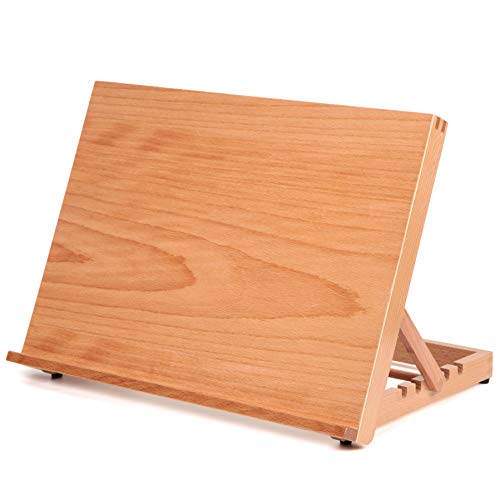
If you want a portable tabletop easel for sketching, drafting, and small-format artwork, the Falling in Art Wood Drafting Table Easel is a smart, practical option. It combines beech wood construction, five angle settings, and a lightweight body that makes it especially appealing for students, hobby artists, and anyone building a flexible home studio.
Falling in Art Easel Review Summary
Falling in Art Wood Drafting Table Easel is best understood as a compact, no-fuss drawing board with just enough refinement to make daily art work easier.
It is not trying to be a giant studio easel or a heavy display stand; instead, it focuses on portability, simple angle adjustment, and a stable tabletop footprint that suits sketching, drafting, lettering, and paper-based illustration.
For buyers who want a wood drafting table easel that is ready to use immediately, this model has a strong practical appeal.
The European beech wood build gives it a more substantial feel than many flimsy plastic or ultra-light metal alternatives, while the smooth surface and non-slip rubber feet help it behave like a real working tool rather than just a display prop.
What makes it especially attractive is the balance of convenience and usability.
It weighs just 1.9 pounds, requires no assembly, and offers five positions from flat to a steep 68-degree angle.
That is enough flexibility for most drawing workflows, from low-angle sketching to more upright drafting and presentation-style work.
Quick Scorecard
| Category | Score | Why It Matters |
|---|---|---|
| Build quality | 8.0/10 | European beech wood construction feels durable and strong for regular use. |
| Portability | 9.0/10 | At 1.9 lb with rubber feet, it is easy to move between rooms or workspaces. |
| Adjustability | 8.0/10 | Five angle settings give useful flexibility for sketching and drafting comfort. |
| Working surface size | 8.0/10 | 16 1/2 x 12 1/8 inches is practical for standard papers and smaller surfaces. |
| Stability | 7.0/10 | Stable for a compact tabletop design, though not a heavy-duty studio easel. |
| Setup convenience | 9.0/10 | No assembly is required, so it is ready out of the box. |
Bottom line: this is a well-thought-out tabletop drafting board for artists who value portability, quick setup, and a clean wood design over oversized studio features.
Key Features and Specifications of Falling in Art Easel
The specs are straightforward, but they matter because the usefulness of a tabletop easel is defined by size, angle range, and material quality more than by flashy extras.
| Brand | Falling in Art |
|---|---|
| Model | Extra large |
| Model Number | CT0122 |
| Manufacturer Part Number | CT0122 |
| UPC | 709327263500 |
| Material | Beech wood |
| Color | Brown |
| Item Weight | 1.9 pounds |
| Product Dimensions | 10.83" D x 16.5" W x 12.12" H |
| Board Size | 16 1/2" L x 12 1/8" W |
| Easel Type | Single mast easel |
| Required Assembly | No |
| Unit Count | 1 |
- Material: European beech wood, chosen for a sturdier feel and better long-term durability than many lightweight alternatives.
- Angle range: 5 settings, from flat up to a 68-degree drawing angle.
- Surface: Smooth board designed for sketching, drafting, and presentation-style art tasks.
- Footing: Non-slip rubber feet help it stay in place on desks and tables.
- Format: Compact tabletop drafting easel and drawing board, not a full standing studio easel.
Those details make the product easy to evaluate.
If you need a portable beech wood drafting board that can handle standard paper sizes and small canvases, the dimensions are practical.
If you need a tall floor easel for large display work, the format is not the right match.
Pros and Cons of Falling in Art Easel
Falling in Art Wood Drafting Table Easel pros and cons are fairly clear once you look at how the board is built and what it is meant to do.
It is a focused product, and that focus helps in some ways while limiting it in others.
Pros
- Durable beech wood build: The European beech material gives it a more premium, dependable feel than many budget tabletop easels.
- Very portable: At 1.9 pounds, it is easy to carry, reposition, or store.
- Five useful angles: The adjustment range supports different drawing habits and reduces neck strain.
- No assembly required: This is a real benefit for buyers who want to open the box and start working immediately.
- Good for standard art tasks: It is well suited to sketching, drafting, and smaller canvas or panel work.
- Rubber feet improve desk use: The non-slip base is a meaningful design choice for tabletop stability.
Cons
- Not a full studio easel: Artists wanting a large floor-standing setup should look elsewhere.
- Compact surface area: The 16 1/2 x 12 1/8 inch board is useful, but not ideal for oversized layouts.
- Single-mast design has limits: It is simpler and more portable, but not as versatile as heavier studio easels.
- Best for drawing, not display: It is more of a work surface than a presentation stand.
Verdict on the pros and cons: the strengths are practical and immediate, while the drawbacks mostly come from the product’s compact size rather than poor execution.
Who Should Buy Falling in Art Easel?
This easel fits buyers who want a small, reliable, and portable drawing station.
It is especially useful for people who work at a desk, kitchen table, studio bench, or classroom art station and need something that can be stored away easily.
- Students who need a simple drafting board for assignments, figure drawing, or practice sketches.
- Hobby artists who want a wood tabletop easel without the bulk of a floor model.
- Home users building a compact art corner with limited space.
- Traveling or mobile creators who want a lightweight board that can move from room to room.
- Artists working with paper, panels, or small canvases who want angle flexibility.
Who should skip it? Artists who regularly work on large canvases, need height adjustment, or want a heavy-duty standing easel will likely find this tabletop format too limited.
Design and Usability: Why the Beech Wood Build Matters
One of the most important buying decisions in this category is material choice.
Beech wood is a sensible option because it tends to feel more rigid and dependable than ultra-light synthetic alternatives.
That matters when you are leaning on the board, adjusting the angle, or using it daily for sketch work.
The brown finish is understated and studio-friendly.
It does not try to look flashy, which is often a plus for artists who care more about function than appearance.
The smooth board surface also helps with paper handling and makes the easel feel more refined than a rough utility board.
The single-mast design is worth noting because it affects how the product behaves.
It keeps the easel compact and portable, but it also means this is fundamentally a simple tabletop solution.
That is a reasonable tradeoff for the buyers this product targets.
Practical takeaway: if your priority is a clean, stable, easy-to-move work surface for drawing, the design choices make sense.
If you want a more mechanical or studio-heavy setup, you may outgrow it quickly.
How the 5 Angle Settings Change the Drawing Experience
The angle range is one of the strongest reasons to consider this product.
A flat setting is useful for sketching, tracing, and some mixed-media tasks, while a lower incline can improve comfort for pencil work and writing.
The steeper positions help when you want better posture and less glare, especially under bright indoor lighting.
Because the board adjusts up to 68 degrees, it gives enough range for common drafting workflows without becoming overly complicated.
That is ideal for buyers who do not want to fiddle with a complex mechanism every time they change tasks.
In real use, this means less neck strain and better control during longer sessions.
For artists, that practical comfort often matters more than a long list of advanced features.
Best Paper, Canvas, and Panel Sizes for the Board
The board measures 16 1/2 inches long by 12 1/8 inches wide, which puts it in a very usable middle ground.
It can hold same-size papers comfortably and can also accommodate some larger materials depending on how you position them.
- Best fit: standard drawing paper, sketch pads, practice sheets, and small panels.
- Also workable: modestly larger canvases or boards when you want a portable angle surface.
- Less ideal: oversized paper, large portfolio layouts, or expansive illustration boards.
If you are comparing this to a larger studio setup, think of it as a precision tool for smaller-format work.
That is a strength if your art process is compact and controlled.
It is a drawback if your workflow needs room to spread out.
Tabletop Stability and Desk-Friendly Use
Stability is solid for the category, but it should be judged in context.
This is a lightweight tabletop easel, not a weighted floor easel, so it relies on thoughtful design rather than brute force.
The non-slip rubber feet are especially helpful on smoother desks and tables.
They reduce sliding and make the board more usable for everyday art sessions.
The wood construction also adds enough substance to keep it from feeling toy-like.
That said, buyers should not expect the same planted feel you would get from a large studio easel.
If you press hard, work at a steep angle, or use heavier surfaces, you may notice the limits of a compact single-mast format.
Best use case: desk-based sketching, classroom drafting, and light-to-moderate art work where portability is more important than maximum heft.
Portability for Studio, Classroom, and Home Use
Portability is where this model shines.
At 1.9 pounds, it is easy to lift, move, and store, which makes it useful for artists who do not have a permanent studio setup.
That also makes it an appealing choice for classrooms, workshops, and shared work areas.
No assembly is another major convenience factor.
There are no extra parts to sort out and no setup frustration before a session begins.
For many buyers, that alone justifies choosing this over more complicated alternatives.
This is also a good option for artists who work in more than one location.
If you sketch at home, take classes, or need a mobile workstation for occasional projects, the portability makes everyday use easier.
Buyer fit summary: strong for home studios, student desks, and portable creative setups; weaker for permanent large-scale studio needs.
Falling in Art Easel Compared with Alternatives
If you are still deciding, it helps to compare this product with a few common Amazon-friendly alternatives.
The right choice depends on your workflow rather than brand name alone.
- adjustable tabletop drawing easel options may offer similar portability, but not always the same beech wood feel.
- portable beech wood drafting board listings are the closest match if you want a comparable natural-wood surface.
- larger studio floor easel choices are better if you need height, bulk, and full-size canvas support.
- metal tabletop sketch easel models may be more adjustable in some cases, but often feel less warm and less traditional than wood.
- artist display easel with height adjustment products make more sense for presentation and larger artwork.
Compared with metal tabletop easels, this Falling in Art model feels more classic and arguably more pleasant for long creative sessions.
Compared with floor easels, it wins on portability and convenience but loses on scale and display capability.
Who Should Choose a Beech Wood Drafting Easel
A beech wood drafting easel makes the most sense for buyers who care about tactile feel, durability, and a traditional art-tool look.
If you prefer tools that feel more like studio equipment and less like office accessories, this material choice is a genuine advantage.
You should especially choose this kind of easel if you:
- want a simple, reliable tabletop drawing board
- need a better working angle for long sketching sessions
- prefer wood over metal or plastic aesthetics
- work with paper, pads, or smaller art boards
- value quick setup and easy storage
If those points describe your workflow, the Falling in Art Wood Drafting Table Easel is a very reasonable fit.
Is Falling in Art Easel Worth It?
So, is Falling in Art Wood Drafting Table Easel worth it?
For the right buyer, yes.
It delivers the exact mix of portability, wood construction, and angle flexibility that makes a tabletop drafting easel genuinely useful instead of merely decorative.
This is not the best choice for artists who need a large standing easel, heavy display support, or expansive canvas handling.
But for sketchers, students, and home artists who want a compact tool with a smart working angle, it checks the boxes that matter most.
Final verdict: the Falling in Art Wood Drafting Table Easel is worth buying if you want a portable, no-assembly, beech wood tabletop easel for drawing and drafting.
It is a practical, well-sized solution for smaller art projects and everyday use, and its limitations are mostly the natural tradeoffs of a compact design rather than flaws in execution.
If your priority is a dependable tabletop art surface with easy adjustment and strong portability, this is an easy product to recommend.