Looking for the best camera gimbal with LiDAR autofocus in 2026? The right setup can make handheld shooting feel dramatically more precise, especially when you need reliable subject tracking and smooth motion.
We focused on options that improve stabilization, focusing accuracy, and real-world usability for filmmakers, hybrid shooters, and content creators.
Best 10 Camera Gimbal with Lidar Autofocus Picks for 2026
Cinema Flagship
DJI Ronin 4D-8K Full-Frame Cinema Camera with LiDAR

- Integrated 4-axis cinema system
- LiDAR focusing works in low light
- Records up to 8K/75fps
Best For: Professional cinema crews and high-end solo filmmakers
Compact Tracking Gimbal
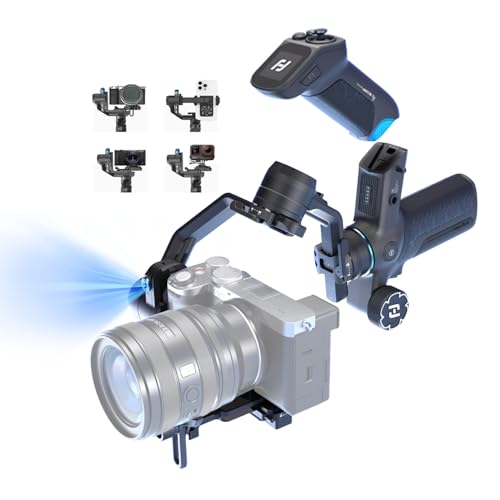
- 4.4 lb payload for compact rigs
- AI tracking with 59 ft range
- Detachable handle and OLED screen
Best For: Mirrorless, action cam, and smartphone creators
LiDAR Focusing Add-On

- 43,200 ranging points for focus support
- 14m range with 70° FOV
- Enables manual-lens autofocus on compatible rigs
Best For: DJI RS owners adding LiDAR focus to their setup
Smart Tracking Gimbal

- Built-in AI tracking sensor
- Fast vertical filming setup
- 2.5 kg payload with touchscreen control
Best For: DSLR and mirrorless shooters who want easy subject tracking
DJI Pro LiDAR Focusing Kit
DJI Focus Pro All-in-One Combo

- 20m LiDAR focusing range
- 76,800 ranging points for tracking
- AMF and FIZ lens control
Best For: Cinematographers needing long-range LiDAR focus control
FeiyuTech AI Tracking Gimbal

- Built-in AI tracking, no extra module
- 3-axis stabilization for smooth footage
- OLED touchscreen and Magic Wheel control
Best For: Solo creators who want built-in tracking and fast setup
DJI Pro Creator LiDAR Kit

- 20m LiDAR focus range
- 76,800 ranging points with AI recognition
- Lean kit for solo focus control
Best For: Solo cinematographers wanting DJI LiDAR focus assistance
Compact Hybrid Tracking Gimbal

- Built-in AI tracker follows faces or objects without app support
- 1.2 kg payload fits mirrorless cameras, phones, DSLR, and action cams
- Includes fill light, extension rod, case, and mounting accessories
Best For: Creators who want a lightweight multi-device gimbal with easy tracking
Dedicated LiDAR Autofocus Module

- 76,800 ranging points sharpen subject edge detection
- Supports autofocus for calibrated manual lenses with Focus Pro Motor
- Works with DJI RS 4 Pro, RS 3 Pro, and Focus Pro Grip
Best For: DJI shooters building a LiDAR-assisted autofocus rig
Smartphone Tracking Gimbal

- Magnetic AI tracker works without app or system limits
- Detachable 1.4-inch touchscreen remote improves control
- Built-in extension rod and RGB fill light aid solo shooting
Best For: Phone creators who want tracking, lighting, and easy remote control
Cinema Flagship – DJI Ronin 4D-8K Full-Frame Cinema Camera with LiDAR
If you want a camera gimbal with lidar autofocus built into a full cinema system, the DJI Ronin 4D-8K is in a class of its own. It combines a full-frame gimbal camera, LiDAR focusing, wireless transmission, and 4-axis stabilization into one integrated rig for fast, high-end production work.
Best For: Professional filmmakers who want an all-in-one stabilized cinema camera with LiDAR-assisted focusing.
Pros:
- Integrated 4-axis design combines imaging, stabilization, LiDAR focusing, and wireless video transmission.
- LiDAR focusing works fast and accurately, including in low light, and supports manual lenses.
- X9-8K full-frame camera records up to 8K/75fps with ProRes RAW and ProRes 422 HQ support.
- Wireless transmission and remote control can reach up to 20,000 feet.
Cons:
- Much more specialized than a standard handheld gimbal.
- Heavy and premium, so it is not a casual travel option.
- Best suited to users who need a full cinema workflow, not simple stabilization.
Overall, this is the most advanced option here if your priority is a true cinema setup with LiDAR-based focusing and pro-level stabilization. It is built for serious production, not everyday gimbal use.
Compact Tracking Gimbal – Feiyu SCORP Mini 3 Pro
The Feiyu SCORP Mini 3 Pro is a practical camera gimbal with AI tracking for creators who want lightweight stabilization and subject following, though it does not use lidar autofocus. Its 4.4 lb payload, detachable handle, and quick vertical/horizontal setup make it a flexible all-in-one option for mirrorless cameras, action cams, and smartphones.
Best For: Creators who want a compact gimbal with AI subject tracking and broad device compatibility.
Pros:
- Supports up to 4.4 lb payload for mirrorless cameras and other compact setups.
- AI tracking locks onto subjects with a claimed 0.003s response time and 59 ft range.
- Detachable handle with 1.3-inch OLED screen adds direct on-gimbal control.
- Quick-release design makes switching between horizontal and vertical shooting fast.
Cons:
- AI tracking is not the same as lidar-based autofocus.
- Best suited to smaller camera builds rather than heavier rigs.
- Smartphone clamp and accessories add to the setup compared with simpler gimbals.
In practice, this is a strong everyday stabilizer if you want tracking help without moving into a full cine rig. It is especially appealing for users who shoot across multiple devices and need quick setup changes.
LiDAR Focusing Add-On – DJI LiDAR Range Finder (RS)
If you are building a camera gimbal with lidar autofocus, the DJI LiDAR Range Finder (RS) is the focusing module that makes that workflow possible on supported rigs. It projects 43,200 ranging points, detects up to 14 meters, and is designed to improve handheld focusing, especially in low-light scenes and with manual lenses after calibration.
Best For: DJI RS 4 Pro and RS 3 Pro users who want LiDAR-assisted focusing and manual-lens autofocus support.
Pros:
- Projects 43,200 ranging points for LiDAR-assisted focus and tracking.
- Works up to a 14-meter range with a built-in 30mm-equivalent camera and 70° field of view.
- Enables autofocus on manual lenses when paired with the new Focus Motor (2022) after calibration.
- Especially useful for handheld shooting and low-light focusing.
Cons:
- Requires compatible DJI RS 4 Pro or RS 3 Pro hardware.
- It is an add-on focus tool, not a full gimbal on its own.
- Focus gains depend on calibration and system pairing.
This is the most direct choice if you already own a compatible DJI RS setup and want LiDAR-driven focus control. It does one job, but it does that job very well.
Smart Tracking Gimbal – FeiyuTech SCORP 2
The FeiyuTech SCORP 2 is a 3-axis camera stabilizer with an integrated AI tracking sensor for creators who want subject following and quick vertical shooting in one package. It is not a camera gimbal with lidar autofocus, but it does offer wireless or cable camera control, a touchscreen, and a fast setup system for mirrorless and DSLR workflows.
Best For: DSLR and mirrorless shooters who want built-in AI tracking and easy vertical filming.
Pros:
- Built-in AI tracking module removes the need for extra accessories.
- Quick-install L-shaped plates support fast vertical shooting.
- Supports wireless Bluetooth or cable camera control for flexible operation.
- 1.3-inch touchscreen and multifunction knob make on-device adjustments easy.
Cons:
- AI tracking is not LiDAR autofocus.
- 2.5 kg maximum payload limits heavier camera builds.
- Not water resistant.
For users who want tracking assistance more than cinematic focus tech, the SCORP 2 is a balanced and approachable option. It is a strong fit for run-and-gun shooting where setup speed matters.
DJI Pro LiDAR Focusing Kit – DJI Focus Pro All-in-One Combo
If you want a camera gimbal with lidar autofocus-style precision for serious production work, the DJI Focus Pro All-in-One Combo is built for that job. Its 20-meter subject focusing range, 76,800 LiDAR ranging points, and AI recognition are designed to keep focus dependable at longer distances, while AMF mode blends autofocus with operator control.
Best For: Cinematographers and camera teams who need long-range LiDAR focus control with DJI PRO workflow integration.
Pros:
- 20-meter maximum subject focusing range with 76,800 ranging points
- Built-in AI recognition for human and vehicle subject tracking
- AMF mode combines autofocus precision with manual creativity
- FIZ control covers focus, iris, and zoom with tactile feedback
Cons:
- Designed for DJI PRO ecosystem use, so compatibility is narrower
- Includes multiple components, which makes it more set-oriented than travel-friendly
The strongest reason to choose this kit is its focus control depth: LiDAR waveform guidance, precise FIZ handling, and DJI PRO compatibility make it a specialized tool for demanding set environments.
FeiyuTech AI Tracking Gimbal – SCORP-C2 3-Axis Stabilizer
The FeiyuTech SCORP-C2 is a practical pick if you want a camera gimbal with lidar autofocus-like convenience in a simpler, all-in-one package. It doesn’t use LiDAR, but its built-in AI tracking, 3-axis stabilization, and direct camera controls are aimed at solo creators who want reliable framing without extra accessories.
Best For: Solo creators, vloggers, and event shooters who want built-in tracking and fast setup in a 3-axis gimbal.
Pros:
- Built-in AI tracking with no app or extra module required
- 3-axis stabilization for smooth cinematic footage
- Arca quick release and balancing aids speed up setup
- OLED touchscreen and Magic Wheel provide on-gimbal control
Cons:
- Not a LiDAR autofocus system
- Best suited to supported camera bodies rather than universal use
For creators who care more about fast hands-free tracking and stable footage than advanced rangefinding, the SCORP-C2 offers a straightforward, feature-rich gimbal workflow.
DJI Pro Creator LiDAR Kit – DJI Focus Pro Creator Combo
For buyers looking for a camera gimbal with lidar autofocus capabilities in a creator-focused kit, the DJI Focus Pro Creator Combo delivers the core tools. It combines a 20-meter LiDAR focusing range, 76,800 ranging points, and AI recognition with AMF control, giving solo cinematographers a focused way to manage sharpness and lens movement.
Best For: Solo cinematographers who want DJI LiDAR focus control without the full all-in-one kit.
Pros:
- 20-meter subject focusing range for extended-distance use
- 76,800 LiDAR ranging points for reliable focus tracking
- AMF mode blends autofocus behavior with operator control
- Includes LiDAR, Grip, Motor, and Carrying Case
Cons:
- Does not include the Hand Unit found in the all-in-one combo
- Built around DJI PRO compatibility rather than broad camera support
This combo keeps the same LiDAR-based focus engine as the larger kit, but in a leaner package that makes sense when you mainly need efficient autofocus assistance and creative lens control.
Compact Hybrid Tracking Gimbal – FeiyuTech SCORP Mini 2 Kit
If you want a camera gimbal with lidar autofocus-style tracking features in a compact hybrid setup, the FeiyuTech SCORP Mini 2 Kit is aimed at creators who shoot with multiple device types. It supports mirrorless cameras, smartphones, DSLR cameras, and action cameras, while the built-in AI tracker can follow faces or objects without connecting to an app.
Best For: Creators who need one lightweight gimbal for mixed camera setups and simple subject tracking.
Pros:
- Built-in AI tracking works without app pairing
- 1.2 kg payload supports cameras, phones, and action cams
- 1.3-inch touch screen and five-way joystick improve control
- Includes fill light, extension rod, carrying case, and accessories
Cons:
- AI tracking is not the same as true LiDAR autofocus
- 852 g weight is still noticeable for all-day handheld use
- Best fit depends on staying within the 1.2 kg payload limit
The SCORP Mini 2 is a practical choice if you want stabilized shooting plus built-in subject tracking in a travel-friendly package. It is more about flexible compatibility and easier tracking than specialized autofocus hardware, but that makes it appealing for everyday content work.
Dedicated LiDAR Autofocus Module – DJI Focus Pro LiDAR
DJI Focus Pro LiDAR, Compatibility: DJI RS 4 Pro, DJI RS 3 Pro, DJI Focus Pro Grip
Check Price On AmazonFor buyers focused specifically on camera gimbal with lidar autofocus workflows, the DJI Focus Pro LiDAR is the most specialized option in this set. It is designed for use with the DJI RS 4 Pro, DJI RS 3 Pro, and DJI Focus Pro Grip, and its LiDAR system is built to sharpen subject detection and reduce focus hunting on compatible rigs.
Best For: DJI users who want LiDAR-assisted autofocus with supported gimbals and manual lenses.
Pros:
- 76,800 ranging points improve human-subject edge detection
- Up to 20 m focus distance supports longer-range setups
- 30 Hz refresh rate helps track moving subjects more confidently
- Can enable autofocus for calibrated manual lenses with DJI Focus Pro Motor
Cons:
- Requires compatible DJI hardware and ecosystem support
- Not a standalone gimbal; it is a LiDAR accessory
- Longer 20 m range depends on enabling 2x zoom display
This is the right pick if your priority is adding LiDAR-based focus assistance to a supported DJI stabilizer setup. It is less versatile than a general-purpose gimbal, but far more relevant for users who need precise autofocus help on manual lenses.
Smartphone Tracking Gimbal – Hohem iSteady M7
If you are shopping for a camera gimbal with lidar autofocus-like convenience for phones, the Hohem iSteady M7 is built around fast hardware-based AI tracking rather than lens-based focus control. It uses a magnetic AI tracker, a detachable touchscreen remote, and a built-in extension rod to make solo smartphone filming easier and more flexible.
Best For: Smartphone creators who want app-free tracking, remote control, and built-in lighting.
Pros:
- Magnetic AI tracker works without app or system restrictions
- Detachable 1.4-inch touchscreen remote simplifies control
- Built-in 193 mm extension rod adds more framing options
- CCT and RGB fill light helps in dim shooting conditions
Cons:
- Designed for smartphones only, not mirrorless or DSLR cameras
- AI tracking is not LiDAR autofocus
- 500 g payload may limit heavier phone rigs with extra accessories
The M7 stands out as a feature-rich phone gimbal for creators who value tracking, lighting, and control in one tool. It is a strong everyday option for mobile video, but it is not the right choice if you need a true camera rig or dedicated LiDAR autofocus support.
How We Picked the Best Camera Gimbal with Lidar Autofocus
We prioritized systems that combine strong stabilization with practical autofocus assistance, dependable tracking, and creator-friendly controls. That means looking at payload support, compatibility, focusing range, tracking intelligence, and how well the system fits a real production workflow.
Because the best Camera Gimbal with Lidar Autofocus is often part of a larger rig, we also considered whether each option works as a standalone stabilizer, an integrated cinema solution, or a modular focusing add-on.
Quick Comparison
Some picks are full camera systems built for high-end filmmaking, while others are gimbals or accessories that add smart focus and tracking to an existing setup. If you need all-in-one capture, look toward integrated cinema rigs. If you already own a compatible gimbal, a LiDAR module or focus system may be the better-value upgrade.
Key Buying Factors for a Camera Gimbal with Lidar Autofocus
Compatibility
Check whether the system works with your camera body, lens type, and gimbal platform. Many LiDAR autofocus solutions are designed for specific ecosystems, especially DJI RS-series accessories.
Focus Performance
Look for fast subject acquisition, stable tracking in motion, and the ability to maintain focus at practical shooting distances. Higher ranging point counts and AI-assisted recognition can improve reliability, but they do not replace good setup and calibration.
Stabilization and Payload
A gimbal should comfortably handle your camera, lens, and accessories without pushing the motor limits. Payload headroom matters if you use larger zoom lenses, wireless transmitters, or monitors.
Workflow and Controls
Features like touchscreen control, wireless operation, and integrated lens control can save time on set. For solo creators, these usability details often matter as much as raw focus specs.
Who Should Buy Which Camera Gimbal with Lidar Autofocus?
Choose an integrated cinema system if you want the most complete all-in-one solution for high-end production. Pick a modular LiDAR autofocus add-on if you already own a compatible gimbal and want to improve focusing without replacing your whole rig.
Hybrid shooters and run-and-gun creators may prefer lighter gimbals with built-in tracking or AI assistance, while smartphone users should focus on compact stabilizers with smart subject following rather than camera-only LiDAR gear.