Experienced printmakers need more than a basic block-printing tool. The right press should deliver consistent pressure, accommodate your preferred plate or block sizes, and fit the way you work in the studio.
This roundup compares 10 manual printmaking presses across etching, relief, lino, woodblock, and slab roller designs, with attention to construction, adjustability, workspace, and practical value.
Best 10 Printmaking Presses for Experienced Artists Picks for 2026
High-Capacity Tabletop Pick

- 19.7-by-12.6-inch panel
- Adjustable roller height
- Handwheel-controlled pressure
Best For: Larger tabletop printmaking projects
Craftsmanship and Portability Pick

- Heavy-duty steel construction
- Uniform-pressure design
- Foldable for compact storage
Best For: Foldable table-mounted lino printing
Compact Aluminum Pick

- Lightweight aluminum-alloy frame
- Two-inch roller
- 11.8-by-6.7-inch work area
Best For: Portable small-format etching and relief work
Large-Format Lino Pick
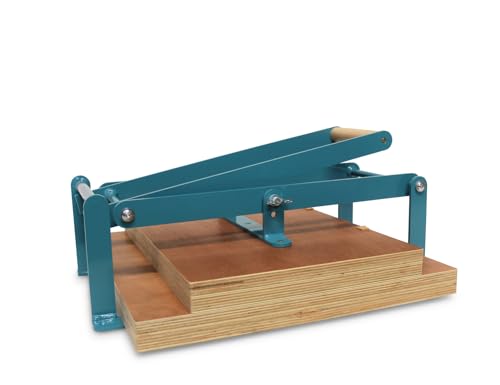
- 11.75-by-16.5-inch format
- Designed to resist tipping
- Foldable, table-mountable design
Best For: Stable A3-sized lino printing
Flexible Tabletop Choice

- A3 working area for larger prints
- Steel frame with beech wood handle
- Includes brayer and felt sheet
Best For: Tabletop lino, relief, and block printing
Multi-Technique Workhorse

- Supports woodcut, etching, and copperplate
- Large Bakelite platen over 30 by 45 cm
- Double rollers and adjustable stroke
Best For: Experienced artists working across multiple printmaking techniques
Compact Precision Pick

- Prints up to 6 by 8 inches
- Two adjustable height settings
- Portable 5.7-pound steel design
Best For: Small block prints at home, school, or on the go
Compact Relief Press

- Birch plywood construction
- Portable tabletop design
- Includes felt pad, lino sheet, and carving tools
Best For: Portable A4 linocut and woodblock projects
Large-Format Studio Press

- 19.7-by-13.1-inch workspace
- Adjustable roller height
- Steel and aluminum construction
Best For: Larger copperplate, woodblock, and paper-print projects
Stable Iron Studio Press
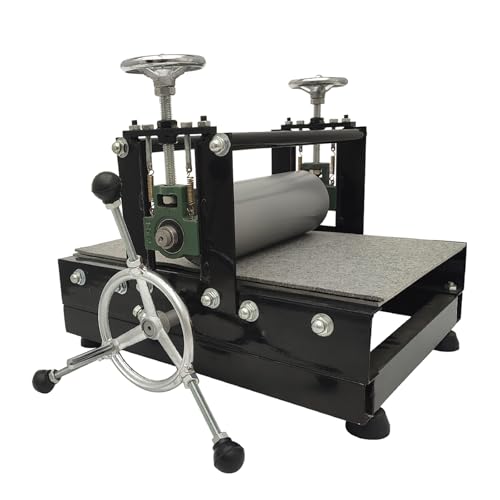
- 19.7-by-12.6-inch workspace
- High-strength iron construction
- Four non-slip feet
Best For: Stable tabletop copperplate and relief printing
High-Capacity Tabletop Pick – TECHTONGDA Slab Roller
For experienced artists seeking printmaking presses for experienced artists, the TECHTONGDA Slab Roller offers a larger 19.7-by-12.6-inch panel, adjustable roller height, and handwheel-controlled pressure. Its iron frame and tabletop footprint suit artists who want a more substantial manual press for relief, gravure, and other pressed artworks.
Best For: Artists needing a larger working surface and adjustable pressure for varied printmaking projects.
Pros:
- 19.7-by-12.6-inch panel supports relatively large workpieces.
- Adjustable roller height accommodates different material and plate needs.
- Handwheel operation is designed to provide even pressure.
- Anti-slip feet help stabilize the press on a tabletop.
Cons:
- At 58 pounds, it is less convenient to move than compact presses.
- Its larger footprint may require dedicated workspace.
This is a practical choice when workspace and weight are acceptable tradeoffs for a larger panel and adjustable roller. The painted iron frame and PVC surface are intended for durable, regular use.
Craftsmanship and Portability Pick – Woodzilla 19-Inch Press
The Woodzilla 19-inch press is a strong contender among printmaking presses for experienced artists who want uniform pressure without excessive effort. Its heavy-duty steel construction, table-mounting design, and foldable form make it suitable for artists balancing pressing performance with storage constraints.
Best For: Lino-printing artists who want a sturdy, foldable press for a table or workbench.
Pros:
- Heavy-duty steel is designed to apply uniform pressure.
- Foldable construction helps conserve storage space.
- Can be mounted to a table or workbench.
- Anti-skid shoes help protect the printing surface from scratches.
Cons:
- Mounting may be needed for the most stable setup.
- The product details do not specify adjustable roller height.
With a 29.1-pound weight and foldable design, this Woodzilla model offers a useful middle ground between stability and manageability. It is particularly appealing when consistent pressure and compact storage matter.
Compact Aluminum Pick – Professional Etching Press
For experienced artists comparing printmaking presses for experienced artists in a compact studio, this manual aluminum press emphasizes portability and controlled operation. Its 2-inch roller, 11.8-by-6.7-inch working area, and rust-proof aluminum-alloy construction support intaglio, relief, woodblock, and copperplate work.
Best For: Artists who need a lightweight tabletop press for smaller prints and multiple techniques.
Pros:
- Aluminum-alloy construction is lightweight and rust-proof.
- Two-inch roller is designed for uniform pressure distribution.
- L-shaped handwheel supports smooth manual operation.
- Compact footprint suits home studios, classrooms, and exhibitions.
Cons:
- The 11.8-by-6.7-inch working area limits print size.
- Its compact format may be less suitable for large plates.
At 12.13 pounds, this is the most portable option in the group. Choose it when smaller working dimensions are acceptable and easy relocation is a priority.
Large-Format Lino Pick – Woodzilla A3 Press
The A3 Woodzilla press is designed for artists who want a broader lino-printing area while maintaining a stable, foldable setup. For experienced artists evaluating printmaking presses for experienced artists, its 11.75-by-16.5-inch format, anti-skid base, and resistance to tipping under pressure make it a practical workbench-mounted option.
Best For: Lino-printing artists working with A3-sized formats who need stability and compact storage.
Pros:
- 11.75-by-16.5-inch format supports larger lino prints.
- Designed to accept substantial pressure without tipping.
- Mounts to a table or workbench for added stability.
- Foldable design saves space between sessions.
Cons:
- Mounting is likely important for maximum stability.
- Its 29.1-pound weight is less portable than compact presses.
This model makes the most sense for artists prioritizing an A3 working size and secure pressure application. Its foldable construction helps offset the larger format when the press is not in use.
Flexible Tabletop Choice – A3 Linocut Press
For artists comparing printmaking presses for experienced artists, this tabletop linocut press offers a practical balance of working size, manual control, and technique flexibility. Its steel frame and beech wood handle are suited to lino, relief, and block printing, while the A3 format accommodates larger projects.
Best For: Artists who want a tabletop press for A3-size lino, woodcut, rubber-block, and relief-printing projects.
Pros:
- Supports lino, woodcut, rubber-block, relief, and block printing.
- A3 printing area measures 16.5 by 11.8 inches.
- Powder-coated steel frame and solid beech wood handle provide manual control.
- Includes a 6 cm rubber brayer and felt sheet.
Cons:
- Manual operation requires the artist to apply pressure through the handle.
- The supplied notes do not specify a pressure gauge or motorized assistance.
With its larger format and included basic accessories, this press is a versatile option for experienced printmakers who need more room than a small hobby press while still preferring a compact tabletop setup.
Multi-Technique Workhorse – Professional Hand Press
Among printmaking presses for experienced artists, this hand-operated model stands out for its broad technique coverage and larger-than-30-by-45-cm print bed. It is designed for copperplate, woodcut, offset relief, monotype, and etching work, with adjustable operation for artists handling varied projects.
Best For: Experienced printmakers seeking a versatile hand press for woodcut, etching, copperplate, relief, monotype, and mixed-surface projects.
Pros:
- Supports copperplate, woodcut, offset relief, monotype, and etching techniques.
- Offers fold sizes of 390 by 543 mm and 270 by 390 mm.
- Double rollers, manual stroke adjustment, and a large handwheel support controlled operation.
- Includes a reinforced Bakelite platen measuring over 30 by 45 cm and more than 1 cm thick.
Cons:
- The product notes provide limited information about assembly and setup.
- Its broad capabilities may be more than needed for artists focused only on small block prints.
This is the most technique-oriented option in the group. The adjustable stroke, double rollers, and generous platen make it a compelling choice for artists who want one manual press for several printmaking processes.
Compact Precision Pick – Speedball Model B Press
Speedball Block Printing Press - Adjustable Height Model B Steel Press For Printmaking
Check Price On AmazonFor artists evaluating printmaking presses for experienced artists in a compact studio or travel setup, the Speedball Model B focuses on straightforward block printing. Its adjustable height and firm, even pressure suit prints up to 6 by 8 inches, while the steel construction keeps the unit portable.
Best For: Artists who primarily make small block prints at home, in classrooms, or while traveling.
Pros:
- Designed for reproducing prints up to 6 by 8 inches.
- Two adjustable height settings accommodate different block thicknesses.
- Steel construction provides a sturdy press for hard and soft substrates.
- Weighs about 6 pounds for easier transport.
Cons:
- Its 6-by-8-inch print capacity is limited for larger artwork.
- It is focused on block printing rather than a broad range of etching or plate techniques.
- No warranty is listed in the supplied product details.
The Model B is a focused, portable solution rather than a large-format studio press. Choose it when compact storage, simple height adjustment, and consistent pressure matter more than maximum print area.
Compact Relief Press – A4 Linocut Hand Press
For artists comparing printmaking presses for experienced artists, the AsellPress offers a compact manual setup for linocut and woodblock work. Its birch plywood construction, tabletop footprint, and consistent hand pressure suit smaller relief-printing projects.
Best For: Experienced artists who want a portable A4 press for linocut and woodblock printing at home, in a studio, or in a classroom.
Pros:
- Birch plywood body provides a strong, stable construction.
- Compact, lightweight tabletop design is easy to position or transport.
- Includes a felt pad, lino sheet, and six carving tools.
- Available in A3, A4, and A5 size options.
Cons:
- The A4 version is less suitable for larger-format prints than the available A3 option.
- Manual operation requires the artist to apply the pressing force.
This is a practical choice when portability and straightforward relief printing matter more than a large work area or powered operation.
Large-Format Studio Press – Adjustable Slab Roller Press
For experienced artists seeking printmaking presses for experienced artists, this manual slab roller provides a larger 19.7-by-13.1-inch workspace for copper plates, woodblocks, and paper prints. Its adjustable roller height and rigid metal construction support varied gravure and relief-printing tasks.
Best For: Studio artists, universities, and printmakers handling larger plates or blocks and needing adjustable pressure clearance.
Pros:
- Large work area accommodates formats up to approximately 19.7 by 13.1 inches.
- Adjustable roller height supports different substrate thicknesses.
- Thickened aluminum alloy panel and high-strength steel body provide stability.
- Large-diameter handwheel is designed for controlled, low-force operation.
Cons:
- Its tabletop dimensions require more dedicated space than a compact hand press.
- Manual operation may be slower for artists producing very high volumes.
With its generous bed and adjustable roller, this press is the more capable option for artists moving beyond small relief prints into larger or mixed printmaking projects.
Stable Iron Studio Press – Iron Adjustable Slab Roller
This BEILOCKERY press is a strong contender among printmaking presses for experienced artists who need a broad tabletop work area and adjustable roller height. Its iron construction, non-slip feet, and large handwheel are suited to copperplate, woodblock, and relief printing.
Best For: Experienced printmakers and teaching studios that prioritize a stable iron frame for larger-format manual printing.
Pros:
- 19.7-by-12.6-inch workspace handles relatively large plates and blocks.
- High-strength iron plates are finished for long-term, reliable use.
- Four non-slip feet improve stability during operation.
- Adjustable roller height accommodates different material thicknesses.
Cons:
- Its nearly 20-inch work area requires substantial tabletop space.
- Manual pressing still requires physical operation for each print.
The BEILOCKERY balances a substantial work surface with straightforward manual control, making it a sensible studio-oriented choice for artists who value stability and adjustable clearance.
How We Picked the Best Printmaking Presses for Experienced Artists
We selected these models for artists who already understand registration, blankets, plates, blocks, and pressure control. The lineup includes compact lino presses, adjustable hand presses, Speedball’s steel press, and larger tabletop slab roller designs. We considered the working area, press format, material quality, pressure adjustment, portability, and the types of printmaking each machine is intended to support.
Because specifications and included accessories can vary, confirm the current listing for dimensions, roller construction, maximum plate thickness, assembly requirements, and whether blankets or other essentials are included.
Quick Comparison
| Press type | Best suited to | Main advantage | Potential limitation |
|---|---|---|---|
| Slab roller press | Etching, woodblock, larger work | Broad working surface and versatile format | Heavier and less portable |
| Dedicated lino press | Relief and linocut printing | Simple, compact operation | Less flexible for thicker plates |
| Adjustable hand press | Mixed relief and intaglio projects | Greater control over pressure and clearance | May require more setup and technique |
| Steel press | Frequent studio use | Rigid, durable construction | Usually less convenient to move |
Key Buying Factors for Printmaking Presses for Experienced Artists
Working Area and Compatibility
Choose a bed or roller width that comfortably exceeds your largest regular plate or block. A slightly larger press gives you room for registration marks, margins, and blankets, while an undersized press can limit both paper size and technique.
Pressure Control
Intaglio work generally benefits from controlled, even pressure and adequate clearance for plates, paper, and blankets. Relief printing may need a different setup. Look for adjustable rollers, screw pressure controls, or a design that lets you fine-tune contact without overloading the mechanism.
Construction and Stability
Rigid frames reduce flex and help maintain consistent impressions. Steel and aluminum can provide useful durability, while plywood presses may be easier to handle and more affordable. Check the base, roller supports, handle, and table requirements—not just the headline size.
Portability and Studio Space
Measure your work surface and storage area before buying. Compact presses suit shared studios, classrooms, and occasional transport; larger tabletop models are better when stability and coverage matter more than mobility.
Workflow and Maintenance
Consider how quickly you can load paper, position blankets, adjust pressure, and clean the press between colors or plates. Simple mechanisms can be advantageous when reliability and repeatable setup matter more than automation.
Who Should Buy Which Printmaking Presses for Experienced Artists?
Choose a dedicated lino press if relief printing is your main focus and you value a compact, straightforward tool. Choose an adjustable hand press if you work across lino, woodcut, and occasional intaglio projects and need more control over clearance and pressure.
Choose a slab roller-style press if you print larger plates, want a broad tabletop format, or need flexibility across copperplate and woodblock work. Choose the Speedball steel model if you prioritize a recognizable, rigid press for regular studio or teaching use. Before ordering, match the press to your largest format, available workspace, and the techniques you use most often—not simply the lowest price.