The best printmaking presses for classrooms make relief, linocut, etching, and slab-based projects easier to teach and more consistent to produce. The right choice depends on student age, available space, print size, and how much setup teachers can manage.
We selected 10 manual presses and related machines ranging from compact hand-lever models to larger tabletop designs. Use the guide below to match press format, capacity, and durability to your classroom workflow.
Best 10 Printmaking Presses for Classrooms Picks for 2026
Best Overall A3 Option

- A3 tabletop format
- Works with lino, wood, and rubber blocks
- Includes brayer and felt sheet
Best For: Versatile classroom relief-printing projects
Best for Technique Variety

- Supports multiple printmaking methods
- Handles prints up to 9 by 15 inches
- Includes felt pad and base plate
Best For: Technique-focused school art rooms
Best for Heavy-Duty Projects
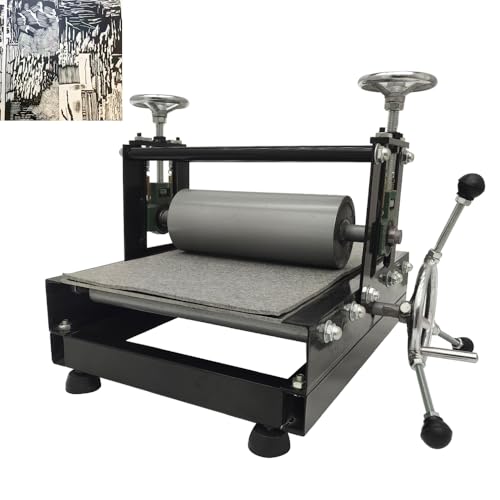
- Large tabletop work panel
- Adjustable roller height
- Heavy 48.9-pound construction
Best For: Stable, larger-scale relief and embossed artwork
Best Beginner Lever Press

- Easy manual lever operation
- Designed for A5 projects
- Includes roller, pads, and wrenches
Best For: Introductory small-format relief printing
Heavy-Duty Tabletop Pick

- Large 19.7-by-12.6-inch panel
- Adjustable roller height
- Stable but weighs 58 pounds
Best For: Larger classroom projects and workshop-style batch printing
Ready-to-Use Classroom Kit
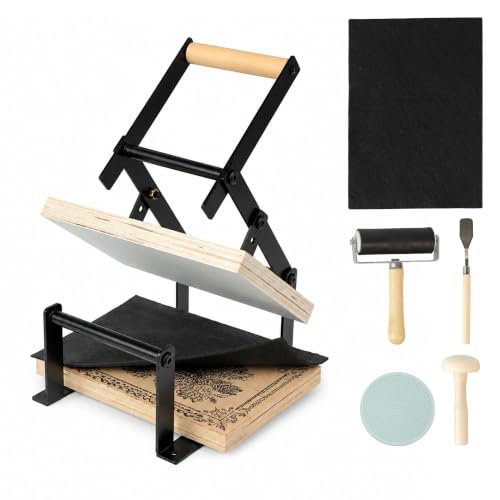
- Includes seven useful kit components
- Ergonomic lever and felt mat
- Compact A4 desktop format
Best For: Beginner-focused linocut lessons and shared classroom use
Adjustable A4 Workshop Choice
Premium Beech Wood Linocut Press

- Three adjustable pressure settings
- Handles blocks up to 25 mm thick
- Stable 304 stainless steel frame
Best For: Versatile A4 classroom projects and craft workshops
Best Budget Lever Press
TOPOWN Linocut Hand Lever Press

- Three pressure settings for blocks up to about 25mm
- A4-compatible tabletop format
- Includes roller, pads, and wrenches
Best For: Beginner classroom linocut and relief printing
Best Roller-Style Press
PreAsion Tabletop Etching Press

- Handwheel-controlled roller for uniform pressure
- 19.7-by-12.6-inch panel
- Adjustable feet and roller height
Best For: Tabletop etching, rubbing, and slab-printing projects
Best Premium Beginner Press

- Three pressure gears for A4 work
- Beech wood plate and 304 stainless steel frame
- Felt pad and shaft sleeve support smooth operation
Best For: Frequent beginner instruction and classroom workshops
Best Overall A3 Option – Green Linocut Press
For classrooms needing versatile printmaking presses for classrooms, this A3 tabletop lino press offers a practical balance of working space, manual control, and included accessories. Its steel frame and beech wood handle support lino, woodcut, rubber block, relief, and block printing projects.
Best For: Classrooms handling varied relief-printing projects and larger paper sizes up to A3.
Pros:
- A3 printing area accommodates projects up to 16.5 by 11.8 inches.
- Supports linoleum, woodcut, rubber block, relief, and block printing.
- Includes a 6 cm rubber brayer and felt sheet.
- Powder-coated steel frame and beech wood handle provide manual control.
Cons:
- Manual operation requires students to apply pressure by hand.
- The supplied details describe an adult age range rather than a specific classroom age group.
This is a strong general-purpose choice when a classroom wants one press that can support several relief-printing techniques and larger compositions. The included roller and felt sheet also help reduce the need for immediate accessory purchases.
Best for Technique Variety – Basic Etching Press
Among printmaking presses for classrooms, this compact etching machine stands out for supporting multiple processes, including etching, embossing, block printing, monotype, lithography, and relief printing. Its 9 by 15 inch capacity suits smaller classroom workspaces.
Best For: Schools and workshops teaching several printmaking techniques in a limited space.
Pros:
- Supports prints up to 9 by 15 inches.
- Compatible with etching, embossing, block printing, monotype, lithography, and relief printing.
- Includes a felt pad and base plate for immediate setup.
- Compact 18.5-pound design is suited to schools, workshops, and storage.
Cons:
- Its stated print capacity is smaller than the A3 press in this roundup.
- Manual operation may be less suitable for extended sessions without breaks.
This press is a practical teaching tool when curriculum flexibility matters more than maximum print size. The included cushioning and base plate make it easier to begin classroom projects without sourcing those accessories separately.
Best for Heavy-Duty Projects – Manual Slab Roller Press
For classrooms seeking printmaking presses for classrooms with a larger, sturdy work surface, this manual tabletop machine provides a 19.7 by 12.6 inch panel and adjustable roller height. Its handwheel operation and adjustable feet support controlled, stable printing without electricity.
Best For: Craft-focused classrooms needing a durable press for relief plates, gravure printing, and embossed artwork.
Pros:
- Large 19.7 by 12.6 inch panel supports substantial projects.
- Adjustable roller height accommodates material thicknesses up to about 1.57 inches.
- Handwheel operation provides manual pressure control without electricity.
- Adjustable anti-slip feet help stabilize the machine during use.
Cons:
- At 48.9 pounds, it is less convenient to move between classrooms.
- Its 19.7 by 19.7 by 16.14 inch footprint requires considerable table space.
- The notes do not list included brayers, felt, or other classroom accessories.
This is the most substantial option here for classrooms prioritizing a broad panel, adjustable clearance, and a heavy-duty build. Plan a dedicated workstation because its weight and footprint make frequent relocation impractical.
Best Beginner Lever Press – TOPOWN Mini Linocut Press
This compact lever press is a classroom-friendly option among printmaking presses for classrooms, especially for introductory linocut and relief work. It is designed for A5 paper and blocks up to 25 mm thick, with an even manual lever action that can be easier for beginners to use.
Best For: Beginner classes teaching A5 linocut, woodcut, rubber, and other small relief-printing projects.
Pros:
- Even lever pressure is designed to reduce operating effort.
- Works with A5 paper and blocks up to 25 mm thick.
- Includes rubber roller, felt pad, rubber pad, and wrenches.
- Supports linocut, woodcut, letterpress, rubber, cork, and other listed craft applications.
Cons:
- A5 compatibility limits print size compared with larger presses.
- Blocks are not included.
- It is intended for manual operation rather than powered production.
This mini press makes sense for classroom stations where ease of use and small-format projects are priorities. Its included pads and tools help students start quickly, while the A5 limit keeps projects focused and manageable.
Heavy-Duty Tabletop Pick – TECHTONGDA Slab Roller Press
For classrooms seeking printmaking presses for classrooms with a larger work area and strong construction, the TECHTONGDA slab roller is a practical manual option. Its 19.7-by-12.6-inch panel, adjustable roller height, and handwheel-operated pressure system support relief, gravure, and other pressed artworks.
Best For: Classrooms, workshops, and batch production where a sturdy tabletop press and larger working surface are useful.
Pros:
- Large 19.7-by-12.6-inch panel accommodates sizable projects.
- Iron frame and PVC surface are designed for durability and smooth operation.
- Adjustable roller height supports different material needs.
- Four anti-slip feet help stabilize the press on a tabletop.
Cons:
- At 58 pounds, it is substantially heavier than compact student presses.
- Manual operation requires students to turn the handwheels through each print.
- The package dimensions indicate that it needs considerable storage space.
This is the strongest choice here for classrooms prioritizing capacity and a substantial frame over portability. Plan for a dedicated, stable table and storage area.
Ready-to-Use Classroom Kit – A4 Linocut Hand Lever Press
Teachers looking for printmaking presses for classrooms may appreciate this A4 linocut press because it combines a lever mechanism with the core tools needed to begin printing. The felt mat is intended to even out pressure, while the included roller, baren, scraper, and wrench reduce the need for separate purchases.
Best For: Art students, beginner printmakers, and classrooms teaching A4 linocut, woodcut, cards, or small-batch artwork.
Pros:
- Ergonomic lever design is intended to reduce hand fatigue.
- Includes an ink roller, wooden baren, scraper, felt mat, and assembly wrench.
- Thick wooden plate and 3mm felt mat support consistent pressure.
- Compact desktop size fits home studios and classroom worktables.
Cons:
- The A4 active surface is smaller than the TECHTONGDA press’s working panel.
- Its wood construction may be less suitable for heavy-duty work than an iron-frame press.
- Manual pressing still requires repeated lever operation.
As an all-in-one option, this press is easy to position for instruction and shared student use. Its included accessories make it especially convenient when building a classroom printmaking setup from scratch.
Adjustable A4 Workshop Choice – Premium Beech Wood Linocut Press
This A4 beech wood press is a versatile option for classrooms comparing printmaking presses for classrooms. It combines a compact tabletop footprint with three pressure settings and clearance for blocks up to 25 mm thick, making it suitable for varied beginner and craft projects.
Best For: Classrooms and craft workshops that need adjustable pressure for linocut, woodcut, letterpress, rubber printing, and handmade projects.
Pros:
- Three pressure gears accommodate different paper and block thicknesses.
- Supports carving blocks up to 25 mm thick.
- 304 stainless steel frame is described as rust-resistant and stable.
- Felt pad and upgraded shaft sleeve support smoother, more even pressing.
Cons:
- It is limited to an A4-size active format.
- Unlike the other listed kit, the supplied notes do not identify included ink or carving tools.
- Its 13-pound weight is portable but lighter than the heavy-duty TECHTONGDA press.
The adjustable pressure system gives this model useful flexibility for a teaching environment, while the tabletop design keeps it manageable. Verify the classroom’s accessory inventory before choosing it as a complete starter setup.
Best Budget Lever Press – TOPOWN Linocut Hand Lever Press
For classrooms seeking accessible printmaking presses, the TOPOWN Linocut Press offers a compact manual design with three pressure adjustments and compatibility with A4 paper and blocks up to approximately 25mm thick. Its lever mechanism is intended to make even pressing manageable for younger students.
Best For: Beginner-friendly linocut, woodcut, rubber printing, and mixed craft activities in classrooms or small studios.
Pros:
- Three-level adjustment accommodates blocks up to about 25mm thick.
- Manual lever design distributes pressure evenly and is easy to operate.
- Includes a rubber roller, felt pad, rubber pad, and wrenches.
- Powder-coated alloy steel frame and plywood handle provide a sturdy build.
Cons:
- Blocks are not included.
- Its A4-compatible format may limit larger classroom projects.
- At 13 pounds, it may need a dedicated storage area.
The TOPOWN is a practical choice when a class needs a straightforward lever press with included accessories and simple pressure control. It is particularly suited to introductory relief-printing lessons rather than oversized work.
Best Roller-Style Press – PreAsion Tabletop Etching Press
The PreAsion Etching Press is a larger roller-style option among printmaking presses for classrooms, with a handwheel-controlled roller and a broad 19.7-by-12.6-inch panel. Adjustable feet help stabilize it on a table, while the roller height can be adjusted for different materials.
Best For: Classroom demonstrations and projects involving etching, rubbing, plaster, wood, paper, or slab-based printing.
Pros:
- Handwheel operation provides uniform pressure across the work.
- 11-inch-long, 3.9-inch-diameter roller is described as smooth and thick.
- Adjustable anti-slip feet support tabletop placement.
- Roller height adjusts by approximately 4cm.
Cons:
- At 58.9 pounds, it is substantially heavier than the compact lever presses.
- Its larger footprint requires more classroom table and storage space.
- The supplied notes do not list included printing accessories.
Choose the PreAsion when a classroom needs a roller press with a comparatively generous working surface and adjustable setup. Its weight can improve stability, but it also makes moving the machine between lessons less convenient.
Best Premium Beginner Press – A4 Beech Wood Linocut Press
This A4 beech wood linocut press is designed for beginners, teens, and classroom workshops. It combines a smooth natural-wood pressure plate and handle with a 304 stainless steel frame, three pressure settings, and a felt pad for more consistent ink transfer.
Best For: Classroom and workshop instruction where students need a compact, durable press for A4 linocut and relief-printing projects.
Pros:
- Three adjustable pressure gears fit A4 paper and blocks up to 25mm thick.
- Natural beech wood components have a smooth, burr-free surface.
- 304 stainless steel frame is designed to resist rust, shaking, and deformation.
- Includes a wear-resistant shaft sleeve and felt pad for smoother operation and protected blocks.
Cons:
- Limited to A4-sized work rather than larger prints.
- Its 13-pound weight may be inconvenient for frequent room-to-room transport.
- The notes do not specify that carving blocks or printing ink are included.
With its classroom-friendly dimensions, beginner-oriented controls, and stated two-year manufacturer warranty, this press is a strong fit for repeated instructional use. It offers more premium frame and material specifications while retaining a simple manual workflow.
How We Picked the Best Printmaking Presses for Classrooms
We focused on practical classroom requirements rather than treating one press style as universally best. The selection includes compact A4 and mini linocut presses, larger A3 machines, etching-style presses with plates and felt, and slab rollers designed for broader printmaking or clay-related work. We considered working area, manual effort, portability, included accessories, construction materials, adjustability, and suitability for repeated student use.
Because classroom needs vary, a simple hand-lever press may be preferable for younger learners or quick relief-print projects, while a heavier adjustable machine can offer more flexibility for advanced groups. Teachers should also account for supervision, storage, and whether students will share one press or work at several stations.
Quick Comparison
- Best for compact linocut stations: A4 and mini hand-lever presses.
- Best for larger prints: A3 presses and wide tabletop machines.
- Best for mixed techniques: Etching presses with adjustable pressure and a base plate.
- Best for portability: Lightweight manual tabletop models.
- Best for beginner programs: All-in-one kits with straightforward controls and basic accessories.
Key Buying Factors for Printmaking Presses for Classrooms
Working Size and Project Range
Check the maximum paper, plate, or block size before buying. A4 models save space and suit individual student projects, while A3 equipment supports posters and larger collaborative work. A wider bed can also reduce the need to reposition materials.
Operation and Student Safety
Hand-lever presses are usually intuitive and allow students to see how pressure is applied. Look for stable bases, smooth-moving handles, protected pinch points, and controls that teachers can explain quickly. Younger students should use presses with close adult supervision.
Construction and Durability
Wooden frames can be approachable and relatively light, whereas metal components may better tolerate frequent adjustment and shared use. Examine the bed, rollers, bearings, handle, and fasteners—not just the advertised print size.
Pressure Adjustment and Accessories
Adjustable pressure is valuable when classes use different block thicknesses, paper types, or techniques. Felt, base plates, blankets, and registration aids can reduce extra purchases, but verify exactly what is included because kit contents vary.
Storage and Maintenance
Measure shelves, worktables, and doorways before choosing a larger press. Manual machines generally avoid electrical maintenance, but rollers, plates, and moving parts still need cleaning and occasional inspection after ink-heavy projects.
Who Should Buy Which Printmaking Presses for Classrooms?
Choose a compact A4 or mini press for elementary classrooms, after-school programs, and schools with limited storage. These models are easier to share and typically fit standard student-sized prints.
Choose a larger A3 or adjustable tabletop press for art departments teaching advanced relief, etching, or larger-format work. The additional capacity is worthwhile when several techniques must be supported.
Choose an all-in-one kit when a classroom needs a straightforward starting point with fewer separate accessories to source. For frequent, high-volume use, prioritize a stable frame, robust pressure controls, and replaceable or serviceable components over the lowest initial price.