A full-size drafting table can overwhelm a bedroom, dorm, or compact studio. The best drafting tables for small spaces deliver useful tilt adjustment and a workable surface without consuming the room.
We compared compact desks with folding frames, casters, storage drawers, stools, and adjustable tabletops to help you choose a practical setup for drawing, crafting, painting, or technical work.
Best 10 Drafting Tables for Small Spaces Picks for 2026
Best Storage Pick
Yaheetech Tilting Drafting Table

- 0–40° tilt with 10 locking positions
- Three drawers, shelf, and side counter
- Includes a matching stool
Best For: Artists and crafters needing organized storage
Best Foldaway Option
GreenForest Folding Drafting Desk

- Folds to 3.8 inches thick
- 0–90° gas-strut tilt range
- Lockable rolling casters
Best For: Portable workstations in apartments and dorms
Best Lap-Height Design
Nnewvante Foldable Bamboo Drawing Table
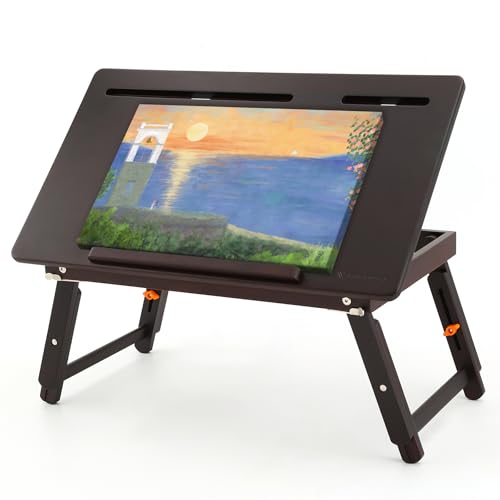
- Compact 7-pound bamboo construction
- 0–65° angle and four height settings
- Converts to a tabletop easel
Best For: Bed, floor, and portable creative work
Best Glass Surface
MoNiBloom Tempered Glass Art Desk

- 41.5-inch tempered-glass worktop
- 0–65° tilt for drafting and art
- Trays, drawers, casters, and spare feet
Best For: Home studios needing a cleanable, mobile art surface
Best Adjustable Workhorse
VEVOR Adjustable Drafting Table

- 0°–90° tilt range
- Adjustable feet and H-frame
- 35.43-inch-wide work surface
Best For: Artists needing a sturdy, versatile workspace
Best All-in-One Set
Yaheetech Drafting Table with Stool

- 0°–60° adjustable tabletop
- Two drawers and slide-out side surface
- Matching stool included
Best For: Small creative stations needing storage and seating
Best for Easy Storage
Folding Portable Drafting Table

- Folds for compact storage
- Four height settings
- Useful for drawing, dining, or computing
Best For: Dorms, bedrooms, and rental spaces
Expandable Comfort
Adjustable Natural Drafting Desk

- Tilting main surface plus separate flat workspace
- Two drawers and included matching stool
- Non-slip feet and adjustable height
Best For: Multi-use home workspaces needing storage and seating
Vintage Simplicity

- 40.16-inch-wide compact footprint
- Adjusts from flat to a 45-degree angle
- Removable tray with pen holes and slots
Best For: Artists and hobbyists wanting compact vintage styling
Mobile Glass Studio
JupiterForce Adjustable Glass Drafting Table

- Height adjusts from 31.5 to 49.5 inches
- Glass top tilts up to 60 degrees
- Casters, two drawers, and four supply trays
Best For: Mobile workspaces needing height and angle flexibility
Best Storage Pick – Yaheetech Tilting Drafting Table
For shoppers comparing drafting tables for small spaces, the Yaheetech combines a generous 35.4-by-23.6-inch work surface with built-in storage. Its adjustable tabletop, side counter, drawers, and included stool make it a practical all-in-one station, though its wider footprint suits a dedicated corner better than a highly compact setup.
Best For: Artists and crafters who want substantial workspace, organized supplies, and a matching stool.
Pros:
- Tabletop tilts from 0 to 40 degrees and locks into 10 positions.
- Three fabric drawers, a shelf, and a side counter provide useful storage.
- Includes a stool and adjustable protective floor levelers.
Cons:
- At 50.5 inches long overall, it may be too large for very tight rooms.
- The tabletop is less flexible than models offering a 65- or 90-degree range.
This is a strong choice when storage matters as much as size. Measure carefully before buying, especially if you plan to use the stool and side counter together.
Best Foldaway Option – GreenForest Folding Drafting Desk
The GreenForest is one of the more space-conscious drafting tables for small spaces because it folds to just 3.8 inches thick for storage. Its 31.5-by-16.5-inch format, rolling casters, and gas-strut tilt mechanism make it useful for temporary workstations in apartments, dorms, and home offices.
Best For: Students, renters, and remote workers who need a portable desk that can be stored between uses.
Pros:
- Folds flat for storage under a bed, in a closet, or behind furniture.
- Gas-strut tabletop adjusts from 0 to 90 degrees.
- Four lockable wheels make relocation easy.
Cons:
- It is intended for light-to-moderate use rather than heavy-duty loads.
- The narrow 16.5-inch width limits the available work area.
Choose this model when storage and mobility are priorities. It offers useful versatility in a small footprint, but users needing a heavy, permanent drafting station may want a sturdier design.
Best Lap-Height Design – Nnewvante Foldable Bamboo Drawing Table
For extremely limited rooms or flexible floor-based work, the Nnewvante offers a compact alternative to full-size drafting tables for small spaces. This 23.6-by-13.8-inch bamboo table adjusts in height and angle, folds into a tabletop easel, and can be used on a bed or floor.
Best For: Casual artists, readers, and laptop users who prefer a portable floor or bed workstation.
Pros:
- Compact 7-pound design is easy to move and store.
- Angle adjusts from 0 to 65 degrees across seven positions.
- Folds into a tabletop easel and includes tablet, phone, and mouse-pad features.
Cons:
- Its low 9.3-to-12.6-inch height is not a substitute for a standard-height desk.
- The 23.6-by-13.8-inch surface is suited to lighter, compact tasks.
This is a practical pick when a conventional desk will not fit or when you work from a bed or floor. Its bamboo construction and adjustable setup provide flexibility without taking over the room.
Best Glass Surface – MoNiBloom Tempered Glass Art Desk
The MoNiBloom offers a broad 41.5-inch tempered-glass surface while retaining features useful in drafting tables for small spaces, including casters, removable feet, and built-in supply storage. It is a good fit for a compact home studio where a wipe-clean surface and versatile positioning matter.
Best For: Artists working on drawing, painting, tracing, diamond painting, or everyday computer tasks.
Pros:
- Tempered-glass tabletop tilts from 0 to 65 degrees.
- Four stationery trays and two fabric drawers keep supplies accessible.
- Lockable casters allow movement, while included rubber feet support stationary use.
Cons:
- Its 41.5-inch width requires more wall or floor space than compact folding models.
- The glass surface may be less forgiving than a wood or engineered-wood top.
This desk balances a large creative surface with mobility and storage. It is best for buyers who have room for a wider station but still want the option to roll it between rooms or convert it to a stationary setup.
Best Adjustable Workhorse – VEVOR Adjustable Drafting Table
For shoppers comparing drafting tables for small spaces, the VEVOR offers a relatively compact 23.62-by-35.43-inch work surface while still providing a substantial drawing area. Its 0°–90° tilt, adjustable feet, and H-shaped frame make it adaptable for drawing, writing, crafting, or home-office use.
Best For: Artists and multi-use workspace shoppers who want a sturdy, highly adjustable table with a broad work surface.
Pros:
- Tilts from 0° to 90° for flexible drawing and desk use.
- Adjustable feet help stabilize the table on uneven floors.
- 40 kg/88 lb maximum weight recommendation and H-frame support provide substantial capacity.
- Built-in pen holders keep tools within reach.
Cons:
- At 32.6 pounds, it is less portable than a lightweight folding table.
- Assembly is required.
- The 35.43-inch width may still be substantial for extremely tight rooms.
This is a strong choice when stability and tilt range matter more than ultra-compact storage. Its moderate footprint and versatile flat-to-steep adjustment make it suitable for a dedicated corner that also needs to function as a writing or computer workspace.
Best All-in-One Set – Yaheetech Drafting Table with Stool
The Yaheetech combines a drafting surface, storage, auxiliary shelf, and stool in one setup, which can help consolidate a small creative area. The 47.5-inch width is larger than some compact desks, but its side surface can slide underneath when not needed.
Best For: Home artists who want an integrated seating and storage solution for drawing, crafts, or homework.
Pros:
- Tabletop angle adjusts from 0° to 60°.
- Includes two drawers and a retractable auxiliary surface.
- Comes with a matching metal-frame stool.
- Adjustable pencil ledge helps prevent tools from sliding when tilted.
Cons:
- The 47.5-inch width may be too large for very small rooms.
- At 51.8 pounds, it is relatively heavy to reposition.
- Manual adjustment and assembly may require more setup than a basic desk.
This set is best when the goal is to replace several pieces of furniture with one coordinated station. Measure carefully before buying, especially if floor space is limited, but the drawers, stool, and sliding side surface add useful functionality.
Best for Easy Storage – Folding Portable Drafting Table
For truly tight bedrooms, dorms, or rental spaces, this folding portable drafting table emphasizes storage efficiency. It folds for easier stowing, uses telescopic legs and sliding rails, and offers four panel height settings for drawing, studying, dining, or computer use.
Best For: Students, renters, and occasional users who prioritize foldaway storage and portability.
Pros:
- Folds easily for space-saving storage.
- Four height settings provide adjustable working comfort.
- Telescopic legs and sliding rails support quick height changes.
- Can serve as a drafting, dining, desk, or computer table.
Cons:
- The supplied specifications do not provide reliable unfolded dimensions.
- It may offer less working area than a full-size drafting desk.
- Folding construction may be less suitable for permanent heavy-duty use than a fixed H-frame table.
This is the most storage-friendly option in the group, provided its available work area meets your needs. Confirm the actual open dimensions before purchasing, since the supplied listing data does not clearly state them.
Expandable Comfort – Adjustable Natural Drafting Desk
For shoppers comparing drafting tables for small spaces, this adjustable desk combines a tilting main surface with a separate flat section for added flexibility. Its built-in drawers and included stool make it a practical workstation for drawing, studying, or crafting.
Best For: Multi-use home workspaces that need adjustable positioning, storage, and seating in one setup.
Pros:
- Main work surface adjusts for angled work, with a maximum tilt angle listed at 60 degrees.
- Separate flat surface expands usable workspace, while two drawers hold supplies.
- Includes a matched stool, pencil ledge, non-slip foot pads, and assembly accessories.
Cons:
- At 55 inches wide, it may require more wall or floor space than ultra-compact desks.
- Assembly requires two people, and the instructions recommend securing the desk to the wall or floor.
- The supplied dimensions and size listings vary, so confirm the measurements before ordering.
This is a feature-rich choice when storage and an included seat matter more than the smallest possible footprint. The dual-surface design is especially useful for switching between angled drafting and flat computer or study work.
Vintage Simplicity – VECELO Tilting Art Desk
This VECELO desk is a streamlined option for drafting tables for small spaces, measuring about 40.16 inches wide and 23.63 inches deep. The tilting wooden top, pencil ledge, and removable supply tray support creative work without adding bulky storage furniture.
Best For: Artists, students, and hobbyists who want a compact, vintage-style desk with organized tool storage.
Pros:
- Tabletop adjusts from flat to a 45-degree angle for drawing, writing, or reading.
- Removable side tray includes separate slots and pen holes for organizing supplies.
- Metal frame and MDF tabletop provide a sturdy construction, while the desk can also function as a regular workspace.
Cons:
- The height is listed as fixed at 29.53 inches, so it does not offer height adjustment.
- Storage is limited to the removable tray and built-in slots rather than drawers.
- Lockable rolling wheels are mentioned in the product title, but the supplied details do not specify wheel dimensions or configuration.
With its relatively narrow footprint and simple storage approach, this model suits rooms where visual lightness matters. It is a practical pick for focused drafting or craft work, especially if you prefer a desk that can return to a flat position.
Mobile Glass Studio – JupiterForce Adjustable Glass Drafting Table
Among drafting tables for small spaces, this JupiterForce model stands out for mobility and vertical adjustability. Its glass surface tilts up to 60 degrees, the height ranges from 31.5 to 49.5 inches, and casters make it easier to reposition in a home office or studio.
Best For: Users who need a movable, height-adjustable surface for drawing, painting, crafting, or reading.
Pros:
- Glass tabletop adjusts from 0 to 60 degrees and supports a broad height range.
- Four 360-degree swivel casters, including two lockable wheels, help with repositioning.
- Two sliding drawers and four removable supply trays provide accessible organization.
Cons:
- At 99 pounds, it is substantially heavier than the other listed options.
- The 41.25-by-24-inch surface may still be large for especially tight spaces.
- Glass requires careful handling, even though the tabletop is described as toughened and easy to clean.
This desk offers the most flexibility for users who alternate between seated and standing-height work or frequently rearrange a room. Its storage and casters add convenience, but its weight and glass construction make it less suited to anyone seeking a lightweight, easily portable table.
How We Picked the Best Drafting Tables for Small Spaces
We focused on the features that matter most when floor space is limited: compact footprints, folding or portable designs, useful tabletop adjustment, stable construction, and easy repositioning. We also considered whether each table adds practical storage, includes a stool, or can serve as a general-purpose desk when you are not drawing.
Because product dimensions and weight capacities can vary, confirm the current specifications before ordering. A table that looks compact may still need additional clearance behind or beside it when tilted.
Quick Comparison
| Feature | Best for | What to check |
|---|---|---|
| Folding frame | Dorms, bedrooms, and occasional use | Folded dimensions and storage space |
| Wheels | Shared rooms and flexible layouts | Locking casters and frame stability |
| Glass tabletop | Light visibility and easy cleaning | Surface comfort, glare, and durability |
| Drawers or shelves | Small studios with limited storage | Drawer capacity and legroom |
| Included stool | Complete starter workstations | Stool height and weight rating |
Key Buying Factors for Drafting Tables for Small Spaces
Measure the Entire Working Area
Measure the available floor area, not just the table’s listed width and depth. Leave room for your chair or stool, foot movement, and the rear clearance needed when the top is raised. If the table will sit beside a bed or wall, check whether drawers and tilt mechanisms can open fully.
Prioritize Adjustable Tilt and Stability
A broad tilt range is useful for sketching and drafting, but adjustment is only helpful if the table stays steady. Look for a secure locking mechanism, a braced frame, and feet or casters that do not shift under pressure. Lockable wheels are especially important on smooth floors.
Balance Storage Against Legroom
Drawers, pencil ledges, and shelves keep supplies organized, yet they can reduce knee clearance. Choose built-in storage if it replaces a separate organizer, but avoid crowded supports if you regularly work with large paper or need to sit close to the edge.
Consider Portability and Everyday Use
Folding tables are convenient for occasional projects and shared rooms. Wheeled models are better when you need to move the workstation frequently, while heavier fixed frames may feel more stable for extended drawing sessions. Confirm the folded size and total weight before relying on portability.
Who Should Buy Which Drafting Tables for Small Spaces?
- Choose a folding model if you need to store the table between projects or share a bedroom, dorm, or multipurpose room.
- Choose a wheeled table if you frequently rearrange your workspace or need to move between natural light and storage areas.
- Choose a model with drawers if you have limited room for separate art-supply storage.
- Choose a glass-top design if easy cleanup and a smooth work surface matter more than a traditional wood feel.
- Choose a larger adjustable desk if you work with oversized sheets or want more room for tools, despite the greater footprint.
Before buying, compare the assembled dimensions, maximum tilt, height range, surface material, storage layout, and return policy. The right compact drafting table should fit your room first, then support the way you actually create.