Camera sliders with motion tracking can instantly make your shots feel more polished, cinematic, and repeatable. Whether you film interviews, product content, or time-lapses, the right slider helps you move the camera with precision.
In this roundup, we focused on models that balance smooth motion, control options, build quality, and practical use for real-world creators.
Best 10 Camera Sliders with Motion Tracking Picks for 2026
Studio-Ready Carbon Fiber Pick
31" Motorized Slider with Tracking

- 31-inch carbon fiber rail with remote control
- Horizontal, tracking, and 120° panoramic modes
- Includes video capture and time-lapse menus
Best For: Shoots that need a longer motorized slider for repeatable motion
Ultra-Portable Phone Slider Pick
Pico Pro Mini Motorized Slider

- Weighs 1.8 lbs and fits in a backpack
- Works with phones, action cams, and compact cameras
- App control supports up to 8 keyframes
Best For: Travel shooters who need a compact automated slider
Long-Rail Tracking Option
48" Carbon Fiber Motorized Slider

- 48-inch carbon fiber rail for wider movement
- Horizontal, tracking, and 120° panoramic modes
- Includes six shutter cables plus extension cable
Best For: Users who want more slide distance for cinematic tracking
Compact Multi-Axis Choice

- 4-axis motion with 3rd-axis expansion support
- Works with Pocket 3/4, phones, and compact cameras
- Quiet motor with app, knob, and Apple Watch control
Best For: Creators who want compact slider motion with upgrade potential
Motorized Round-Trip Slider
GVM 48" Carbon Fiber Motion Control
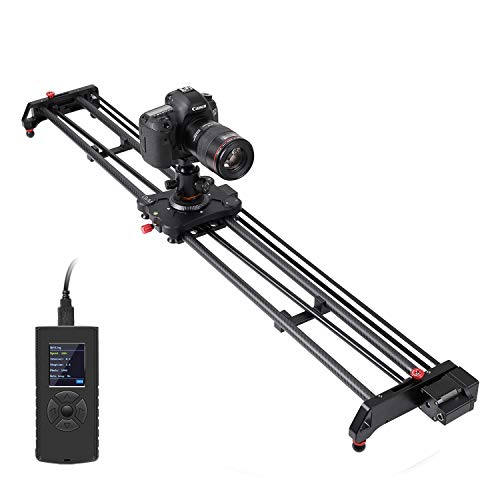
- 48-inch carbon fiber rail with stable carriage
- Supports tracking, time lapse, panoramic shooting, and auto loop
- Includes battery, charger, remote line, shutter cables, and bag
Best For: Creators needing a full-length motorized slider for tracking and repeatable motion
Compact Smart Slider
iFootage PICO Phone & Pocket Rig

- 4-axis motion control with DJI Pocket 3/4 integration
- Works with Pocket cameras, action cams, and smartphones
- Quiet brushless motor with app and onboard programmable points
Best For: Mobile creators and Pocket camera users who need a compact tracking slider
App-Control Motorized Rail

- App control plus 2.4G remote compatibility
- Silent stepper motor with video and time-lapse modes
- Carbon fiber rail supports horizontal, panorama, and tilt shooting
Best For: Shooters wanting an app-controlled motorized slider with versatile angle options
Motorized Motion Control Pick
Zeapon Micro 3 E1000 with Quick Motor Switching

- Adjustable fluid damping from 1 to 5
- Quick-release motor switching for flexible setups
- Triple support system helps reduce end-of-travel tilt
Best For: Shooters who want a stable motorized slider with smooth, adjustable motion
Multi-Mode Motion Slider
GVM GP-80D 6-in-1 Motorized Rail
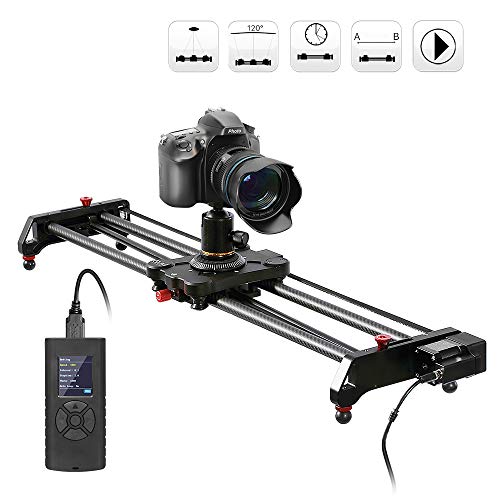
- Supports tracking, panoramic, time lapse, and video capture
- Custom start/end points with speed and pause controls
- Includes battery, controller, and carrying bag
Best For: Creators who want a versatile motion slider for multiple shooting styles
Smart App-Control Slider

- Built-in motor with Bluetooth app control
- Memory A/B points for repeatable moves
- Carbon fiber rail with quiet sub-30dB operation
Best For: Filmmakers who want app-driven, repeatable motion control
Studio-Ready Carbon Fiber Pick – 31" Motorized Slider with Tracking
If you want camera sliders with motion tracking for smoother moving shots, this GVM model gives you a longer 31-inch carbon fiber rail with multiple automated motion options. It supports horizontal, tracking, and 120-degree panoramic shooting, plus timed video capture and time-lapse modes for repeatable movement.
Best For: Creators who need a lightweight but sturdier motorized slider for tracking shots, panoramas, and time-lapse work.
Pros:
- Carbon fiber build keeps it relatively lightweight for outdoor use.
- Offers horizontal, tracking, and 120° panoramic shooting modes.
- Includes video capture and time-lapse menus with auto round trip.
- Comes with remote controller, NP battery, charger, ball head, and shutter cables.
Cons:
- At 31 inches, it is less compact than mini travel sliders.
- Best suited to cameras and camcorders rather than phones.
- Setup may take more time than a simpler manual slider.
This is a practical option if you want a motorized slider that covers common motion patterns without giving up a carbon fiber build. The included accessories and multiple screw ports make it a flexible choice for tripod-mounted shooting.
Ultra-Portable Phone Slider Pick – Pico Pro Mini Motorized Slider
For buyers comparing camera sliders with motion tracking in a travel-friendly format, the IFOOTAGE Pico Pro stands out as a compact motorized slider built for phones, action cameras, DJI Osmo Pocket models, and small cameras. It supports slide and 360° pan moves, and the app can set up to 8 keyframes for automated motion.
Best For: Mobile creators who want an easy-to-carry slider for smooth cinematic moves and simple automated keyframes.
Pros:
- Very portable at 1.8 lbs and easy to pack for travel.
- Works with smartphones, action cameras, DJI Osmo Pocket 3/4, and cameras up to 3.3 lbs.
- Built-in 5000mAh battery provides up to 7 hours of runtime.
- Supports control by onboard knob, smartphone app, or Apple Watch.
Cons:
- Shorter 15.7-inch size limits travel distance compared with longer rails.
- Payload is capped at 3.3 lbs, so it is not for heavier camera setups.
- Advanced 4-axis use depends on pairing with compatible DJI Pocket models.
This is a strong choice if portability matters more than rail length. It gives you automated slide and pan motion in a package that is easy to carry and quick to control.
Long-Rail Tracking Option – 48" Carbon Fiber Motorized Slider
If you need camera sliders with motion tracking and more travel distance, this 48-inch GVM model offers a longer carbon fiber rail with the same core motion options as the shorter version. It supports horizontal, tracking, and 120-degree panoramic shooting, along with video capture and time-lapse menus for consistent automated movement.
Best For: Filmmakers who want a longer motorized slider for wider moves and repeatable tracking shots.
Pros:
- Long 48-inch rail gives you more slide range.
- Carbon fiber construction aims for strength and efficiency.
- Supports horizontal, tracking, and 120° panoramic shooting.
- Includes six shutter release cables and an extension cable.
Cons:
- At 11 pounds, it is less travel-friendly than compact sliders.
- Primarily designed for cameras and camcorders, not phones.
- Large folded size makes storage and transport less convenient.
This model makes sense if your shots benefit from a longer path and a more professional-style motorized setup. It keeps the same motion modes and automation features while giving you more room to frame the move.
Compact Multi-Axis Choice – Shark Slider Pico Pro
Among camera sliders with motion tracking, the iFootage Shark Slider PICO PRO is built for compact rigs that still need automation and expansion options. It works with DJI Pocket 3/4, Action 5/6, smartphones, and compact cameras, and it supports 4-axis motion with a 3rd-axis expansion path for external gimbals and AI face tracking accessories.
Best For: Solo creators and compact-kit shooters who want advanced motion options in a lightweight slider.
Pros:
- Supports 4-axis motion when paired with DJI Pocket 3/4.
- 3rd-axis expansion can add gimbal control or AI face tracking.
- Whisper-quiet brushless motor is useful for interviews and vlogs.
- Built-in battery provides up to 7 hours of runtime and fast charging.
Cons:
- 15.8-inch rail is better for compact moves than long cinematic slides.
- Full 4-axis functionality depends on compatible devices and add-ons.
- 3.3 lb payload keeps it in the lightweight camera category.
This is the most flexible option in the group if you want a small slider that can grow into more advanced motion workflows. The quiet motor, app controls, and expansion support make it especially appealing for solo production.
Motorized Round-Trip Slider – GVM 48" Carbon Fiber Motion Control
If you want camera sliders with motion tracking for longer moves and repeatable framing, this GVM 48-inch motorized slider is built for controlled tracking, time-lapse, and panoramic shooting. Its carbon fiber rail, adjustable motor settings, and round-trip automation make it a practical pick for creators who need smooth motion and flexible setup options.
Best For: Filmmakers who want a full-length motorized slider for tracking shots, time-lapse work, and panoramic video capture.
Pros:
- 48-inch carbon fiber rail with a stable carriage assembly
- Supports tracking shooting, time lapse, panoramic shooting, and auto loop
- Adjustable motor torque, speed, interval, stop time, and photo count
- Includes battery, charger, remote line, shutter cables, and carrying bag
Cons:
- Maximum weight recommendation is 5 kg
- At 11.8 pounds, it is less travel-friendly than compact sliders
- Best suited to video/camera setups rather than ultra-light rigs
This GVM model is strongest when you need a longer sliding path and preset motion control instead of a minimalist portable setup. The multiple mounting ports and manual/electric modes add flexibility, while the included accessories help you get started quickly.
Compact Smart Slider – iFootage PICO Phone & Pocket Rig
For camera sliders with motion tracking in a compact form, the iFootage Shark Slider PICO is designed around small rigs like DJI Pocket 3/4, Action 5/6, and smartphones. It adds 4-axis motion control with direct USB-C integration for Pocket cameras, plus app and wearable control for repeatable tracking shots, panoramas, and other cinematic moves.
Best For: Mobile creators and Pocket camera users who want a lightweight slider for tracking shots and programmable motion.
Pros:
- Direct USB-C integration for DJI Pocket 3/4 with 4-axis motion control
- Works with Pocket cameras, action cams, and smartphones
- Quick-Mark system and app support for up to 8 programmable points
- Quiet brushless motor with Video, Time-Lapse, Stop Motion, Panorama, and Multi-Target modes
Cons:
- 15.8-inch slider length is better for compact moves than long sweeps
- 2.4 lb payload may limit heavier camera builds
- Smaller size favors portability over a full studio-style setup
The PICO stands out if you value portability, quiet operation, and simple repeatable control from a phone or app. Its short length and pocket-friendly build make it more of a nimble creative tool than a large production rail.
App-Control Motorized Rail – NEEWER ER1-80 31.5" Slider
If you’re comparing camera sliders with motion tracking for DSLR or phone-based video, the NEEWER ER1-80 offers app wireless control, preset motion, and a carbon fiber build in an 80cm format. It supports video mode, time lapse, and manual operation, giving you a straightforward way to create smooth back-and-forth camera motion with a quiet stepper motor.
Best For: Shooters who want an app-controlled motorized slider with flexible angle options and solid load support.
Pros:
- App control and 2.4G remote compatibility for motion setup
- Silent stepper motor for smooth, noiseless camera movement
- Supports horizontal, 120° panorama, and 45° tilt shooting
- Carbon fiber build with 11 lb horizontal load capacity
Cons:
- Remote control is not included
- Charger is not included with the 4400mAh battery
- Tilt load capacity drops to 5.5 lb at 45°
The ER1-80 is a good middle-ground choice if you want app-based control without moving up to a larger rig. Its angle options, quiet motor, and portable carbon fiber design make it versatile for controlled motion work.
Motorized Motion Control Pick – Zeapon Micro 3 E1000 with Quick Motor Switching
If you’re comparing camera sliders with motion tracking, the Zeapon Micro 3 E1000 stands out for its motorized, adjustable-damping design and quick motor switching. It is built for smooth motion work, with a 42″/107cm travel distance, strong payload support, and a triple support system that helps keep moves stable as the slider runs.
Best For: Creators who want a motorized slider with smooth damping, strong support, and flexible motion-control setup.
Pros:
- Fluid damping can be adjusted from 1 to 5 for smoother camera movement.
- Fast motor switching makes it easier to move between production setups.
- Triple support system helps prevent tilting when the slider moves to the end.
- Supports camera, DSLR, and smartphone use.
Cons:
- Heavier than compact manual sliders at 15 pounds.
- Travel length may be more than some tabletop setups need.
- Motorized system may be more involved than a basic rail slider.
This is a practical pick if you want a smoother, more controlled motion rig rather than a simple glide rail. Its adjustable damping and support accessories make it well suited to repeatable motion shots and more demanding shooting setups.
Multi-Mode Motion Slider – GVM GP-80D 6-in-1 Motorized Rail
For buyers browsing camera sliders with motion tracking, the GVM GP-80D is built around versatility rather than simplicity. It supports tracking shooting, panoramic shooting, time lapse, and video capture, while also letting you set starting and ending points and adjust speed, dwell time, distance, and pause time.
Best For: Creators who want one motorized slider for tracking, panoramic, and time-lapse-style shots.
Pros:
- 6-in-1 design supports tracking, panoramic, time lapse, and video capture.
- Lets you customize start/end points, speed, dwell time, and pause time.
- Includes tripod support via multiple 1/4″ and 3/8″ screw holes.
- Comes with carrying bag, battery, charger, controller, and cables.
Cons:
- Maximum weight recommendation is 11 pounds.
- At 31 inches, travel distance is more limited than longer sliders.
- Feature set may be more than needed for basic glide shots.
This slider makes sense if you want several motion modes in one system and need fine control over each shot. It is especially appealing for users who want a ready-to-use package with included accessories.
Smart App-Control Slider – KONOVA G1 Smart Motion Rail
If you’re shopping for camera sliders with motion tracking, the KONOVA G1 is a strong fit for users who want app control and fast setup. Its motor is integrated into the rail, and the Bluetooth app on iOS or Android lets you set A/B points for repeatable motion, with quiet operation and multiple shooting modes for video, time lapse, stop motion, and panoramic work.
Best For: Filmmakers and content creators who want app-based motion control with repeatable start and end points.
Pros:
- Integrated motorized rail design reduces setup complexity.
- Bluetooth app supports A/B points and repeatable moves.
- Quiet motor operation is rated below 30dB.
- Carbon fiber build improves stability and portability.
Cons:
- Maximum horizontal payload is 11 lb, so heavier camera rigs are out.
- Camera cable compatibility must be checked before use.
- 80cm length may be short for users needing more travel.
Overall, this is a smart option if you value easy app control and repeatable motion programming over a more manual rail setup. The built-in motor and quiet performance make it well suited to polished production work.
How We Picked the Best Camera Sliders with Motion Tracking
We looked for Camera Sliders with Motion Tracking that offer dependable motion control, stable rails, useful travel length, and easy setup. We also favored models with strong app control, time-lapse support, and features that help creators get repeatable results without complicated operation.
Quick Comparison
Short sliders are usually easier to pack and better for tabletop, phone, and compact setup work. Longer rails are better when you want more dramatic push-ins, product reveals, or controlled parallax movement. Motor quality, battery life, and control method matter just as much as raw length.
Key Buying Factors for Camera Sliders with Motion Tracking
Motion Smoothness and Control
Look for a slider that starts and stops cleanly, supports consistent speed changes, and allows accurate path planning. Good motion control is essential if you want professional-looking tracking shots rather than jerky movement.
Payload and Camera Compatibility
Check the maximum supported weight and make sure it matches your camera, lens, head, and any accessories you plan to mount. Mirrorless and DSLR users often need more load capacity than phone creators.
Travel Distance and Shooting Style
A compact travel range works well for close-ups and desktop work, while longer travel is better for interviews, cinematic reveals, and scene-to-scene motion. Choose length based on the shots you actually make most often.
Power and Control Options
Battery-powered operation, app control, Bluetooth connectivity, and repeatable automated moves can save time on set. If you shoot solo, these features are especially useful because they reduce the need for extra hands.
Portability and Setup Time
If you travel often, weight and case design matter. A lighter rail system is easier to carry, but heavier builds may feel steadier in use. The best choice is the one you can deploy quickly and confidently.
Who Should Buy Which Camera Sliders with Motion Tracking?
Content creators and mobile shooters should focus on compact, easy-to-control options. DSLR and mirrorless users should prioritize payload, rail stability, and motion repeatability. Filmmakers and product-video shooters will usually benefit most from longer sliders with programmable moves and strong app control. If you want the simplest path to better motion shots, choose a model that matches your camera weight, typical scene size, and workflow first.