Choosing the right field monitor with HDR can make framing, focus, and exposure far easier on set or in the field. The best models balance brightness, color accuracy, size, and practical power options.
Below, we’ve narrowed the list to 10 standout monitors for filmmakers, creators, and run-and-gun shooters who need a reliable display they can trust in changing light.
Best 10 Field Monitor with Hdr Picks for 2026
Bright Touch Monitor
NEEWER F700 7" 2000nit Camera Field Monitor

- 2000-nit 7-inch IPS touch screen
- HDR plus waveform, vectorscope, and zebras
- 4K HDMI loop in/out with LUT upload support
Best For: Outdoor shooters who want a bright touchscreen HDR monitor
Large Production Display
osee Mega 15S 15.4" HDR Production Monitor
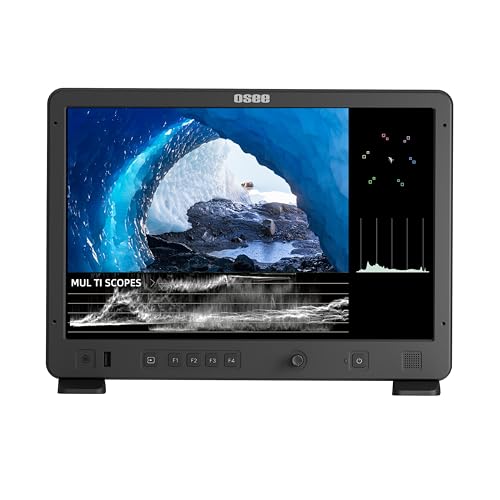
- 15.4-inch 10-bit IPS display with 1500-nit brightness
- HDR preview with hardware auto color calibration
- Dual 3G-SDI I/O plus 4K HDMI input
Best For: Directors and DITs who need a large calibrated set monitor
Compact OLED Pick
NEEWER F700U 7" OLED HDR Camera Monitor

- 7-inch OLED touchscreen with 1200-nit brightness
- HDR tools plus waveform, vectorscope, and peaking
- HDMI loop out and 3G-SDI I/O in a portable build
Best For: Crews that want OLED contrast in a compact HDR monitor
Budget Touch Option
VILTROX DC-550 5.5" HDR Camera Monitor

- 5.5-inch touchscreen with 1200-nit brightness
- HDR, waveform, false color, and focus assist tools
- 4K HDMI in/out with sunshade and accessories
Best For: Compact rigs and buyers wanting an affordable HDR touchscreen
Budget-Friendly Starter Pick
FEELWORLD FW759 Pro 7" Touchscreen

- 7-inch touchscreen with 1280x800 IPS display
- Histogram, zebra, focus assist, and false color tools
- Includes batteries, sunshade, cables, and mounts
Best For: Beginners and lightweight camera rigs needing an easy-to-read on-camera monitor
Premium Compact Pick
Atomos Shinobi II 5.2" HDR Touchscreen

- 5.2-inch HDR touchscreen monitor
- USB-C camera control for exposure and color adjustments
- Bundle includes battery, charger, and hot shoe mounts
Best For: Photographers and solo creators wanting compact HDR monitoring with on-screen control
Best Value Full-HD Pick
FEELWORLD F5 Pro V4 6" Touchscreen

- 6-inch 1920x1080 touchscreen panel
- 3D LUT, waveform, vector, and histogram support
- F970 kit and DC output help power a streamlined rig
Best For: Videographers needing a sharp touchscreen monitor with advanced exposure and color tools
Ultra-Portable HDR Pick
Atomos Shinobi GO 5-inch Monitor

- 1500-nit HDR/SDR screen for bright daylight use
- Waveform, histogram, false color, and RGB parade tools
- Lightweight 210g body with NP-F and USB-C PD power
Best For: Creators who want a bright, lightweight HDMI monitor for field use
Workflow Value Pick

- 1000-nit display for outdoor shooting
- Custom false color and 8 MySets workflow
- 4K HDMI input with LOG/HDR preview and 3D LUT support
Best For: DSLR and mirrorless shooters who want fast preset-based monitoring
Battery-Powered Touch Pick
FEELWORLD P6XL 6-Inch HDR Monitor
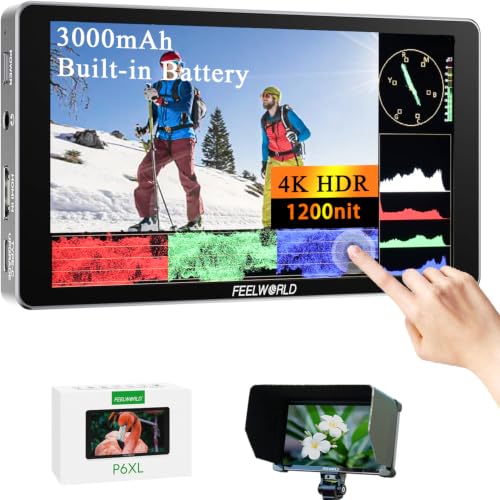
- 6-inch 1200-nit touchscreen for fast control
- Built-in 3000mAh battery for portable shooting
- HDR tools, waveform, vector scope, histogram, and 3D LUTs
Best For: Mobile creators who want a bright touchscreen monitor with internal power
Bright Touch Monitor – NEEWER F700 7" 2000nit Camera Field Monitor
If you want a field monitor with hdr that stays readable outdoors, the NEEWER F700 is built around brightness and flexibility. Its 7-inch 1080p IPS touch panel, 2000-nit output, and auto backlight control make it a practical choice for daylight shoots, while the built-in exposure tools and LUT support help with fast on-set checking.
Best For: Solo shooters, crews, and creators who need a bright touchscreen monitor with HDR and strong framing tools.
Pros:
- 2000-nit 7-inch IPS touch screen for easier daylight viewing
- Includes HDR, waveform, vectorscope, false color, zebras, and more
- Supports 4K HDMI loop in/out plus headphone audio monitoring
- Offers 15 built-in 3D LUTs and up to 60 custom LUT uploads
Cons:
- DC cable is not included for all power setups
- Uses NP-F batteries, so runtime depends on battery choice
- Bulkier than a smaller on-camera monitor
The F700 is a strong pick if visibility is your top concern and you still want pro monitoring features. It balances brightness, touch control, and HDR support well for camera operators working in changing light.
Large Production Display – osee Mega 15S 15.4" HDR Production Monitor
The osee Mega 15S is a bigger field monitor with hdr for crews that need a daylight-viewable reference display. Its 15.4-inch 10-bit IPS panel, 1500-nit brightness, hardware color calibration, and HDR preview support make it a better fit for set work than a compact camera-top monitor.
Best For: Directors, DITs, and production teams needing a large, color-focused HDR monitor for set use.
Pros:
- 15.4-inch 10-bit IPS panel with 1500-nit peak brightness
- Supports HDR preview in HLG and PQ
- Includes dual 3G-SDI I/O and 4K HDMI input for flexible routing
- Hardware auto color calibration helps maintain Rec.709 accuracy
Cons:
- Larger and less portable than a 5- or 7-inch on-camera monitor
- Designed more for production monitoring than lightweight rigging
- May be overkill for simple single-camera setups
This monitor makes sense when image review and color confidence matter more than compact size. For multi-camera production, the combination of SDI, HDMI, and calibration tools is especially useful.
Compact OLED Pick – NEEWER F700U 7" OLED HDR Camera Monitor
If you want a compact field monitor with hdr and deeper contrast, the NEEWER F700U brings an OLED panel to a familiar 7-inch on-camera format. The 1200-nit screen, 100000:1 contrast ratio, HDMI loop out, and SDI input/output make it a useful option for monitoring detail in both video and live rig setups.
Best For: Shooters who prefer OLED contrast and need a portable HDR monitor with HDMI and SDI support.
Pros:
- 7-inch OLED touchscreen with 1200-nit brightness and very high contrast
- Includes HDR, peaking, false color, zebra, waveform, and vectorscope tools
- Supports 4K HDMI input/loop out plus 3G-SDI input/output
- Comes with two NP-F750 batteries for mobile use
Cons:
- Smaller screen than larger production monitors
- Brightness is lower than some daylight-first monitors
- Needs SD card separately for custom LUTs and firmware updates
The F700U is a smart choice if contrast and signal flexibility matter more than sheer screen size. It gives you a solid mix of HDR tools, OLED image quality, and both HDMI and SDI connectivity.
Budget Touch Option – VILTROX DC-550 5.5" HDR Camera Monitor
The VILTROX DC-550 is a smaller field monitor with hdr that covers the essentials for mirrorless, DSLR, and cinema camera rigs. Its 5.5-inch touchscreen, 1200-nit brightness, 4K HDMI in/out, and included sunshade make it a practical lightweight monitor for shoots where portability matters.
Best For: Budget-conscious shooters who want a compact HDR touchscreen monitor with useful exposure tools.
Pros:
- 5.5-inch IPS touchscreen with 1200-nit daylight-friendly brightness
- Includes HDR, waveform, false color, focus assist, and zebras
- Supports 4K HDMI input/output and audio monitoring
- Ships with a sunshade, battery, cables, and carry case
Cons:
- Smaller screen may feel cramped for detailed framing
- Brightness is good, but not as high as the brightest field monitors
- Single included battery may not be enough for longer sessions
For creators who want a straightforward monitor without moving up to a larger production display, the DC-550 covers the basics well. It combines a compact footprint with HDR support and the core focus and exposure tools most operators need.
Budget-Friendly Starter Pick – FEELWORLD FW759 Pro 7" Touchscreen
If you want a field monitor with hdr-style monitoring tools without overcomplicating your rig, the FEELWORLD FW759 Pro is a practical 7-inch option for framing, focus, and exposure checks. Its 1280×800 IPS panel gives you more screen space than a camera display, and the included sunshade helps it stay usable outdoors.
Best For: Vloggers, beginners, and lightweight DSLR or mirrorless setups that need an easy-to-read monitor for composition and exposure.
Pros:
- 7-inch touchscreen makes menu control and shot review more convenient
- Histogram, zebra, focus assist, and false color support help with exposure and focus checks
- Light 300g design works well on handheld rigs and gimbals
- Includes batteries, sunshade, cables, and mounting accessories in the box
Cons:
- 400-nit brightness is more modest than higher-end daylight monitors
- Resolution is 1280×800, not full HD
- Only one HDMI port is listed
Overall, this is a straightforward monitor for creators who want a larger, easier-to-use screen and essential monitoring tools at a lower-friction setup level. The bundled accessories make it especially appealing if you want to start shooting quickly.
Premium Compact Pick – Atomos Shinobi II 5.2" HDR Touchscreen
The Atomos Shinobi II is a compact field monitor with hdr support designed for creators who want a sharper, more refined on-camera viewing experience. Its 5.2-inch touchscreen, selfie mirror mode, and USB-C camera control make it especially useful when you need quick, hands-on adjustments while shooting.
Best For: Photographers, vloggers, and mobile shooters who want a lightweight HDR monitor with touchscreen control and camera-side convenience.
Pros:
- HDR touchscreen display for clearer monitoring in a compact form factor
- USB-C camera control lets you adjust white balance, aperture, shutter speed, and ISO
- Selfie mirror mode is helpful for solo shooting and vlogging
- Bundle includes battery, charger, and hot shoe mounts
Cons:
- Smaller 5.2-inch screen may feel tight compared with larger field monitors
- Bundle weight is higher than the monitor alone due to included accessories
- Package is geared toward convenience rather than extensive monitoring-tool details
This is a strong choice if you value portability and camera control more than a big display. The bundled power and mounting accessories make it a convenient ready-to-use package for travel or compact rigs.
Best Value Full-HD Pick – FEELWORLD F5 Pro V4 6" Touchscreen
The FEELWORLD F5 Pro V4 is a capable field monitor with hdr-style workflow support for creators who want a sharper Full HD screen and more advanced image tools. Its 6-inch 1920×1080 IPS panel, 3D LUT preview, and waveform, vector, and histogram features make it a strong fit for dialing in exposure and color on set.
Best For: Videographers and content creators who want a Full HD touchscreen monitor with LUT preview and flexible power options.
Pros:
- Full HD 1920×1080 touchscreen gives a crisp viewing experience
- 3D LUT, waveform, vector, and histogram tools support more precise monitoring
- F970 external kit can power accessories like wireless transmitters
- DC 8.4V output can power the camera directly for a cleaner rig
Cons:
- 6-inch screen is smaller than some other field monitor options
- Brightness is listed at 500 nits, which may still need shade in harsh light
- Best features are tied to a more advanced setup than basic plug-and-play use
For creators who want a more advanced monitoring tool without jumping to a much larger setup, this model hits a nice balance. It stands out for its high-resolution panel, LUT support, and useful power integration.
Ultra-Portable HDR Pick – Atomos Shinobi GO 5-inch Monitor
If you want a field monitor with hdr that stays simple, bright, and easy to rig, the Atomos Shinobi GO is built for practical on-camera use. Its 5-inch 1500-nit HDR/SDR display, lightweight body, and monitoring tools make it a strong fit for shooters who need visibility and exposure help without extra bulk.
Best For: Videographers, photographers, and solo creators who want a compact HDR HDMI monitor with strong outdoor visibility.
Pros:
- 1500-nit 5-inch HDR/SDR screen stays visible in bright daylight
- Includes waveform, histogram, false color, RGB parade, and analysis view
- 3D and 1D LUT support with custom .cube loading via SD card
- Lightweight 210g design with NP-F, USB-C PD, and AC power options
Cons:
- HDMI-only monitoring limits connection flexibility
- Battery is not included in the supplied notes
- Focused on monitoring rather than extra built-in features
Overall, the Shinobi GO is a clean choice if you prioritize brightness, portability, and dependable exposure tools over a feature-heavy monitor. Its locking cable system also adds some welcome security on set.
Workflow Value Pick – Osee T5+ 5.5-Inch HDR Monitor
The Osee T5+ is a practical field monitor with hdr for shooters who want strong outdoor visibility plus faster exposure workflows. Its 1000-nit display, custom false color tools, and 8 MySets preview system make it well suited to location work where speed and repeatability matter.
Best For: DSLR and mirrorless users who want customizable monitoring tools and quick on-set preset switching.
Pros:
- 1000-nit brightness helps with outdoor filming
- Custom false color presets and one-click camera model selection
- 8 MySets workflow lets you switch monitoring setups quickly
- Supports 4K HDMI input, LOG/HDR preview, and 3D LUT loading
Cons:
- Battery is not included
- Smaller 5.5-inch screen may feel compact for some users
- Glossy display may not suit every lighting situation
In practice, the T5+ stands out when you want more control over exposure tools and a flexible field workflow. It is a good match for users who value custom presets and monitoring efficiency over a larger screen.
Battery-Powered Touch Pick – FEELWORLD P6XL 6-Inch HDR Monitor
The FEELWORLD P6XL is a field monitor with hdr for shooters who want a larger touch interface and built-in power in one compact body. With a 6-inch 1200-nit screen, internal battery, and HDR/waveform tools, it suits mobile setups where portability and fast operation are priorities.
Best For: Mobile shooters and creators who want a bright touch monitor with built-in battery power.
Pros:
- 6-inch 1200-nit touchscreen is easy to operate and visible in many lighting conditions
- Built-in 3000mAh battery adds convenient portable runtime
- HDR monitoring with waveform, vector scope, histogram, and audio displays
- Supports custom 3D LUTs plus screenshot and image overlay features
Cons:
- Built-in battery offers about 2 hours at 100% brightness
- Heavier than some ultra-light monitors at 332g
- Only one HDMI port is listed in the supplied details
For users who want a monitor that can travel light without depending entirely on external batteries, the P6XL is an appealing option. The touch interface and built-in battery make it especially convenient for quick setups and run-and-gun work.
How We Picked the Best Field Monitor with Hdr
We focused on monitors that offer real-world usability rather than spec-sheet hype. That means strong outdoor visibility, reliable HDR support, responsive touch controls, useful exposure tools, and mounting or power options that suit fast-moving shoots. We also prioritized models that make sense for common cameras and workflows, from compact mirrorless rigs to larger production setups.
Quick Comparison
The best Field Monitor with Hdr for you usually comes down to screen size and brightness. Smaller 5.2-inch and 5.5-inch options are easier to build onto lightweight rigs, while 7-inch models are a sweet spot for most hybrid shooters. If you work outdoors often, higher-nit displays are easier to see in sunlight. Larger 15-inch-class monitors are better for studio, director, or production use where visibility and shared viewing matter more than portability.
Key Buying Factors for Field Monitor with Hdr
Brightness and Outdoor Visibility
Brightness matters more than almost anything else if you shoot outdoors. A monitor with a higher nit rating will generally remain easier to read in daylight. If you frequently work in harsh sun, look for a bright panel and consider whether a sunshade is included.
HDR Support and Exposure Tools
HDR is helpful, but it should be paired with practical monitoring tools. False color, waveform, zebra, peaking, and LUT support can make a bigger difference in day-to-day shooting than HDR alone. These features help you judge exposure and focus more confidently.
Screen Size and Resolution
Choose screen size based on your rig and shooting style. A compact monitor keeps handheld and gimbal setups manageable, while a larger display can improve framing accuracy on tripods or production carts. Full HD resolution is usually the baseline to look for in this category.
Power, Mounting, and Workflow
Battery compatibility, built-in power options, and mounting flexibility all affect how easy a monitor is to live with. If you want a simple portable setup, prioritize lightweight designs and common battery support. If you need a more advanced rig, look for HDMI and SDI options, preview LUTs, and workflow features that save time on set.
Who Should Buy Which Field Monitor with Hdr?
Traveling shooters and gimbal users should lean toward smaller, lighter monitors. Run-and-gun creators and wedding videographers will usually benefit from a bright 5.5- to 7-inch display with strong assist tools. Studio teams, directors, and video village setups may prefer a larger monitor for easier shared viewing. If you need a Field Monitor with Hdr for mixed lighting and outdoor use, focus first on brightness and exposure tools, then narrow by size, battery, and connectivity.