The best jewelry making kits for classrooms make creative projects easier to organize, share, and adapt across different skill levels. The selections below range from large bead assortments to beginner-friendly bracelet and friendship-craft sets.
When choosing for a class, look beyond the piece count. Age-appropriate materials, manageable storage, included tools, project variety, and the number of students each kit can support all affect its real classroom value.
Best 10 Jewelry Making Kits for Classrooms Picks for 2026
Best for Color Variety
Peirich Bead and Floss Organizer Kit

- 44 embroidery floss colors plus approximately 5,000 beads
- Three-tier organizer supports tidy classroom storage
- Works for bracelets, cross-stitch, and other crafts
Best For: Color-focused bracelet projects and organized mixed-media crafting
Best for Jewelry Skills
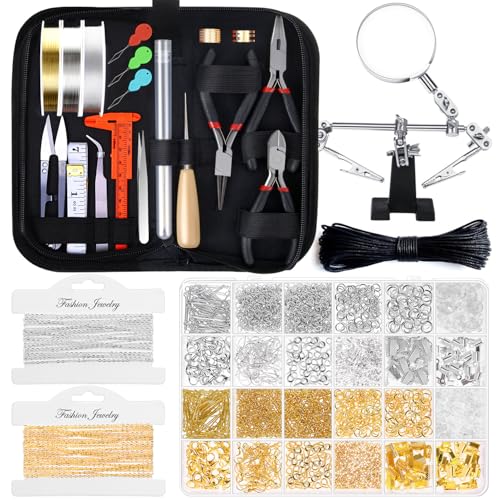
- Includes three essential jewelry pliers
- Contains 1,830 assorted findings and components
- Pouch and helping hands support organized instruction
Best For: Older students practicing jewelry assembly, wire work, and repairs
Best for Large Groups
Pizooro Clay Bead Bracelet Kit

- 9,600 clay beads in 48 colors plus 850 assorted accessories
- Three 24-grid organizers simplify sorting
- Supports bracelets, necklaces, earrings, and chains
Best For: Group friendship-bracelet projects and high-volume classroom crafting
Best for Younger Beginners

- Designed for children ages 5–12
- Includes clay beads, charms, pony beads, and string
- Instructions support beginner friendship-bracelet projects
Best For: Elementary-age beginners and themed bracelet-making activities
Most Complete Adult Set

- About 1,760 pieces with beads, findings, and tools
- Natural gemstone beads in 24 assorted colors
- Makes bracelets, earrings, necklaces, and rings
Best For: Older-student classroom projects with varied jewelry activities
Best Guided Bracelet Activity

- Includes instructions for 16 bracelet patterns
- Comes with clasps, beads, flowers, string, and stickers
- Supports individual or collaborative activities
Best For: Structured bracelet-making sessions for children ages 7–12
Best Organized Bead Assortment
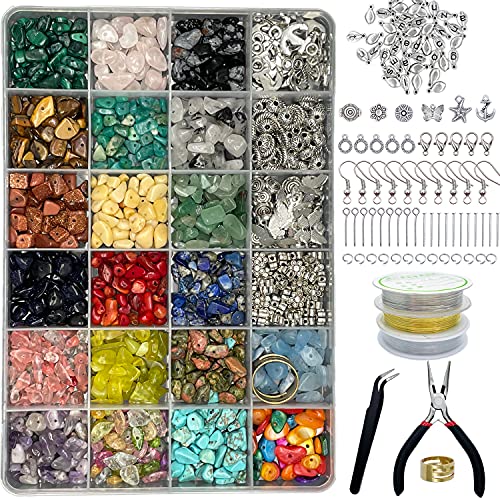
- About 1,587 pieces in a compartmented storage box
- Includes 1,200 gemstone beads in 20 colors
- Supports bracelets, necklaces, earrings, and more
Best For: Organized beginner jewelry projects with varied designs
Best Variety Pick
1200-Piece Polymer Clay Bead Kit

- 1,200 pieces with colorful themed beads
- 26-grid box supports organized storage
- Includes elastic string for multiple projects
Best For: Classrooms needing lots of design variety
Best Ready-to-Share Set

- Makes 24 individual bracelet projects
- Individually wrapped for quick distribution
- Designed for beginner-friendly group activities
Best For: Class parties and classroom prize activities
Best Letter-Bead Option
Pony and Polymer Clay Bracelet Kit

- About 800 pieces in varied styles
- Includes about 350 letter beads
- Comes with elastic string and four woven ropes
Best For: Ages 6–12 and personalized friendship bracelets
Best for Color Variety – Peirich Bead and Floss Organizer Kit
For classrooms seeking jewelry making kits for classrooms with broad creative flexibility, the Peirich kit combines embroidery floss, assorted beads, cords, and a portable three-tier organizer. Its large color selection supports friendship bracelets and other craft projects, though the adult-oriented listing makes supervision and material suitability important for younger students.
Best For: Color-focused bracelet projects, cross-stitch activities, and organized small-group crafting.
Pros:
- Includes 44 embroidery floss colors, approximately 5,000 beads, cords, clips, and fishing line.
- Floss comes pre-wound on bobbins to help reduce tangling and mess.
- Three-tier storage box keeps materials separated and portable.
Cons:
- The listing describes the age range as adult, so teachers should assess classroom suitability.
- The assortment is broad but may require extra planning to distribute materials efficiently among students.
This is a strong choice when variety and storage matter more than a narrowly themed lesson kit. It can support several craft formats from one compact box.
Best for Jewelry Skills – shynek Tools and Findings Kit
The shynek kit is one of the more tool-focused jewelry making kits for classrooms, pairing three pliers with wires, chains, findings, and repair accessories. It is suited to guided lessons in basic jewelry assembly, but its adult listing and sharp tools call for close supervision and age-appropriate use.
Best For: Older students learning jewelry construction, wire work, findings, and simple repairs.
Pros:
- Includes round-nose, wire-cutting, and chain-nose pliers.
- Provides 1,830 jewelry findings, including jump rings, clasps, eye pins, and earring hooks.
- Helping hands, tweezers, needles, and other accessories support more detailed projects.
- Black zip pouch helps keep the tools and supplies together.
Cons:
- The product is listed for adults, and the included tools require classroom supervision.
- It emphasizes findings and tools rather than a large selection of decorative beads.
Choose this set for instruction centered on technique rather than quick, bead-only projects. It offers useful hardware and tools for demonstrations, repairs, and structured skill-building.
Best for Large Groups – Pizooro Clay Bead Bracelet Kit
For classrooms that need a high-volume assortment, the Pizooro kit is a practical option among jewelry making kits for classrooms. It includes 9,600 six-millimeter clay beads, additional decorative beads and charms, elastic cord, and three organizers, making it suitable for collaborative bracelet and accessory projects.
Best For: Group friendship-bracelet activities, color design exercises, and multi-project craft stations.
Pros:
- Includes 48 colors and approximately 9,600 clay beads, plus about 850 assorted accessories.
- Supports bracelets, necklaces, earrings, waist chains, phone chains, and glasses chains.
- Three separate 24-grid organizers help sort colors and bead types.
- Includes elastic string, earring hooks, tweezers, scissors, and jump rings.
Cons:
- The listing notes slight thickness differences among traditional handmade clay beads.
- With many small components, classroom distribution and supervision will be necessary.
This kit stands out for quantity, variety, and storage. It is especially useful when several students need access to colorful materials at the same time.
Best for Younger Beginners – leitait Charm Bracelet Kit
The leitait kit is designed specifically for children ages 5–12, making it a natural candidate among jewelry making kits for classrooms serving younger learners. Its clay beads, charms, string, and instructions support approachable bracelet projects with unicorn and mermaid themes.
Best For: Beginner-friendly bracelet lessons, friendship crafts, and themed activities for elementary-age students.
Pros:
- Designed for girls ages 5–12 and includes instructions for beginners.
- Provides 2,640 clay beads in 12 colors along with pony beads, charm beads, and string.
- Encourages personalized friendship bracelets and gift-making.
- The activity can support color perception, hand-eye coordination, dexterity, and concentration.
Cons:
- The unicorn and mermaid themes may not suit every classroom or student.
- The listing contains differing piece-count details, so teachers should verify the package contents before planning exact quantities.
- Small beads and components require appropriate supervision.
This is a useful pick for structured, low-barrier bracelet sessions with younger students. Its instructions and child-focused theme can help beginners start creating quickly.
Most Complete Adult Set – Crystal Jewelry Making Kit
For classrooms looking for jewelry making kits for classrooms with broad project coverage, this ygorios set provides a large assortment of gemstone beads, findings, tools, and jewelry-making components. It supports bracelet, earring, necklace, and ring projects, though its adult-oriented design may suit supervised older students best.
Best For: Older-student classroom projects and instructors who want one kit for several types of jewelry.
Pros:
- Includes about 1,760 pieces, including gemstone beads, findings, charms, wire, and tools.
- Offers 24 assorted bead colors in natural gemstone beads with irregular shapes and 5–10 mm sizes.
- Includes jewelry pliers and tweezers, plus hypoallergenic jewelry findings and materials.
- Supports necklaces, bracelets, earrings, and rings in one kit.
Cons:
- The adult-focused kit may require close supervision with younger students.
- Irregular bead shapes and varied sizes may make uniform classroom projects more challenging.
- The notes do not specify classroom-sized quantities or student-by-student instructions.
Choose this option when variety and a wide selection of components matter more than a simplified, age-specific activity format. Its included tools and findings can help an instructor offer multiple jewelry projects from one package.
Best Guided Bracelet Activity – Friendship Bracelet Kit
For younger groups, this friendship bracelet set is a more structured choice among jewelry making kits for classrooms. Step-by-step instructions, 16 bracelet patterns, strings, clasps, beads, decorative flowers, and stickers give students a focused activity with opportunities to work independently or collaboratively.
Best For: Group bracelet activities for children approximately ages 7–12, with adult supervision for small parts.
Pros:
- Step-by-step instructions introduce different bracelet styles.
- Provides 16 bracelet patterns with unique clasps and decorative elements.
- Includes 30 fashion-designed stickers for added personalization.
- Designed for individual or collaborative bracelet-making activities.
Cons:
- Focuses primarily on friendship bracelets rather than necklaces, earrings, or rings.
- Includes a choking-hazard warning for small parts.
- The listed set does not include jewelry-making tools such as pliers.
This is a practical classroom pick when the goal is an accessible, repeatable bracelet project rather than a broad jewelry-design curriculum. The pattern guide can reduce setup time and help students begin creating quickly.
Best Organized Bead Assortment – Xmada Jewelry Kit
This Xmada set is a versatile option for jewelry making kits for classrooms, combining approximately 1,587 pieces with gemstone beads, pendants, findings, wire, and basic tools. The compartmented box helps keep supplies separated, which can be useful when organizing classroom materials or transporting projects.
Best For: Older students and beginners making several jewelry styles from an organized bead-and-findings assortment.
Pros:
- Includes about 1,200 gemstone chip beads in 20 assorted colors.
- Provides pendants, earring hooks, pins, clasps, jump rings, wire, tweezers, and pliers.
- Supports bracelets, necklaces, anklets, earrings, brooches, and rings.
- Comes in a compartmented box to help keep supplies organized after use.
Cons:
- The adult age-range description may make supervision appropriate for younger classrooms.
- Irregular 5–8 mm chip beads may not produce identical results across student projects.
- The set includes basic tools but does not indicate enough tools for every student to work simultaneously.
Consider this kit when storage and project flexibility are priorities. Its broad component selection works well for exploratory design lessons, while the divided box can make cleanup and supply management easier.
Best Variety Pick – 1200-Piece Polymer Clay Bead Kit
For classrooms seeking jewelry making kits for classrooms with plenty of creative options, this 1,200-piece set offers clay, pony, letter, animal, fruit, flower, butterfly, and star beads. The divided 26-grid box helps keep materials organized between activities.
Best For: Classrooms that want broad bead variety for bracelets, necklaces, keychains, phone charms, and other projects.
Pros:
- Includes 1,200 pieces and 20 decorative bead styles plus letter beads.
- Comes with 6 meters of elastic string for project assembly.
- Separate storage compartments make sorting and cleanup easier.
- Suitable for children ages 4 and up, according to the supplied details.
Cons:
- Only one roll of elastic string is included, which may limit larger group projects.
- The letter beads are random, so specific letters may not be available.
This is a flexible choice for teachers who value design variety and reusable organization. Its large assortment supports open-ended crafting, though a classroom may need additional string for extended group use.
Best Ready-to-Share Set – 24-Pack Bracelet Wands
For group activities, this 24-pack is one of the most classroom-ready jewelry making kits for classrooms because each bracelet wand is individually wrapped. The set is designed to make 24 bracelets and combines seven colors with eight cartoon-themed patterns.
Best For: Class parties, classroom prizes, goodie bags, and activities where each child needs an individual bracelet project.
Pros:
- Includes 24 individually wrapped bracelet wands for easy distribution.
- Offers 15 bead styles, seven colors, and eight cartoon-themed patterns.
- Beginner-friendly threading activity for children ages 4 and up.
- Purpose-built for parties, classroom prizes, and friendship activities.
Cons:
- The assortment is focused on bracelets rather than a range of jewelry projects.
- Patterns and bracelet designs are random, so students may not receive identical options.
This set stands out when equal portions and quick distribution matter more than maximum customization. It is a practical pick for a single group event, especially when individual packaging can simplify classroom setup.
Best Letter-Bead Option – Pony and Polymer Clay Bracelet Kit
For older elementary students, this kit is a versatile option among jewelry making kits for classrooms, with about 800 pieces spanning pony beads, polymer clay designs, smile faces, small rounds, and random letter beads. Its 27-compartment case supports sorting during and after projects.
Best For: Classrooms serving ages 6–12 that want personalized friendship bracelets and mixed-media bead projects.
Pros:
- Includes about 350 random letter beads in three types for personalization.
- Combines approximately 300 pony beads, 90 polymer clay beads, smile beads, and small rounds.
- Provides 6 meters of elastic string plus four woven ropes.
- Supports bracelets, necklaces, hair braids, earrings, and pendants.
Cons:
- Letter beads are random, so the selection may not support every student’s desired word.
- The kit is aimed at ages 6–12 rather than the youngest crafters.
This kit offers a strong balance of personalization and bead variety for friendship-bracelet lessons. The extra woven ropes and divided case are useful for shared classroom crafting, while teachers should plan projects around the random letter assortment.
How We Picked the Best Jewelry Making Kits for Classrooms
We focused on kits that offer practical value for group activities, including broad material assortments, clear creative possibilities, and supplies suited to common classroom projects. The lineup includes bracelet-focused sets, friendship-bracelet kits, polymer and clay bead collections, charm assortments, and more advanced jewelry-making supplies.
We also considered organization and usability. A kit with compartments, labeled sections, or an included organizer can reduce setup and cleanup time. For older students, pliers, findings, wires, and earring components add useful skill-building opportunities; for younger groups, larger beads and simpler stringing projects may be the better choice.
Quick Comparison
| Kit type | Best for | What to look for |
|---|---|---|
| Friendship-bracelet kits | Beginner group activities | Floss variety, instructions, and easy sharing |
| Clay and polymer bead kits | Colorful bracelet projects | Letter beads, charms, elastic cord, and style variety |
| General jewelry supply kits | Older students and advanced projects | Pliers, findings, wires, chains, and secure storage |
| Charm and party kits | Short projects and events | Simple assembly and enough matching components |
Key Buying Factors for Jewelry Making Kits for Classrooms
Student Age and Supervision
Check recommended ages before purchasing. Small beads and jewelry findings can be choking hazards, while pliers and wire tools require closer supervision. Younger students generally benefit from larger beads, elastic cord, and projects with fewer steps.
Quantity and Project Coverage
Piece counts can be misleading because beads, charms, findings, and tools are often counted separately. Estimate how many complete bracelets or projects the kit can produce, then compare that number with your class size. Two coordinated kits may work better than one oversized assortment if students need equal access to materials.
Variety and Creative Flexibility
Look for combinations of colors, shapes, letters, charms, and thread types. Variety supports personalization, but too many unrelated parts can make sorting difficult. Kits with a clear project focus are often easier to manage during a single class period.
Storage and Cleanup
Compartmentalized boxes, trays, and resealable containers help prevent lost beads and speed up distribution. Consider whether the organizer is sturdy enough for repeated classroom use and whether students can return supplies to the correct sections.
Who Should Buy Which Jewelry Making Kits for Classrooms?
Choose a friendship-bracelet or bracelet-focused kit for younger beginners, quick lessons, birthday activities, or classrooms where students need a straightforward project. Clay and polymer bead sets are a strong fit for colorful, personalized bracelets and mixed-age groups with basic stringing experience.
For older students learning more advanced techniques, select a comprehensive jewelry supply kit with pliers, wires, chains, earring hooks, and findings. Teachers running rotating stations may prefer a large, well-organized assortment, while small groups or short workshops can benefit from compact charm or bracelet kits that minimize setup time.