Manual flash is still one of the fastest ways to gain creative control over light. For portraits, product shots, events, and on-the-go shooting, a simple speedlight can outperform a camera’s built-in flash by a wide margin.
In this roundup, we focus on manual camera flashes that balance output, recycle time, battery life, and ease of use for different skill levels and camera systems.
Best 10 Manual Camera Flashes Picks for 2026
Ultra-Compact Manual Pick
NEEWER Z160 SE Mini Manual Flash

- 5.3 oz compact body for travel-friendly use
- Manual output from 1/128 to 1/1
- Up to 650 flashes per 1200mAh battery
Best For: Street, travel, and mirrorless shooters who want a tiny manual flash
High-Output Budget Choice
PHOTOOLEX FK300 Manual Speedlite

- GN33 output for stronger indoor reach
- Manual, S1, and S2 flash modes
- Includes pouch, stand, and 12 filters
Best For: Portrait, event, and studio beginners needing more power
Entry-Level Fill Light

- GN12 output with 8 manual power levels
- Tiny 1.3 oz body for easy carry
- Rechargeable battery supports 500-700 flashes
Best For: Beginners and creators who want a simple budget flash
Rotating Head Pick
ZENIKO RF12M Mini Manual Flash

- 180° rotatable and tilting head
- Built-in hemispherical diffuser softens shadows
- Pocket-friendly GN12 manual flash
Best For: New photographers who want bounce-light flexibility in a tiny flash
Wireless Manual Powerhouse
Godox TT600 2.4G Manual Speedlite

- Built-in 2.4G Godox X system
- GN60 output, 5600K±200K color
- Works with many major camera brands
Best For: Godox users who want a powerful manual flash with wireless expansion
Compact Pocket Flash
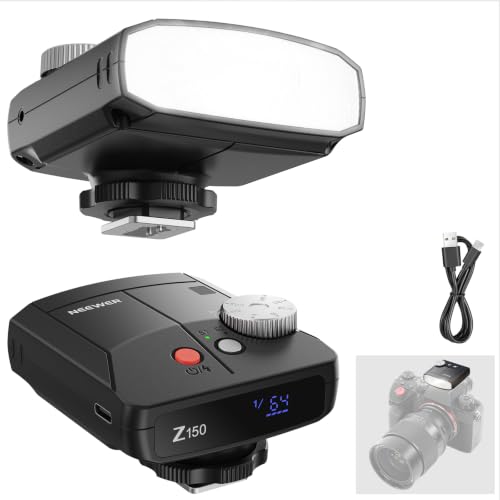
- Ultra-light 3.6oz pocket design
- Manual 1/64 to 1/1 power control
- 20Ws output with S1/S2 slave modes
Best For: Travel-friendly shooters who want a tiny manual flash for basic lighting
Budget Bounce Manual
Powerextra DF-400 Universal Flash

- GN33 output with 8-level manual control
- Tilts 0°-90° and rotates 0°-270°
- Includes S1/S2 modes plus PC sync port
Best For: Budget buyers who want bounce-ready manual flash control
Mini Everyday Flash
Godox iM30 Compact Hotshoe Flash
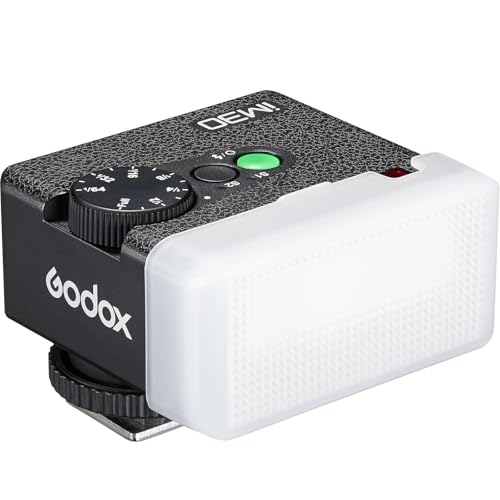
- 78g compact body for easy carry
- 7 manual power levels from 1/64 to 1/1
- Up to 230 flashes on two AAA batteries
Best For: Lightweight on-camera fill light with simple manual control
Compact Battery Flash
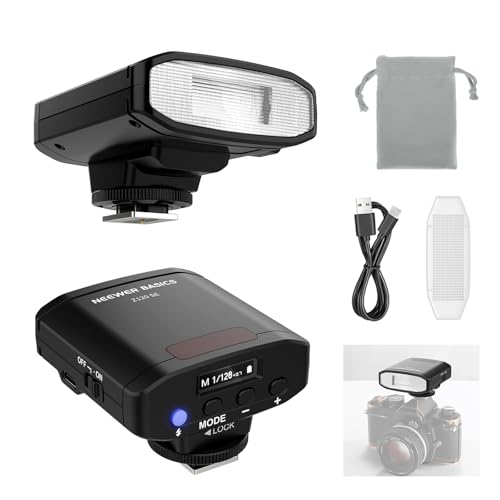
- Built-in 2000mAh battery, up to 500 flashes
- Compact 128g body with diffuser
- Manual, S1, and S2 modes for simple triggering
Best For: Portable rechargeable flash for everyday manual lighting
Ultra-Compact Manual Pick – NEEWER Z160 SE Mini Manual Flash
If you want one of the smallest manual camera flashes for simple on-camera fill, the NEEWER Z160 SE keeps things intentionally stripped down. It offers manual power control, a single-contact hot shoe, and optical S1/S2 slave modes, so it suits photographers who are comfortable adjusting flash output on the unit itself.
Best For: Street photographers, travel shooters, and mirrorless users who need a lightweight manual flash with straightforward controls.
Pros:
- Very compact and lightweight at 5.3 oz for easy on-camera use
- Manual power range from 1/128 to 1/1 for direct control
- 1200mAh battery supports up to 650 full-power flashes
- S1/S2 optical slave modes add basic off-camera flexibility
Cons:
- No TTL, HSS, or automatic flash exposure
- Requires a standard center-contact hot shoe and is not universal in every case
- Fuji and other mirrorless cameras must use mechanical shutter mode
Overall, this is a practical manual flash for photographers who value size and simplicity over advanced automation. If you need a tiny, battery-powered unit and don’t mind setting power manually, it fits the job well.
High-Output Budget Choice – PHOTOOLEX FK300 Manual Speedlite
The PHOTOOLEX FK300 is a straightforward option if you’re shopping manual camera flashes with more reach than a mini fill light. Its GN33 output, 5600K daylight balance, and 1/128 to 1/1 power adjustment make it a useful pick for indoor portraits, event coverage, and simple studio setups.
Best For: Photographers who want a stronger manual flash for portraits, events, and off-camera lighting experiments.
Pros:
- GN33 output gives more range than entry-level mini flashes
- Manual, S1, and S2 modes support flexible shooting setups
- 8 power levels from 1/128 to 1/1 for fine exposure control
- Includes pouch, flash stand, and 12 color filters
Cons:
- No TTL or automatic flash exposure
- Uses a wired design rather than advanced wireless triggering
- Not water resistant
For photographers who want a dependable manual flash with solid output and useful starter accessories, the FK300 is an easy value-focused option. It gives you room to grow into off-camera lighting without adding much complexity.
Entry-Level Fill Light – NEEWER N12 Mini Manual Flash
The NEEWER N12 is a compact, entry-level manual flash built around the basics: GN12 output, 5600K color, and 8 power levels. It’s designed for photographers who want a simple hot-shoe fill light for portraits, product shots, and general shooting without extra features getting in the way.
Best For: Beginners, content creators, and casual shooters who want an affordable manual on-camera flash.
Pros:
- Lightweight 1.3 oz body is easy to carry and mount
- 8 manual power levels from 1/1 to 1/128
- Built-in rechargeable battery supports 500-700 flashes
- Simple plug-and-play single-contact hot shoe design
Cons:
- No TTL or camera menu control
- GN12 output is modest compared with larger flashes
- Not compatible with several Canon Rebel models listed by the manufacturer
If you only need a compact manual flash for occasional use, the N12 keeps the learning curve low. It’s a practical choice for basic fill light, especially when portability matters more than power.
Rotating Head Pick – ZENIKO RF12M Mini Manual Flash
The ZENIKO RF12M stands out among manual camera flashes because it adds a 180° rotatable and tilting head in a pocket-sized body. With GN12 output, a built-in hemispherical diffuser, and a universal single-contact mount, it’s aimed at shooters who want more bounce-light flexibility than a fixed-head mini flash.
Best For: Beginners and hobbyists who want an affordable manual flash with a rotating head for bounce and fill light.
Pros:
- 180° rotating and tilting head for more lighting angles
- Built-in diffuser helps soften harsh shadows
- GN12 manual output covers everyday shooting needs
- Compact, pocket-friendly design for travel and street use
Cons:
- No TTL metering
- No LCD screen
- Lower-power design is better for basic use than demanding setups
As an entry-level manual flash, the RF12M is appealing if you want something easy to carry but still more adaptable than a fixed-angle mini unit. Its rotating head is the main reason to choose it over simpler budget flashes.
Wireless Manual Powerhouse – Godox TT600 2.4G Manual Speedlite
If you want manual camera flashes with real flexibility, the Godox TT600 is built for off-camera work and simple hot-shoe use. Its built-in 2.4G X system makes it easier to integrate into a larger Godox setup, while the GN60 output and 0.1-2.6s recycle time give it enough power for portraits, fill light, and multi-light shooting.
Best For: Shooters using Godox triggers or a mixed Godox setup who want a manual flash with strong output and wireless control.
Pros:
- Built-in Godox 2.4G X system for wireless control and multi-group, multi-channel use
- GN60 output with stable 5600K±200K color temperature
- Up to about 230 full-power flashes and 0.1-2.6s recycle time
- Compatible with many Canon, Nikon, Pentax, Olympus, Fujifilm, and Panasonic cameras with standard hot shoe
Cons:
- Does not provide HSS on-camera hot shoe use
- AA batteries are required and not included
- Sold TTL trigger is needed to access some remote features
This is a strong pick if you want a straightforward, powerful manual flash that grows with a Godox system. It is less about automatic convenience and more about dependable output, wireless expansion, and practical control.
Compact Pocket Flash – NEEWER Z150 Mini Manual Flash
The NEEWER Z150 is a compact choice for manual camera flashes when you want a lightweight fill light without extra complexity. It uses a universal single-contact hotshoe, puts out 20Ws with GN15, and keeps things simple with manual power adjustment plus S1/S2 optical slave modes.
Best For: Photographers who want a tiny manual flash for everyday carry, basic fill light, and simple off-camera triggering.
Pros:
- Very compact at 3.6oz/103g with a retro pocket-sized design
- Manual power range from 1/64 to 1/1 for direct control
- 20Ws output, GN15, and 3.1s recycle time
- Supports S1 and S2 optical slave modes for simple wireless setups
Cons:
- No TTL, no HSS, and no camera menu control
- Works only with cameras that have a standard center-contact hotshoe
- For Fujifilm and similar mirrorless cameras, mechanical shutter mode is required
This flash is best viewed as a minimal, portable tool rather than a feature-heavy unit. If your setup is compatible and you mainly need a small manual flash for fill and simple off-camera use, it fits the job well.
Budget Bounce Manual – Powerextra DF-400 Universal Flash
The Powerextra DF-400 is a classic manual camera flash for shooters who want more power and physical control without TTL. With GN33 output, 8-level manual adjustment, and a head that tilts and rotates for bounce techniques, it works as a practical entry point for basic portrait and general-purpose lighting.
Best For: Budget-minded photographers who want a manual flash with bounce capability and straightforward optical slave modes.
Pros:
- GN33 output with 5500K±200K daylight-balanced color temperature
- 8-level power control from 1/128 to 1/1 with LED indicators
- Head tilts 0°-90° and rotates 0°-270° for bounce flash use
- Includes S1/S2 optical slave modes and a PC sync port
Cons:
- Manual flash only, with no TTL or automatic exposure
- Requires a standard single-contact hot shoe and is not compatible with some listed cameras
- Uses 4 AA batteries, which are not included
For the price-focused buyer, this flash covers the basics well: manual output, bounce flexibility, and wired or optical triggering. It is less polished than higher-end options, but it gives you useful control for learning and simple setups.
Mini Everyday Flash – Godox iM30 Compact Hotshoe Flash
If you want a simple option among manual camera flashes, the Godox iM30 is built for quick fill light without extra setup. Its compact size, 7-level power adjustment, and single-contact hot shoe design make it a practical pick for casual shooting, travel, and everyday use.
Best For: Photographers who want a lightweight, easy-to-carry manual flash for basic on-camera fill light.
Pros:
- Very compact and lightweight at 78g, so it is easy to carry in a small bag.
- 7 power levels from 1/64 to 1/1 give useful control for different lighting needs.
- Up to 230 flashes on two AAA batteries helps it stay useful on short shoots.
- S1/S2 optical slave modes add simple off-camera triggering options.
Cons:
- Uses a single-contact hot shoe, so compatibility depends on your camera type.
- Batteries are not included.
- The notes warn that wide-angle or telephoto lenses may cause shadows.
Overall, the iM30 is a stripped-down manual flash that favors portability and ease of use over advanced automation. It makes sense if you want a small fill flash for supported cameras and do not need TTL or complex control.
Classic Manual Workhorse – NEEWER TT560 GN38 Manual Speedlite
The NEEWER TT560 is a straightforward choice if you are shopping for manual camera flashes and want higher output without paying for TTL features. It is designed for photographers who are comfortable setting power on the flash itself and want dependable, basic off-camera and on-camera lighting.
Best For: Shooters who want a full-size manual flash with strong output and simple, no-frills operation.
Pros:
- GN38 output is much stronger than mini flashes, giving more room to light portraits and general shooting.
- 8 manual power levels from 1/128 to 1/1 provide flexible control.
- S1/S2 optical slave modes and PC sync support off-camera lighting setups.
- The head tilts and rotates for bounce and directional lighting.
Cons:
- No TTL, no HSS, and no camera menu control, so all adjustment is manual.
- Requires 4 AA batteries, which are not included.
- Compatibility is limited by the need for a standard center-contact hot shoe.
In practice, the TT560 is best for photographers who want a budget-friendly manual flash and do not mind working without automation. Its stronger guide number and swivel head make it the most capable traditional speedlite here for basic lighting tasks.
Compact Battery Flash – NEEWER Z120 SE Mini Speedlite
The NEEWER Z120 SE is a compact manual flash for photographers who want a small, rechargeable option among manual camera flashes. With a built-in 2000mAh battery, diffuser, and basic optical slave modes, it fits everyday shooting, creator lighting, and portable setups.
Best For: Users who want a small rechargeable manual flash for casual portraits and portable lighting.
Pros:
- Built-in 2000mAh battery supports up to 500 full-power flashes.
- Compact retro-style body is easy to carry at 128g.
- Manual, S1, and S2 modes offer simple control and optical triggering.
- GN12 output with a translucent diffuser helps soften fill light.
Cons:
- No TTL, no HSS, and no camera menu control.
- Best suited to lenses of 88mm or shorter, according to the notes.
- Uses a standard single-contact hot shoe, so compatibility must be checked first.
The Z120 SE is a practical middle ground if you want rechargeable convenience without moving up to a larger flash. It is not the most powerful option, but it is easy to pack and well suited to simple manual lighting jobs.
How We Picked the Best Manual Camera Flashes
We prioritized Manual Camera Flashes that offer a practical mix of power, portability, consistent output, and straightforward controls. We also looked for units with usable guide numbers, reliable hot-shoe compatibility, clear manual power steps, and battery or AA options that fit real-world shooting.
Because these flashes are aimed at hands-on users, we gave extra weight to recycle performance, beam coverage, build quality, and whether the flash is easy to learn without needing complex TTL automation.
Quick Comparison
Choose a compact mini flash if you want lightweight fill light for travel or everyday shooting. Pick a higher-output speedlight if you need more reach for portraits, bounce flash, or mixed lighting. If you want a simple upgrade from the camera pop-up flash, entry-level models with manual power control are often the best value.
Key Buying Factors for Manual Camera Flashes
Power and Guide Number
Higher guide numbers generally mean more output, which matters if you plan to bounce light, use modifiers, or shoot in larger rooms. Smaller flashes can still work well for close-range fill, but they are less flexible at a distance.
Recycle Time and Battery Life
Faster recycle times help keep up with portrait sessions, events, and candid shooting. Battery capacity matters just as much if you want to avoid interruptions. For frequent use, look for a flash that can sustain many full-power pops without slowing down too quickly.
Control Range
Manual power steps should be easy to adjust, especially if you are learning flash exposure. Finer power increments make it easier to match ambient light and keep consistency from shot to shot.
Compatibility and Mounting
Check hot-shoe compatibility carefully, especially if you use multiple camera brands. Some Manual Camera Flashes are broadly compatible, while others are designed around single-contact hot-shoe operation or specific system support.
Size, Weight, and Use Case
Mini flashes are best when portability matters more than raw output. Full-size speedlights are the better choice when you need bounce capability, stronger illumination, or more versatility for paid work.
Who Should Buy Which Manual Camera Flashes?
If you are a beginner, choose a compact flash with simple manual controls and a clear display. Travel shooters and creators will usually prefer a lightweight mini unit that is easy to carry every day. Portrait photographers and anyone who wants more flexibility should lean toward a higher-power speedlight with stronger output and better recycle performance.
For the best overall value, focus on the model that matches your lighting style, not just the highest power rating. The right manual flash is the one you can set quickly, trust consistently, and carry often enough to use in real shoots.