The best portable NAS enclosures make it easier to carry, protect, and access your data without depending entirely on cloud storage. This roundup covers compact NVMe systems, multi-bay NAS devices, USB-C drive enclosures, and DIY-ready cases.
Whether you need phone backups, a mobile media library, creator-focused storage, or a scalable home server, the right choice depends on drive compatibility, connectivity, software, and how much expansion you need.
Best 10 Portable Nas Enclosures Picks for 2026
Best Outdoor Pick

- Battery-powered design with up to six hours of continuous use
- M.2 NVMe and SD card backup support
- LCD, app, Wi-Fi 6, and one-click backup controls
Best For: Creators backing up photos and video while traveling or working outdoors
Best High-Capacity Choice

- Four bays and up to 144TB total supported capacity
- Dual 10GbE ports with Ryzen processing and expandable RAM
- Supports media servers, Docker, VMs, backups, and surveillance
Best For: Power users and small teams needing fast, expandable local storage
Best Compact SSD Server

- Eight M.2 NVMe bays with up to 64TB supported capacity
- Core i3-N305, 16GB DDR5, and 10GbE networking
- Compact, quiet, all-SSD design with business backup tools
Best For: Fast, quiet home-lab or small-business storage in a compact chassis
Best Beginner Option

- Two-bay personal NAS supporting up to 64TB
- Automatic backups across major desktop and mobile platforms
- AI photo organization and layered privacy features
Best For: Beginners and families consolidating private backups at home
Best Versatile Enclosure
WAVLINK 4-Bay USB-C Storage Dock

- Four SATA bays support up to 88TB
- 10Gbps USB-C data connectivity
- Cooling fans and independent bay switches
Best For: Flexible high-capacity direct-attached storage
Best Ready-to-Use NAS
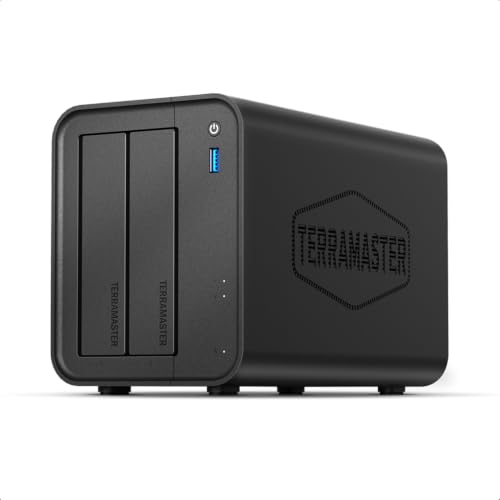
- Quad-core Intel CPU with 4GB RAM
- 2.5GbE networking for faster transfers
- Mobile backups and media-server support
Best For: Home private-cloud storage and streaming
Best DIY NAS Chassis
KCMconmey 4+1 Bay Mini-ITX Case
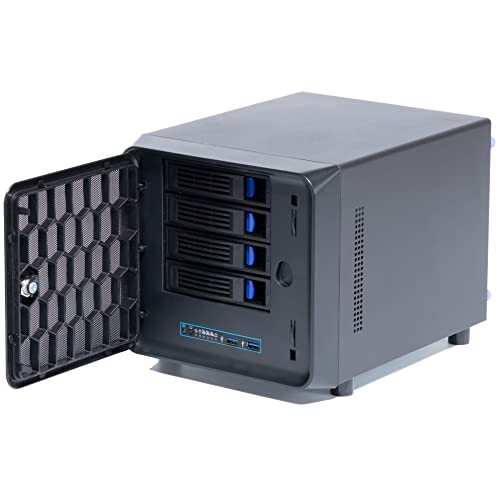
- Four external bays plus one internal 2.5-inch bay
- Mini-ITX and Flex/1U PSU support
- Single-slot PCIe expansion capability
Best For: Custom Mini-ITX NAS and private-cloud builds
Pocket Performance Pick
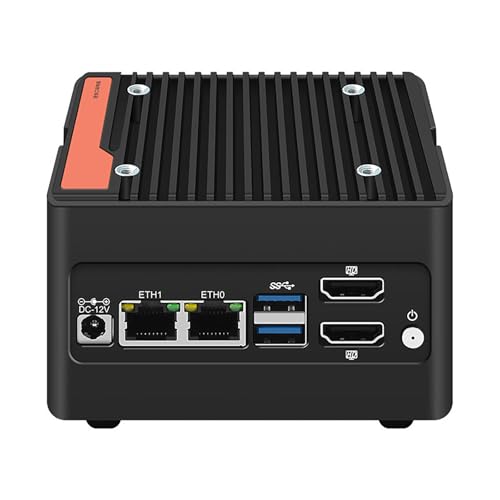
- Four NVMe bays in a pocket-sized enclosure
- Intel i3-N305 with dual 2.5GbE networking
- Ships without RAM or SSDs
Best For: Portable high-speed storage builds
Beginner-Friendly Choice

- Designed for simple home private storage
- Includes 4GB RAM and 2.5GbE networking
- Diskless design requires separate hard drives
Best For: Home backups, media, and private cloud access
DIY Capacity Leader

- Eight hot-swap bays for HDDs or SSDs
- Supports Mini-ITX and Micro-ATX builds
- Case only; core components are not included
Best For: Expandable custom media and backup servers
Best Outdoor Pick – PocketCloud Portable NAS
Among portable NAS enclosures, the PocketCloud stands out as a battery-powered, travel-ready option for photographers, vloggers, and other creators. It accepts an M.2 NVMe drive and SD cards, offers Wi-Fi 6 and built-in hotspot connectivity, and includes one-click backup controls for field use.
Best For: Outdoor photo and video backup when portability, local privacy, and flexible connection options matter.
Pros:
- Supports an M.2 NVMe drive up to 8TB, with expansion to 16TB using the matching Dock.
- Backs up through SD cards, USB drives, Wi-Fi 6, AP mode, or Ethernet with the Dock.
- Dual replaceable 3200mAh batteries provide up to six hours of continuous use, according to the supplied specifications.
- LCD display, control knob, one-click backup, local account storage, and encrypted connections simplify secure field use.
Cons:
- It is diskless, so an M.2 NVMe drive must be purchased separately.
- Ethernet connectivity requires the matching Dock.
- At 722g, it is less pocketable than a compact external SSD.
The PocketCloud is a specialized portable NAS enclosure rather than a traditional desktop NAS. Its built-in batteries, SD workflow, and simple controls make it particularly practical for creators who need to offload media away from a computer or reliable internet connection.
Best High-Capacity Choice – UGREEN NAS DXP4800 GT
For buyers comparing portable NAS enclosures for a demanding home office or creator workflow, the UGREEN DXP4800 GT offers desktop-class expansion in a relatively transportable four-bay chassis. Its Ryzen processor, expandable memory, dual 10GbE ports, and broad app support are aimed at heavier multitasking than entry-level units.
Best For: Creators, tech enthusiasts, and small office teams managing large media libraries, backups, surveillance footage, or self-hosted applications.
Pros:
- Four drive bays support up to 144TB total capacity when configured with compatible drives and SSDs.
- AMD Ryzen Embedded R2514, 8GB DDR4 RAM expandable to 64GB, and dual 10GbE support demanding workloads.
- UGOS Pro supports Docker, virtual machines, media servers, home automation, and other self-hosted services.
- Built-in SD, USB, HDMI, RAID, local account, and surveillance features cover varied storage workflows.
Cons:
- Drives are not included, so the final system cost will be higher.
- Its four-bay desktop design is less convenient for truly mobile use than a battery-powered enclosure.
- Advanced features may be more than beginners need.
The DXP4800 GT is best viewed as a powerful, expandable NAS that can be moved when necessary rather than carried everywhere. It makes the most sense for users who prioritize capacity, fast wired networking, and application flexibility over minimum size.
Best Compact SSD Server – TERRAMASTER F8 SSD Plus
The TERRAMASTER F8 SSD Plus is a compact alternative among portable NAS enclosures, using eight M.2 2280 NVMe slots instead of conventional hard-drive bays. Its Core i3-N305 processor, 16GB DDR5 memory, and 10GbE port make it suited to fast local storage, media serving, virtualization, and business backup tasks.
Best For: Users who want high-speed, all-SSD network storage in a small, quiet enclosure for home labs, post-production, or small-business backups.
Pros:
- Eight M.2 NVMe slots support up to 64TB total capacity with compatible drives.
- Core i3-N305, 16GB DDR5 memory, UHD Graphics, and 10GbE provide a strong performance foundation.
- Palm-sized design fits on desks, shelves, or other space-constrained locations.
- Heat sinks, convection cooling, and quiet fans help maintain SSD performance with standby noise below 19dB.
Cons:
- It is diskless, requiring up to eight separately purchased NVMe SSDs.
- It relies on a wired network connection rather than built-in wireless portability.
- Eight-SSD expansion can make the complete setup expensive.
The F8 SSD Plus is compelling when compact dimensions and quiet, fast SSD storage matter more than battery operation. Its eight-drive layout and included business backup suite also give it more headroom than a basic personal NAS.
Best Beginner Option – UGREEN NAS DH2300
The UGREEN DH2300 is a straightforward choice for shoppers seeking portable NAS enclosures for home backups and personal file storage. Its two-bay design, 4GB of onboard memory, automatic device backups, and beginner-oriented software provide a simpler starting point than more advanced NAS systems.
Best For: Individuals and families moving from cloud storage or scattered external drives to private, centralized backups.
Pros:
- Two bays support up to 64TB with separately purchased storage drives.
- Automatic backups work across Windows, iOS, Android, and macOS devices.
- AI organization can tag photos, identify duplicates, and help search by people, objects, locations, or text.
- RAID modes, two-factor authentication, permissions, and encrypted transfers add privacy and protection.
Cons:
- Drives are not included.
- It has a 1GbE port and is intended for simpler workloads rather than high-speed professional editing.
- Docker and virtual machines are not supported, and Wi-Fi requires an external USB adapter.
The DH2300 focuses on approachable personal storage rather than advanced server features. It is a sensible portable NAS enclosure to consider when easy cross-device backup, photo organization, and local ownership are more important than application hosting or wireless operation.
Best Versatile Enclosure – WAVLINK 4-Bay USB-C Storage Dock
For shoppers comparing portable NAS enclosures and high-capacity external storage, the WAVLINK 4-Bay offers four SATA bays, USB-C 10Gbps connectivity, and support for both 3.5-inch and 2.5-inch drives. Its aluminum shell, temperature-controlled fans, independent bay switches, and HDMI output make it more than a basic drive enclosure.
Best For: Users who want flexible, high-capacity direct-attached storage with fast USB-C transfers and optional 4K display connectivity.
Pros:
- Supports four 3.5-inch or 2.5-inch SATA drives, with capacity up to 88TB.
- USB 3.2 Type-C supports data transfer speeds up to 10Gbps.
- Aluminum construction and automatically controlled dual fans help manage heat.
- Independent power switches enable convenient drive-by-drive operation.
Cons:
- 2.5-inch drives require separate mounting brackets.
- HDMI video output requires a compatible host USB-C port and USB-C-to-C connection.
- It is a direct-attached enclosure rather than a standalone network NAS.
This WAVLINK is a strong choice when expandable local storage and connectivity matter more than built-in network services. The four bays and fast interface suit large media libraries, backups, and demanding file transfers.
Best Ready-to-Use NAS – TerraMaster F2-425 2-Bay NAS
The TerraMaster F2-425 is a practical option for shoppers seeking portable NAS enclosures with genuine network storage features. This diskless two-bay NAS combines an Intel quad-core processor, 4GB of RAM, 2.5GbE networking, mobile management, and storage redundancy options in a compact desktop design.
Best For: Home users who need centralized files, photo backups, media streaming, and multi-user network access.
Pros:
- Intel x86 quad-core CPU and 4GB RAM support multitasking and 4K transcoding.
- 2.5GbE networking enables faster file transfers and concurrent user access.
- Supports Plex, Emby, Jellyfin, DLNA, mobile backups, and cloud synchronization.
- Tool-free push-lock trays and a rated operating noise of 19dB(A) simplify home use.
Cons:
- Drives are not included.
- Its two-bay design provides less drive expansion than four-bay enclosures.
- Network features require setup and connection to a suitable network.
Unlike a USB drive enclosure, the F2-425 is built around shared network access and automated backups. Its two bays, 2.5GbE port, and broad media-server support make it well suited to a home private-cloud setup.
Best DIY NAS Chassis – KCMconmey 4+1 Bay Mini-ITX Case
For builders who want to create their own portable NAS enclosure, this KCMconmey chassis provides four front drive trays plus one internal 2.5-inch bay. It accepts a Mini-ITX motherboard, Flex or compatible 1U power supply, and one single-slot full-height PCIe card, giving a DIY system room for storage or networking upgrades.
Best For: DIY builders assembling a customizable Mini-ITX NAS or private-cloud server.
Pros:
- Provides four 2.5- or 3.5-inch bays plus one internal 2.5-inch bay.
- Supports Mini-ITX motherboards and Flex or specified 1U power supplies.
- Allows one single-slot full-height PCIe expansion card for upgrades.
- Includes two front USB 3.0 ports and a replaceable 80mm fan.
Cons:
- Requires a separate motherboard, power supply, drives, and other system components.
- Compatibility depends on the specified Mini-ITX, PSU, and PCIe dimensions.
- Only one chassis fan is included.
This enclosure offers more customization than a prebuilt NAS, but it also demands more planning and assembly. Verify component dimensions carefully before purchase, especially for the power supply and expansion card.
Pocket Performance Pick – 4-Bay NVMe Mini NAS
If you want portable NAS enclosures with unusually fast solid-state storage potential, this compact Mrroute unit is worth considering. Its Intel i3-N305 platform, four NVMe bays, dual 2.5GbE ports, and pocket-sized aluminum enclosure suit mobile work and high-speed local storage, but it arrives without RAM or SSDs.
Best For: Users building a compact, high-performance NVMe NAS or portable workstation storage system.
Pros:
- Four M.2 2280 NVMe bays support high-speed, large-capacity storage.
- Intel i3-N305 processor, dual 2.5GbE, dual HDMI 2.0, and USB 3.2 Gen 2 provide versatile connectivity.
- Very compact 100 × 100 × 58.5mm aluminum design with an active cooling system.
Cons:
- RAM and NVMe SSDs must be purchased separately.
- Requires an adapter board to split the motherboard’s PCIe connection across four drives.
- Wi-Fi and Bluetooth functionality requires a compatible module.
This is a strong option when portability and NVMe speed matter more than out-of-the-box simplicity. Factor in the cost and installation of memory, storage, and any optional wireless module before buying.
Beginner-Friendly Choice – Yxk Zero1 2-Bay NAS
Among portable NAS enclosures, the Yxk Zero1 is aimed at households that want private storage without a complicated setup. This diskless two-bay NAS supports remote access, phone backup, Docker, 2.5GbE networking, RAID modes, and snapshot recovery, while its compact tabletop design fits easily into a home office.
Best For: Beginners and families seeking private cloud storage, device backups, and shared media access.
Pros:
- Simple two-bay design supports personal storage, photo backup, and media use.
- Remote access works through phone apps, desktop clients, or web browsers across major platforms.
- Includes 4GB RAM, 2.5GbE connectivity, Docker support, and 4K HDMI.
- Quiet cooling, health monitoring, RAID options, and snapshot recovery add practical protection.
Cons:
- Hard drives are not included and must be purchased separately.
- Two bays provide less expansion capacity than larger NAS systems.
- The plastic enclosure may be less rugged than a metal alternative.
The Zero1 emphasizes accessibility over maximum capacity. It is a sensible starting point for private cloud features and backups, provided two drive bays meet your storage needs.
DIY Capacity Leader – 8-Bay Hot-Swap NAS Case
For builders comparing portable NAS enclosures with expandable drive capacity, this AUDHEID case takes a different approach: it is a full DIY chassis rather than a complete NAS. It offers eight hot-swap bays for 3.5-inch HDDs or 2.5-inch SSDs, broad Mini-ITX and Micro-ATX compatibility, and separated cooling channels for custom servers.
Best For: DIY builders creating high-capacity media servers, private clouds, surveillance storage, or small-business archives.
Pros:
- Eight hot-swap bays support both 3.5-inch hard drives and 2.5-inch SSDs.
- Compatible with Mini-ITX and Micro-ATX motherboards, 1U/FLEX power supplies, and CPU coolers up to 58mm.
- Separated airflow paths and three temperature-controlled fans help manage drive and motherboard heat.
- Includes drive stands, fans, SATA cables, screws, and front USB 3.0 access.
Cons:
- Motherboard, CPU, power supply, drives, and other core components are not included.
- The steel chassis is substantially larger and less portable than mini NAS systems.
- Assembly and component compatibility require DIY planning.
This case is best viewed as a flexible foundation for a custom NAS rather than a ready-to-use product. Its hot-swap capacity and motherboard compatibility make it appealing for expansion-focused builds, while its size and component requirements limit portability.
How We Picked These Portable Nas Enclosures
We selected systems across several use cases rather than treating every enclosure as interchangeable. The list includes genuinely portable options, desktop NAS products, multi-bay enclosures, and bare cases for DIY builds. We considered drive support, bay count, network and USB speeds, memory and processor capability, backup features, cooling, expandability, and ease of setup.
Because some products are diskless, the advertised capacity may depend on the drives you install. Check whether a model includes storage, an operating system, memory, or a power supply before comparing prices.
Quick Comparison
| Best For | Recommended Type | What to Prioritize |
|---|---|---|
| Travel and quick backups | Compact NVMe or SD-enabled NAS | Battery flexibility, Wi-Fi, app support, and size |
| Home media and personal files | Two-bay NAS | RAID support, simple software, and quiet cooling |
| Creators and small teams | Four- to eight-bay NAS | CPU performance, RAM, 2.5GbE or faster networking |
| Custom storage builds | DIY NAS case | Motherboard clearance, drive trays, airflow, and PSU compatibility |
| USB-attached storage | Multi-drive enclosure | USB bandwidth, RAID modes, and host compatibility |
Key Buying Factors for Portable Nas Enclosures
Drive Format and Capacity
Confirm whether the enclosure accepts 2.5-inch drives, 3.5-inch hard drives, M.2 NVMe SSDs, or a combination. NVMe storage is compact and fast, while 3.5-inch hard drives usually provide more capacity per dollar. A diskless unit also requires a separate drive budget.
Connectivity and Real-World Speed
Wi-Fi 6 can make a compact NAS convenient, but wired Ethernet is typically more consistent for large transfers. Look for 2.5GbE or faster networking if you edit video, move large project files, or serve several users. USB 3.2 and USB-C are useful for direct backups, although advertised interface speeds are shared with drive performance and system overhead.
Redundancy, Software, and Backups
RAID can improve availability, but it is not a substitute for an independent backup. Check supported RAID levels, mobile apps, automated sync, remote access, snapshots, and compatibility with your preferred backup software. Beginners generally benefit from guided setup and a clear management interface.
Cooling, Noise, and Physical Design
More bays and faster processors generate more heat. Review fan control, ventilation, hot-swap support, and the enclosure’s footprint before placing it in a bedroom, office, or travel bag. DIY cases require extra attention to fan size, cable routing, motherboard fit, and power delivery.
Who Should Buy Which Portable Nas Enclosures?
Choose a compact NVMe or SD-enabled model if portability and quick device backups matter most. A two-bay NAS is a sensible starting point for personal files, photos, and a small media library. Creators, households with several users, and small offices should consider four- or eight-bay systems for greater capacity and expansion. Choose a USB enclosure when you already own drives and mainly need direct-attached storage. Finally, select a DIY case only if you are comfortable sourcing compatible components and configuring the operating system yourself.