A heated chamber can improve layer bonding, reduce warping, and make demanding engineering materials easier to print. The right model depends on more than chamber temperature, however: build volume, nozzle capability, material support, automation, filtration, and workflow all matter.
We compared 10 promising enclosed printers, including large-format QIDI and Prusa models, multi-toolhead Flashforge systems, and the high-speed Creality K2 Pro Combo. Use the guide below to narrow the list by application, budget, and material requirements.
Best 10 3d Printer with Heated Chamber Picks for 2026
Best Large-Format Pick
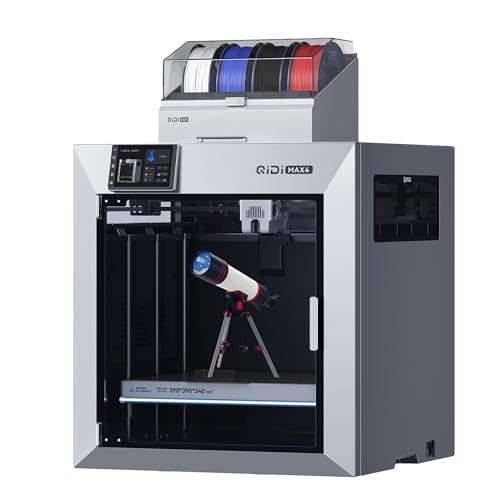
- 390 × 390 × 340mm build volume
- 65°C active heated chamber
- Supports engineering-grade composites
Best For: Large prototypes, molds, and demanding materials
Best Premium Large-Format Choice

- Large 11.8 × 11.8 × 12.99-inch workspace
- 60°C actively heated chamber
- Rigid enclosed CoreXY design
Best For: Large advanced-material prints with streamlined setup
Best Balanced Choice
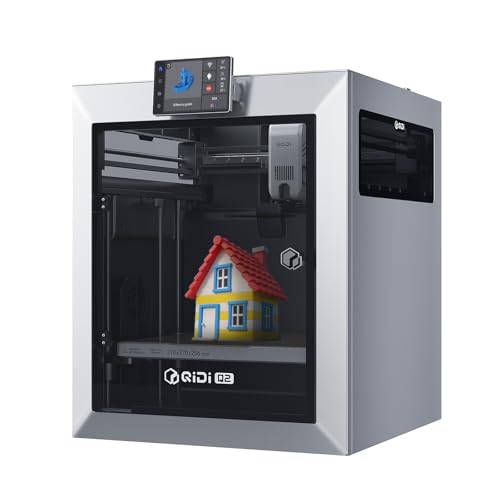
- 65°C heated chamber and 370°C nozzle
- CoreXY platform reaches up to 600mm/s
- Filtration and automated monitoring included
Best For: Beginners and engineers sharing one versatile printer
Best Multi-Material System

- Four independent preloaded toolheads
- 65°C active heated chamber
- Supports numerous engineering composites
Best For: Multi-material prototypes and production-oriented workflows
Large-Format Engineering Pick

- 320 × 320 × 300mm build volume
- 65°C chamber and 370°C extrusion
- Optional 16-color printing with active drying
Best For: Large prototypes and engineering-grade materials
Zero-Waste Multimaterial Pick

- Four independent toolheads switch in about 7 seconds
- 65°C chamber with HEPA13 filtration
- 256mm cubed build volume and remote management
Best For: Multimaterial production with minimal color waste
Compact Multicolor Performance Pick
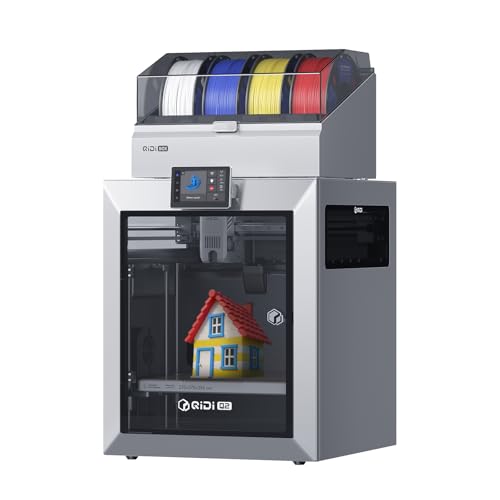
- 65°C chamber and 370°C nozzle
- Up to 16 colors with dry-while-print QIDI BOX
- CoreXY motion with automatic leveling
Best For: Multicolor engineering prints in an enclosed system
Best Industrial Multicolor Pick

- 65°C active heated chamber
- Four independent extruders
- 600mm/s CoreXY printing
Best For: Engineering materials and efficient multicolor production
Best High-Temperature Large-Format Pick

- 65°C active chamber heating
- 370°C high-temperature nozzle
- 12 × 12 × 11-inch build area
Best For: Large engineering parts and high-temperature filaments
Best Large Multicolor Combo
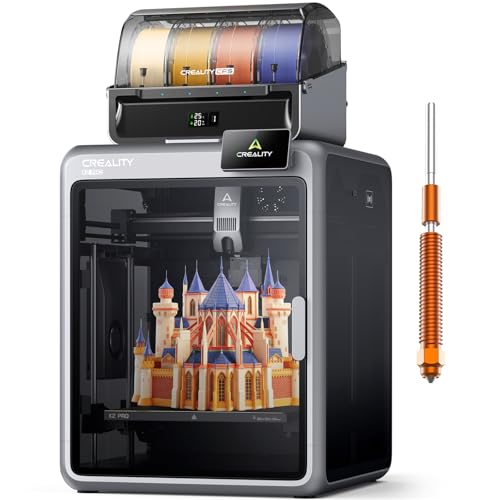
- 60°C active heated chamber
- Included CFS supports up to 16 colors
- 300 × 300 × 300mm build volume
Best For: Large multicolor prototypes and production-oriented printing
Best Large-Format Pick – QIDI Max4 Combo
The QIDI Max4 Combo is a strong choice if you need a 3d printer with heated chamber for large engineering parts, molds, or prototypes. Its 390 × 390 × 340mm build area and 65°C active chamber support demanding materials while helping reduce warping.
Best For: Professionals and experienced makers printing large parts and high-temperature materials.
Pros:
- Large build volume supports many full-size parts without splitting.
- 65°C heated chamber and Polar Cooler system support materials such as ABS-CF, PC, and PPS-CF.
- Closed-loop X/Y motors, high-speed motion, and anti-backlash Z-axis hardware support precise prints.
- AI monitoring can detect failures and pause the printer automatically.
Cons:
- At 120 pounds, it requires substantial installation space and a sturdy setup.
- The Polar Cooler is sold separately.
- Multi-color printing requires the separately connected QIDI BOX.
The Max4 Combo stands out for its unusually large capacity and broad material support. It is best suited to users who can take advantage of its industrial-oriented features rather than those seeking a compact beginner machine.
Best Premium Large-Format Choice – Prusa CORE One L
The Original Prusa CORE One L combines a large enclosed workspace with a 60°C actively heated chamber, making it a capable 3d printer with heated chamber for advanced materials such as ASA, ABS, PC, and Nylon. Its enclosed CoreXY design emphasizes stable, repeatable printing.
Best For: Users who want a large-format printer with automated setup, strong construction, and offline-first operation.
Pros:
- 11.8 × 11.8 × 12.99-inch build volume accommodates large parts and models.
- Actively heated chamber helps improve adhesion and reduce warping.
- Steel exoskeleton and CoreXY motion system support high-speed precision.
- Automated sensors simplify leveling and print preparation.
Cons:
- Its large footprint may be difficult to accommodate in smaller workspaces.
- The supplied notes do not specify a maximum nozzle temperature or multi-color capability.
The CORE One L is a practical fit for demanding users who value a robust platform and straightforward setup. Its offline functionality and extensive support resources also make it appealing for long-term ownership.
Best Balanced Choice – QIDI Q2
The QIDI Q2 is a more compact 3d printer with heated chamber designed to bridge beginner-friendly operation and professional material capability. Its 65°C chamber, 370°C nozzle, automatic leveling, and CoreXY structure support both everyday and engineering projects.
Best For: Beginners, educators, makers, and engineers who want one printer for a broad range of materials.
Pros:
- 65°C heated chamber helps limit warping and improve layer adhesion.
- 370°C nozzle supports materials including PPS-CF and other composites.
- Nozzle-based leveling, filament detection, AI monitoring, and power-loss recovery improve convenience.
- Triple filtration helps reduce odors and particles during indoor use.
Cons:
- The build volume is not provided in the supplied notes.
- Up to 16-color printing requires the QIDI BOX accessory.
- Its wide material capability may involve a steeper learning curve than a basic PLA printer.
The Q2 offers a compelling feature set for users who want room to grow. It combines automated usability with high-temperature printing and safety-focused filtration, without the much larger footprint of the Max4.
Best Multi-Material System – FlashForge Creator 5 Pro
The FlashForge Creator 5 Pro is a specialized 3d printer with heated chamber for multi-material engineering work. Its four independent toolheads switch materials quickly, while the 65°C active chamber and 320°C hardened nozzle support a broad selection of technical filaments.
Best For: Production-minded users printing multi-material prototypes, supports, and engineering parts.
Pros:
- Four preloaded toolheads enable fast material changes without traditional filament purging.
- Supports materials ranging from PLA and TPU to PA-CF, PPA-CF, and PPS-CF.
- 65°C actively heated chamber helps strengthen layers and reduce warping.
- Adaptive airflow and flow-dynamics calibration support cleaner, more consistent results.
Cons:
- The 320°C nozzle has a lower stated maximum temperature than the QIDI Q2’s 370°C nozzle.
- Four-toolhead functionality may be unnecessary for simple single-material printing.
- The supplied notes do not specify the build volume.
The Creator 5 Pro is most compelling when rapid material switching matters as much as chamber heating. Its toolchanger architecture and wide filament compatibility make it a strong specialist option for complex prototypes and production-style workflows.
Large-Format Engineering Pick – QIDI Plus5 Combo
If you need a 3d printer with heated chamber for oversized prototypes or demanding engineering materials, the QIDI Plus5 Combo is built for substantial workloads. Its 320 × 320 × 300mm build volume, 65°C actively heated chamber, and 370°C maximum extrusion temperature support large parts and materials such as PPS-CF, PPA-CF, PC, and nylon.
Best For: Engineers, makers, and small production workflows that need large-format printing, high-temperature materials, or optional multicolor output.
Pros:
- Large 320 × 320 × 300mm build volume reduces the need to split oversized models.
- Actively heated 65°C chamber and 370°C extrusion support engineering-grade filaments.
- CoreXY motion system reaches speeds up to 600mm/s with automatic leveling and remote monitoring.
- Optional QIDI BOX supports up to 16-color printing with active filament drying.
Cons:
- At 96.8 pounds, it is a substantial machine to position.
- QIDI BOX multicolor functionality is optional rather than included as standard.
- Its large footprint may be excessive for casual, small-format printing.
The Plus5 Combo stands out when build size and material capability matter more than compactness. Its filtration, thermal sensors, flame-retardant enclosure, and AI camera monitoring also make it suited to long, demanding print sessions.
Zero-Waste Multimaterial Pick – Flashforge Creator 5 Pro
The Flashforge Creator 5 Pro is a practical 3d printer with heated chamber for users who want enclosed, multimaterial production without traditional color flushing. Its chamber heats to 65°C for materials such as ABS, ASA, and PA, while four independent toolheads handle separate materials and switch in about seven seconds.
Best For: Offices, workshops, and production-oriented users printing multimaterial parts, including combinations of rigid and flexible materials.
Pros:
- Four independent toolheads reduce flushing and color bleed during material changes.
- 65°C active chamber heating helps limit warping in demanding filaments.
- HEPA13 filtration is rated to capture 99.97% of particles.
- Automatic leveling, remote management, and sensors support easier unattended operation.
Cons:
- The 256 × 256 × 256mm build volume is smaller than the QIDI Plus5’s.
- Four-toolhead capability may be unnecessary for simple single-material projects.
- Its enclosed, production-focused feature set may be more than beginners need.
Choose the Creator 5 Pro if clean material changes and workflow monitoring are priorities. Adaptive cooling also allows closed-door printing for PLA, TPU, PETG, and PLA-CF, adding flexibility beyond heated-chamber applications.
Compact Multicolor Performance Pick – QIDI Q2 Combo
For shoppers seeking a 3d printer with heated chamber that combines engineering-material support with multicolor convenience, the QIDI Q2 Combo offers a well-rounded setup. It pairs a 65°C heated chamber and 370°C nozzle with a QIDI BOX that can print up to 16 colors while drying filament during printing.
Best For: Users who want high-temperature material capability, multicolor projects, and automated filament handling in a relatively compact enclosed printer.
Pros:
- 65°C heated chamber and 370°C nozzle support engineering plastics and composites.
- QIDI BOX enables up to 16 colors, automatic reloading, and dry-while-print operation.
- Full-metal CoreXY construction, linear rails, and automatic leveling support precise results.
- Triple filtration, temperature sensors, and a flame-retardant chamber add operating safeguards.
Cons:
- The supplied notes do not specify the build volume.
- The multicolor and drying features depend on using the QIDI BOX system.
- At 68.9 pounds, it is not especially portable.
The Q2 Combo is a strong middle-ground option for users who want professional-oriented temperature control without giving up colorful models. AI camera monitoring, filament detection, power-loss recovery, and a claimed 15-minute setup further emphasize convenience.
Best Industrial Multicolor Pick – FLASHFORGE Creator 5 Pro
If you need a 3d printer with heated chamber for engineering materials and multicolor work, the FLASHFORGE Creator 5 Pro combines a 65°C active chamber with four independent extruders. Its sealed enclosure, HEPA13 filtration, and CoreXY design make it suited to demanding, high-throughput printing.
Best For: Professionals, schools, offices, and advanced makers printing ABS, ASA, PC, Nylon, or true multicolor projects.
Pros:
- 65°C active heated chamber helps reduce warping and improve layer adhesion.
- Four independent extruders support multicolor and multimaterial printing without shared-nozzle purging.
- 600mm/s speed, automatic leveling, and toolhead offset calibration support efficient production.
- Sealed enclosure with HEPA13 filtration helps manage particles and odors.
Cons:
- Its 256mm³ build volume is smaller than the larger-format alternatives in this roundup.
- The industrial feature set may be more than casual PLA users need.
The Creator 5 Pro stands out when chamber control and clean, efficient multicolor printing matter more than maximum build size. It is a strong fit for engineering-focused users who want automation and speed in one enclosed machine.
Best High-Temperature Large-Format Pick – QIDI PLUS4
The QIDI PLUS4 is a large 3d printer with heated chamber designed for high-temperature filament work. Its 65°C active chamber, 370°C nozzle, and 12 × 12 × 11-inch build area give users room for larger parts and demanding materials.
Best For: Professionals and makers printing ABS, ASA, PC, PA, PPS-CF, PPA-CF/GF, and other high-temperature materials.
Pros:
- 65°C chamber heating with 400W power, air circulation, and dual-layer insulation helps limit warping and cracking.
- 370°C integrated nozzle supports a broad range of engineering filaments.
- Large build volume supports oversized models or batch printing.
- Remote control, progress monitoring, camera recording, and filament detection add convenience.
Cons:
- At 59.4 pounds, it is a substantial printer to position and move.
- Multicolor printing requires the separately referenced QIDI BOX system.
Choose the PLUS4 if material temperature range and build capacity are your priorities. Its reinforced motion components and heated chamber make it especially appealing for larger engineering parts, while app-based monitoring simplifies operation.
Best Large Multicolor Combo – Creality K2 Pro Combo
For users seeking a 3d printer with heated chamber plus ready-to-use multicolor capability, the Creality K2 Pro Combo pairs a 60°C active chamber with the included CFS Smart Filament System. Its 300 × 300 × 300mm build volume and automated monitoring are well suited to larger or repeat jobs.
Best For: Creators and professionals who want large-format printing, automated multicolor workflows, and carbon-fiber-compatible extrusion.
Pros:
- Included CFS supports up to 16-color and multimaterial printing with intelligent filament handling.
- 60°C active chamber supports materials such as ASA and PPA while helping reduce corner warping.
- 300mm cubed build volume accommodates large prototypes or batch production.
- Dual AI cameras support failure detection, build-plate checks, monitoring, and flow-related adjustments.
Cons:
- The 61.6-pound package is relatively heavy and requires dedicated placement.
- The extensive automation and multicolor system may be unnecessary for simple single-material prints.
The K2 Pro Combo is the most compelling option here for users who want a large build area and multicolor printing in one package. Its heated chamber, hardened-steel extrusion hardware, and AI-assisted monitoring add useful support for demanding materials and production-oriented workflows.
How We Picked the Best 3d Printer with Heated Chamber
We focused on printers that either specify active chamber heating or are designed for enclosed, high-temperature materials. Selection factors included maximum chamber temperature, nozzle temperature, build volume, enclosure design, motion speed, material compatibility, filtration, automation, and the practicality of the overall workflow.
We also considered product configurations carefully. Combo packages may add multicolor or multimaterial capability, but they can increase cost, maintenance, and setup complexity. Specifications can vary by region or bundle, so confirm the exact configuration before ordering.
Quick Comparison
- Largest-format priorities: QIDI Max4 Combo and Prusa CORE One L are strong starting points for bigger functional parts.
- High-temperature materials: QIDI Q2, QIDI PLUS4, QIDI Plus5, and QIDI Q2 Combo pair heated chambers with high-temperature nozzles.
- Toolchanging and multimaterial: Flashforge Creator 5 Pro variants use independent toolhead systems for specialized production workflows.
- Multicolor convenience: QIDI Plus5 Combo, QIDI Q2 Combo, and Creality K2 Pro Combo emphasize color or material automation.
- Speed-focused printing: The Flashforge and Creality options advertise high-speed operation, but real-world speed depends on geometry, material, and quality settings.
Key Buying Factors for a 3d Printer with Heated Chamber
Chamber Temperature and Thermal Control
Check whether the chamber is actively heated or merely enclosed. A stated chamber temperature is useful, but uniform heat distribution, insulation, monitoring, and cooling control also affect print consistency. Heated chambers are especially valuable for ABS, ASA, polycarbonate, nylon, PPS, and fiber-reinforced blends.
Nozzle, Bed, and Material Capability
A hot nozzle alone does not guarantee reliable engineering-material printing. Look for a suitable nozzle temperature, abrasion-resistant hardware for carbon- or glass-filled filament, a heated build plate, and a surface compatible with the materials you use. Confirm recommended filament types rather than relying on temperature numbers alone.
Build Volume and Machine Footprint
Choose enough build volume for your largest expected parts, while allowing space for ventilation, filament storage, and maintenance. A larger printer is not automatically better if most of your work consists of small prototypes.
Automation, Toolheads, and Maintenance
Auto-leveling, calibration, cameras, runout detection, and recovery features can reduce failed prints. Independent toolheads may limit purge waste and support different materials, but they add moving parts and require more careful calibration than a simple single-extruder setup.
Filtration and Ventilation
Enclosures and HEPA filters can help manage particles, but they do not eliminate all emissions or replace appropriate ventilation. Follow the manufacturer’s safety guidance, particularly when printing ABS, nylon, carbon-fiber composites, or other materials that may produce fumes.
Who Should Buy Which 3d Printer with Heated Chamber?
Choose a QIDI model if you want a heated chamber, high-temperature nozzle, and a broad engineering-material focus. The Max4 suits larger parts, while the Q2, QIDI PLUS4, and QIDI Plus5 target different combinations of size, speed, and multicolor capability.
Choose a Prusa CORE One L if dependable ecosystem support, enclosed CoreXY printing, and a large-format workflow matter more than having the most elaborate toolchanging system.
Choose a Flashforge Creator 5 Pro if independent toolheads, mixed materials, and production-oriented operation are central to your work. Compare the exact listing because several Creator 5 Pro configurations appear in this roundup.
Choose the Creality K2 Pro Combo if fast printing, automated color handling, cameras, and an integrated combo workflow appeal to you. Before buying, verify chamber-heating specifications and confirm that its material support matches your intended filaments.