The best drawing tablet with pen pressure makes digital sketching, painting, photo editing, and note-taking feel more natural and controlled. This roundup covers compact pen tablets, larger models, and screen-based displays for different budgets and workflows.
We compare pressure sensitivity, active area, display features, connectivity, compatibility, and overall usability so you can choose a tablet that matches your software, workspace, and experience level.
Best 10 Drawing Tablet with Pen Pressure Picks for 2026
Best Professional Screen Tablet
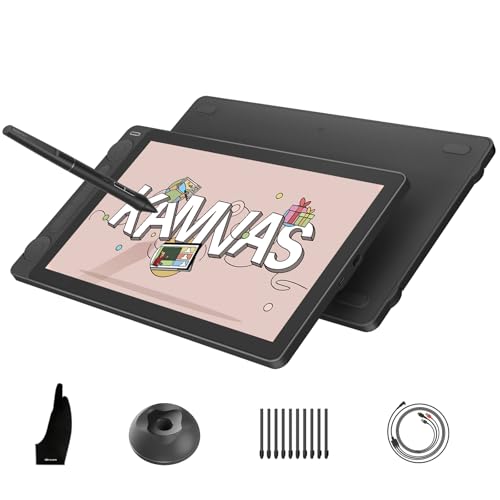
- 16,384 pressure levels with PenTech 4.0
- Full-laminated anti-glare Canvas Glass 2.0
- 99% sRGB and factory color calibration
Best For: Professional digital artists and designers
Best Beginner Drawing Pad

- Battery-free pen with 4,096 pressure levels
- Four ExpressKeys for shortcuts
- Works with Mac, Windows, Android, and Chromebook
Best For: Students, teachers, and first-time digital artists
Best Beginner Pen Display

- 16,384 pressure levels with X4 Smart Chip stylus
- Full-laminated paper-feel nano-etched glass
- Eight customizable keys and one-cable USB-C option
Best For: Beginners learning digital art on a screen
Best Feature-Packed Budget Tablet
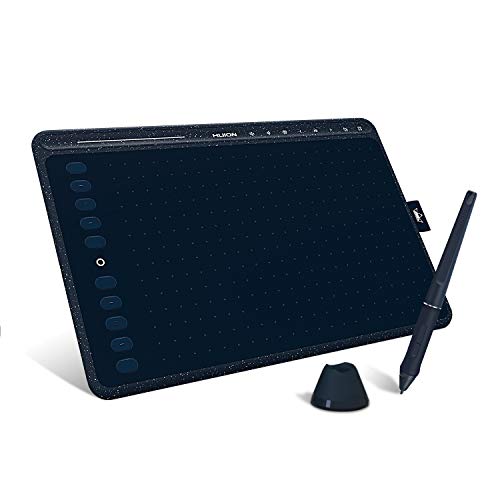
- 8,192 pressure levels with 60-degree tilt
- Large 10.17-by-6.35-inch active area
- Ten programmable keys, touch strip, and multimedia controls
Best For: Artists and editors who prioritize shortcuts and workspace
Best Beginner Drawing Tablet

- 16,384 pressure levels with tilt support
- Large 10 x 6.25-inch drawing area
- Eight customizable shortcut keys
Best For: Beginners seeking a spacious, lightweight pen tablet
Best Screen Drawing Tablet

- 15.8-inch 2.5K QHD pen display
- 16,384 pressure levels with tilt support
- Dual dials and six customizable keys
Best For: Artists wanting a detailed on-screen drawing workflow
Best Wireless Drawing Tablet
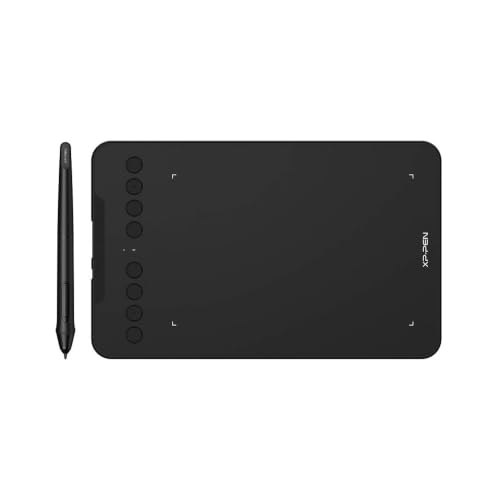
- Wireless Bluetooth 5.0 connection
- 16,384 pressure levels with tilt response
- Eight customizable shortcut keys
Best For: Portable drawing, teaching, and remote work
Best Compact Pick
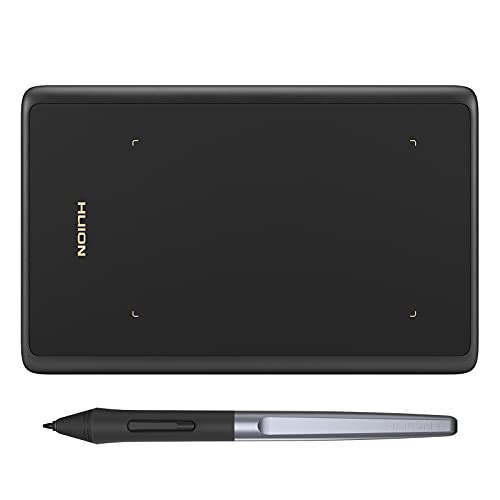
- 8,192 pressure levels with a battery-free pen
- Slim, lightweight design for small desks and travel
- Works with computers, Android devices, and popular apps
Best For: Beginners, students, and portable digital sketching
Best High-Pressure Display

- 16K pressure-sensitive battery-free stylus
- 13.3-inch laminated Full HD display with wide color coverage
- Dial, shortcut keys, stand, and pen-display/tablet modes
Best For: Artists and animators seeking detailed on-screen control
Best Midrange Pen Display

- 8,192 pressure levels with 60° tilt support
- 11.6-inch laminated Full HD screen with anti-glare film
- Red dial and eight customizable shortcut keys
Best For: Artists and teachers wanting compact on-screen drawing
Best Professional Screen Tablet – HUION Kamvas 13 (Gen 3)
The HUION Kamvas 13 (Gen 3) is a strong choice if you want a drawing tablet with pen pressure and a built-in screen. Its 16,384 pressure levels, full-laminated Canvas Glass 2.0, and PenTech 4.0 stylus support precise, natural-feeling strokes. Keep in mind that it must be connected to a computer or compatible device to work.
Best For: Artists, designers, animators, and students who want a color-accurate pen display with customizable controls.
Pros:
- 16,384 pressure levels, tilt support, and a low 2g initial activation force for detailed line control.
- Full-laminated, anti-glare Canvas Glass 2.0 creates a paper-textured drawing surface.
- 99% sRGB coverage, 90% Adobe RGB coverage, and factory calibration rated at ΔE<1.5.
- Two dials, five press keys, and compatibility with Windows, macOS, Android, and Linux.
Cons:
- It is not a standalone tablet and requires a connected computer or compatible device.
- Some Android devices need USB 3.1 and DisplayPort 1.2 support.
With its accurate display, high pressure sensitivity, and portable 865g design, the Kamvas 13 Gen 3 is well suited to serious digital artwork. Its dual dials and shortcut keys also make longer editing sessions more efficient.
Best Beginner Drawing Pad – Wacom Intuos Small
The Wacom Intuos Small is a compact drawing tablet with pen pressure for creators who prefer working on a computer rather than directly on a screen. Its battery-free pen provides 4,096 pressure levels, while the small active area keeps the tablet easy to carry and suitable for desks with limited space.
Best For: Beginners, students, teachers, and creators learning digital drawing, photo editing, or design.
Pros:
- Battery-free EMR pen delivers a pen-on-paper feel without charging.
- 4,096 pressure levels provide responsive control for drawing and editing.
- Four ExpressKeys offer convenient shortcut access.
- Works with Windows, Mac, Android, and Chromebook devices, with creative software and training included after registration.
Cons:
- It has no built-in display, so you draw while viewing the computer screen.
- The 6-by-3.7-inch active area is smaller than larger professional tablets.
The Intuos Small keeps the setup straightforward and affordable for users who want reliable pressure-sensitive input without a screen. Its compact design and included software access make it particularly approachable for new digital artists.
Best Beginner Pen Display – XP-Pen Artist 12 3rd
The XP-Pen Artist 12 3rd is a practical drawing tablet with pen pressure for beginners who want to draw directly on a screen. Its 16,384-pressure-level X4 Smart Chip stylus, full-laminated nano-etched glass, and one-cable USB-C option are designed to simplify setup while preserving precise control.
Best For: Beginner artists, animation students, online educators, and creators who want an accessible screen-based workflow.
Pros:
- 16,384 pressure levels, 60-degree tilt support, and 0.3mm nib travel support controlled strokes.
- Full-laminated AG+AF nano-etched glass offers a paper-like feel while reducing glare and smudges.
- Eight customizable shortcut keys provide quick access to common commands.
- Supports Windows, macOS, Android, ChromeOS, and Linux, with an included foldable stand.
Cons:
- As a pen display, it requires connection to a compatible device rather than operating independently.
- The one-cable setup depends on a compatible full-featured USB-C port.
The Artist 12 3rd combines a beginner-friendly interface with high pressure sensitivity and a screen that reduces the gap between hand movement and on-screen results. Its stand and magnetic stylus also make it convenient for study spaces and travel.
Best Feature-Packed Budget Tablet – HUION HS611
The HUION HS611 is a drawing tablet with pen pressure that emphasizes a large working area and productivity controls rather than an integrated display. Its battery-free stylus supports 8,192 pressure levels and tilt, while programmable keys, a touch strip, and multimedia controls can speed up drawing, editing, and teaching workflows.
Best For: Artists, video editors, students, and teachers who want a large non-screen tablet with extensive shortcut controls.
Pros:
- 8,192 pressure levels and 60-degree tilt support enable varied, natural-looking strokes.
- Large 10.17-by-6.35-inch active area provides room for drawing and annotation.
- Ten programmable keys, a touch strip, and eight multimedia keys support efficient workflows.
- Thin 7.3mm design, 550g weight, USB-C connection, and Android support improve portability.
Cons:
- It has no built-in screen, so artwork appears on the connected computer or device.
- Cursor support is currently limited on Samsung devices except Samsung Note series phones.
- Android compatibility requires Android 6.0 or later and is limited to supported phones and tablets.
The HS611 is a versatile option for users who value workspace and physical controls. It is especially appealing for video editing, online teaching, and digital art sessions where quick shortcuts matter as much as pen pressure.
Best Beginner Drawing Tablet – XPPen Deco 01 V3
The XPPen Deco 01 V3 is a practical drawing tablet with pen pressure for beginners who want a generous workspace without paying for a screen display. Its battery-free stylus provides 16,384 pressure levels and supports tilt, helping you create varied line weights and shading in compatible software.
Best For: Beginners and amateur digital artists who want a large, lightweight tablet with customizable controls.
Pros:
- 10 x 6.25-inch drawing area gives you room for larger gestures.
- Battery-free stylus offers 16,384 pressure levels and up to 60 degrees of tilt.
- Eight customizable keys support left- and right-handed workflows.
- Works with Windows, macOS, Android, Chrome OS, Linux, and major creative software.
Cons:
- It is a pen tablet rather than a built-in screen display.
- Requires a compatible computer, Android device, or other host device.
With its spacious active area, simple USB-C connectivity, and beginner-friendly shortcuts, the Deco 01 V3 is a strong starting point for learning pressure-based digital drawing.
Best Screen Drawing Tablet – HUION Kamvas 16 Gen 3
The HUION Kamvas 16 (Gen 3) is a drawing tablet with pen pressure and a built-in 15.8-inch display, letting you draw directly on the image. Its 16,384 pressure levels, 2.5K resolution, full lamination, and textured glass are aimed at artists who want a more refined on-screen workflow.
Best For: Artists, animators, and students who want a high-resolution pen display with strong color coverage and physical controls.
Pros:
- PenTech 4.0 provides 16,384 pressure levels, 2g initial activation force, and up to 60 degrees of tilt.
- 15.8-inch 2.5K QHD display offers a sharp 2560 x 1440 workspace.
- Full-laminated nano-etched glass is designed for an anti-glare, paper-like feel.
- Dual dials and six customizable press keys can streamline creative software workflows.
Cons:
- It is not standalone and must connect to a computer, laptop, or compatible Android device.
- The screen-focused design and included connection hardware may require more setup than a basic pen tablet.
For users who prioritize drawing directly on the canvas, accurate color coverage, and detailed pressure response, the Kamvas 16 (Gen 3) offers a more advanced alternative to display-free tablets.
Best Wireless Drawing Tablet – XPPen Deco mini7W
The XPPen Deco mini7W is a compact drawing tablet with pen pressure for users who value portability and wireless flexibility. Its battery-free stylus offers 16,384 pressure levels and tilt response, while Bluetooth 5.0 and the included USB dongle provide wired and wireless connection options.
Best For: Teachers, remote workers, and mobile creators who need a lightweight tablet for drawing, writing, online teaching, or e-learning.
Pros:
- Bluetooth 5.0 and USB connectivity let you work wirelessly or with a cable.
- Battery-free pen delivers 16,384 pressure levels and tilt response.
- Eight customizable press keys help personalize common shortcuts.
- Supports Windows, macOS, Android, Chrome OS, and Linux.
Cons:
- The 7 x 4-inch active area is more compact than larger drawing tablets.
- It is a display-free tablet, so you draw while viewing the host device’s screen.
The Deco mini7W is a convenient choice when portability matters most. Its wireless option, broad compatibility, and pressure-sensitive battery-free pen make it well suited to flexible everyday use.
Best Compact Pick – HUION H420X
The HUION H420X is a practical drawing tablet with pen pressure for beginners, students, and anyone working with limited desk space. Its battery-free stylus offers 8,192 pressure levels, while the compact, lightweight design is easy to carry and supports drawing, note-taking, teaching, and document annotation.
Best For: Beginners, students, remote workers, and portable digital sketching.
Pros:
- Battery-free stylus with 8,192 pressure levels and 60° tilt support.
- Compact 4.17-by-2.6-inch active area fits small desks and travel setups.
- Compatible with Windows, macOS, Android, Linux, and many popular creative apps.
- Includes two customizable pen buttons and plug-and-play connectivity.
Cons:
- Small active area may feel limiting for detailed or expansive artwork.
- It is not compatible with iOS.
- It has no built-in display, so you draw while looking at a connected device.
The H420X emphasizes portability and simplicity rather than a large workspace or screen. It is a sensible choice if you want pressure-sensitive input for everyday creative and productivity tasks without installing a driver.
Best High-Pressure Display – XP-PEN Artist 13.3 Pro V2
The XP-PEN Artist 13.3 Pro V2 is a premium drawing tablet with pen pressure for artists who want to draw directly on a screen. Its 16K-pressure battery-free stylus, fully laminated display, shortcut controls, and included stand make it suited to detailed illustration, animation, and longer creative sessions.
Best For: Digital artists, animators, and creators who want a high-resolution pen display.
Pros:
- 16,384 pressure levels provide highly sensitive stroke control.
- 13.3-inch fully laminated 1920-by-1080 display reduces parallax.
- Offers 99% sRGB, 89% Adobe RGB, and 95% P3 color coverage.
- Red dial, eight shortcut keys, dual modes, and a foldable stand support efficient workflows.
Cons:
- Requires connection to a compatible computer or laptop and is not standalone.
- Legacy HDMI setups require a separately sold 3-in-1 cable.
- Its advanced feature set may be more than beginners need.
With its combination of 16K pressure sensitivity, accurate color, and direct-on-screen drawing, the Artist 13.3 Pro V2 is designed for creators who prioritize control and display quality. Check device requirements before choosing the single-cable USB-C connection.
Best Midrange Pen Display – XPPen Artist12 Pro
The XPPen Artist12 Pro combines an 11.6-inch screen with 8,192 pressure levels, making it a capable drawing tablet with pen pressure for sketching, painting, animation, and digital teaching. Its fully laminated display, battery-free stylus, red dial, and shortcut keys provide a direct and efficient drawing experience.
Best For: Digital artists, teachers, and users wanting an affordable screen-based tablet.
Pros:
- 8,192 pressure levels and 60° tilt support capture varied strokes and shading.
- Fully laminated anti-glare display helps reduce parallax and reflections.
- Red dial and eight customizable keys speed up zooming, brush adjustments, and editing.
- Supports Windows, macOS, ChromeOS, Linux, and major creative software.
Cons:
- Requires a connected host device and cannot operate as a standalone tablet.
- The 11.6-inch screen provides less workspace than larger pen displays.
- The included 3-in-1 cable may create a less streamlined setup than a single-cable connection.
The Artist12 Pro offers a useful balance of direct-screen drawing, pressure sensitivity, and workflow controls. It is a strong fit for users who want a compact pen display for creative work and remote annotation without moving to a larger model.
How We Picked the Best Drawing Tablet with Pen Pressure
We selected these models based on the features that most affect everyday drawing: pressure-level range, pen performance, active drawing area, display quality where applicable, shortcut controls, connectivity, compatibility, and portability. We also considered whether each tablet suits beginners, students, hobbyists, or more demanding creative work.
A high pressure rating is useful, but it is not the only measure of quality. Driver stability, pen latency, surface texture, tilt support, and the size of the working area can have a bigger effect on comfort and control.
Quick Comparison
- Best compact screen tablet: HUION Kamvas 13 (Gen 3)
- Best established beginner option: Wacom Intuos Small
- Best value screen tablet: XPPen Artist 12 3rd
- Best large non-screen tablet: HUION HS611 or XPPen Deco 01 V3
- Best larger display: HUION Kamvas 16 (Gen 3)
- Best portable wireless option: XPPen Deco mini7W
- Best budget starter: HUION H420X
Key Buying Factors for a Drawing Tablet with Pen Pressure
Pressure Sensitivity and Pen Response
Pressure sensitivity controls line weight, opacity, and brush size as you press harder or lighter. Tablets in this roundup offer thousands of pressure levels, while newer models advertise up to 16K. Prioritize consistent response and low latency over the maximum number alone.
Screen or Screenless Design
A pen display lets you draw directly on the image and usually feels intuitive for illustrators. It also costs more and requires additional desk space and cables. A screenless tablet is often lighter, more affordable, and a strong choice for photo editing, digital notes, design software, and beginners willing to learn hand-eye coordination.
Size, Surface, and Ergonomics
Choose a compact model for travel or limited desks, but consider a medium or large active area for detailed illustration and broad strokes. A textured surface can provide useful friction, while a fully laminated display may reduce parallax between the pen tip and cursor.
Compatibility and Connectivity
Check support for your operating system and preferred apps before buying. Consider USB requirements, wireless connectivity, Android or Chromebook support, included adapters, and whether the tablet’s shortcut keys work with your software.
Who Should Buy Which Drawing Tablet with Pen Pressure?
Beginners and students should look at the Wacom Intuos Small, HUION H420X, or XPPen Deco mini7W for affordable, straightforward practice. Illustrators who want to draw directly on-screen should consider the HUION Kamvas 13, XPPen Artist 12 models, or XP-PEN Artist 13.3 Pro V2. Artists needing more room may prefer the HUION Kamvas 16 (Gen 3), while designers and editors who do not need a display can get excellent control from the HUION HS611 or XPPen Deco 01 V3. Before ordering, confirm the included pen, cables, software compatibility, and available desk space.