Choosing the right external recorder can make a DSLR feel far more capable, especially when you need cleaner HDMI capture, longer recording times, or a better monitoring workflow.
This roundup of the best camera external recorders for DSLR cameras focuses on practical gear for creators who shoot video, stream, or need a more flexible production setup in 2026.
Best 10 Camera External Recorders for Dslr Cameras Picks for 2026
Pro Monitor-Recorder
Atomos Ninja RAW for HDMI/Mirrorless

- ProRes and ProRes RAW recording
- 1500-nit 5-inch HDR touchscreen
- Camera control plus pro monitoring tools
Best For: Filmmakers needing external RAW capture and monitoring
4K Capture Card
- Up to 4K60 or 1080p120 capture
- Ultra-low latency plug-and-play use
- No external power or drivers needed
Best For: Streamers who want a simple DSLR-to-webcam setup
Rack Recorder
Blackmagic HyperDeck Studio HD Mini
- Records H.264, ProRes, or DNxHD
- 3G-SDI, HDMI, and USB-C connectivity
- Front controls with 2.2-inch display
Best For: Studio and live production setups with SDI/HDMI
Streaming Capture Card

- Captures up to 4K60 with RGB24
- Zero-lag HDMI capture for live use
- Works with Windows, Mac, and iPadOS
Best For: Live streamers and presenters using DSLR cameras
SDI Capture Pick

- 1 SDI input and 1 SDI loop output
- Supports SDI rates up to 12G
- Handles 16 embedded audio channels
Best For: SDI-based capture workflows with embedded audio
Touch Monitor-Recorder
FEELWORLD CUT6 6-Inch Recorder Monitor

- Records via USB2.0 over HDMI to MP4
- 6-inch 1920x1080 touch display
- Waveform, vectorscope, histogram, and LUT support
Best For: DSLR shooters wanting monitor and recording in one
Portable Audio Add-On
Xvive XV1-R Portable Stereo Recorder

- 24-bit or 32-bit float recording up to 96kHz
- Direct recording to microSD cards
- Tripod mount and slate tone for camera workflows
Best For: Compact external audio capture for DSLR rigs
Compact HDMI Recorder Monitor
RH35 3.5-inch Full HD Camera Recorder
- Unlimited 1080p30 recording
- Peaking, zebra, waveform, false color
- 3.5-inch 800 x 480 LCD
Best For: DSLR shooters who need a small monitor with built-in recording
Compact Audio Recorder
Zoom H1n Portable Stereo Recorder
- Built-in X/Y stereo mics
- Records to SD card and works as USB mic
- Camera-mountable and very lightweight
Best For: Creators who want a small recorder for better video audio
Pro On-Camera Recorder
Atomos Ninja 4K HDMI Recorder Bundle

- Records up to 4Kp60
- Supports up to 6Kp30 ProRes RAW
- Includes 240GB SSD bundle
Best For: DSLR, cinema, and mirrorless shooters wanting pro HDMI recording
Pro Monitor-Recorder – Atomos Ninja RAW for HDMI/Mirrorless
If you want one of the more capable camera external recorders for dslr cameras in a compact monitor-recorder form, the Atomos Ninja RAW is built for serious on-set use. It records ProRes and ProRes RAW directly from the camera over HDMI, while also giving you a bright 5-inch HDR touchscreen and professional monitoring tools for checking exposure and focus as you shoot.
Best For: Filmmakers and creators who want external ProRes RAW recording plus pro monitoring and camera control.
Pros:
- Records Apple ProRes and ProRes RAW, including ProRes RAW HQ, LT, 422, and 422 HQ
- 1500-nit 5-inch HDR touchscreen makes outdoor monitoring easier
- Camera control lets you manage start/stop, ISO, shutter, aperture, and white balance
- Professional tools include EL Zone false color, focus peaking, waveform, and Onion Skin overlay
Cons:
- Requires HDMI-connected cameras and compatible workflow support for RAW recording
- External storage and some accessories are sold separately
- More of a production monitor-recorder than a simple plug-and-forget capture device
The Ninja RAW is the strongest fit here if your priority is image control and high-end recording quality rather than basic webcam use. Its mix of touchscreen monitoring, camera control, and external ProRes RAW capture makes it a versatile upgrade for demanding DSLR and mirrorless setups.
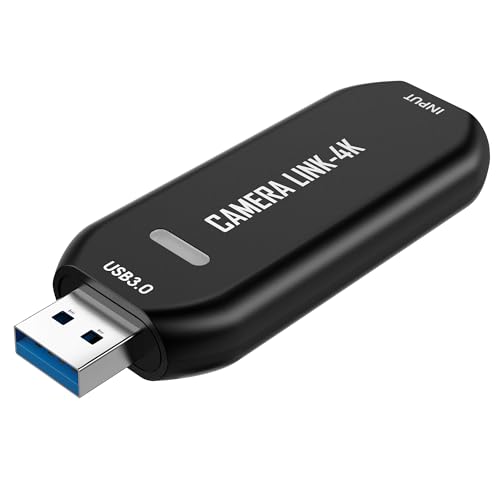
4K Capture Card – VIXLW Cam Link 4K
For creators comparing camera external recorders for dslr cameras with a simple streaming-first setup, the VIXLW Cam Link 4K is a straightforward HDMI-to-USB capture card. It turns a DSLR, camcorder, or action camera into a webcam for OBS, Zoom, and similar apps, while supporting smooth 1080p120 or up to 4K60 capture depending on the output format.
Best For: Streamers and remote workers who want an easy USB capture solution for DSLR or HDMI cameras.
Pros:
- Supports up to 4K60 capture and 1080p120 streaming/recording
- Ultra-low latency for real-time video calls, livestreams, and teaching
- Plug-and-play setup with no drivers and no external power required
- Works with Windows and macOS and supports many HDMI sources
Cons:
- It is a capture device, not an in-camera recording solution
- Best suited to HDMI output workflows rather than direct media recording
- Feature set is focused on streaming and conferencing rather than on-device monitoring
This is a practical pick if you mainly need your camera as a high-quality webcam. It keeps setup simple, gives you strong resolution options, and avoids the complexity of a full recorder.
Rack Recorder – Blackmagic HyperDeck Studio HD Mini
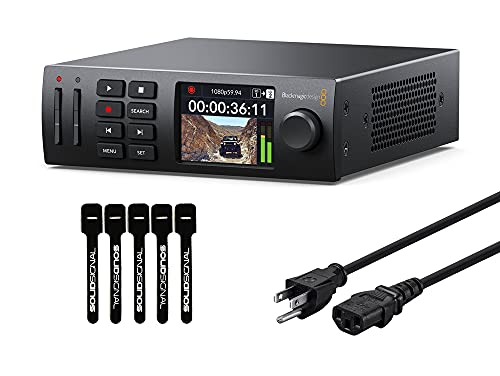
If you need a more studio-oriented option among camera external recorders for dslr cameras, the Blackmagic HyperDeck Studio HD Mini is designed for SDI/HDMI recording and playback workflows. It records H.264, ProRes, or DNxHD to SD/UHS-II cards or external USB disks, while also adding timecode, reference, and front-panel transport controls for tighter production use.
Best For: Studio, live production, and multicamera workflows that need SDI plus HDMI recording.
Pros:
- Records H.264, ProRes, or DNxHD up to 1080p60
- Includes 3G-SDI in/out, HDMI out, timecode, and reference connections
- Front panel controls plus a 2.2-inch color display simplify operation
- USB webcam feature works with Zoom, Teams, Skype, OBS, and more
Cons:
- Less portable than compact HDMI monitor-recorders
- Best suited to rack or studio setups rather than run-and-gun shooting
- Focuses on SD/HD workflows rather than modern RAW capture
This unit makes the most sense when the job is more about dependable studio recording than small-size convenience. It brings strong codec support and broad connectivity, but it is overkill if you only need a lightweight DSLR recorder.
Streaming Capture Card – AVerMedia CamStream 4K
Among camera external recorders for dslr cameras, the AVerMedia CamStream 4K is aimed squarely at live streaming and video conferencing. It captures up to 4K60 with zero-lag performance, works over HDMI, and is designed to make a DSLR or mirrorless camera behave like a clean, reliable webcam for OBS, Zoom, Twitch, and similar platforms.
Best For: Streamers and presenters who want a low-latency 4K HDMI capture card for cameras.
Pros:
- Captures 4K60fps with RGB24 true-to-life color
- Zero-lag and ultra-low-latency design for live use
- Plug-and-play setup with no drivers needed
- Broad compatibility with Windows, Mac, and iPadOS devices
Cons:
- Focused on capture and streaming rather than internal recording
- Requires HDMI output from the camera
- Best value is highest for live workflows, not pro post-production recording
If your main goal is a polished live stream or meeting setup, this is a very direct solution. It emphasizes simplicity, low latency, and broad platform support, which makes it easy to build around a DSLR or mirrorless camera.
SDI Capture Pick – UltraStudio Mini Recorder 12G
If you’re comparing camera external recorders for dslr cameras and need an SDI-focused capture solution, the Blackmagic Design UltraStudio Mini Recorder 12G is built around high-bandwidth SDI input and loop output. It supports SDI rates from 270Mbit up to 12G and includes embedded audio support, making it a practical choice when your workflow centers on SDI video sources rather than HDMI monitoring extras.
Best For: SDI-based capture setups that need up to 12G-SDI support and embedded audio handling.
Pros:
- Supports SDI rates from 270Mbit through 12G.
- Includes 1 SDI input and 1 SDI loop output.
- Handles 16 embedded audio channels on SDI input.
Cons:
- Built around SDI, so it is not the most direct fit for HDMI-only setups.
- Supplied notes focus on capture features rather than on-camera monitoring tools.
Overall, this is a specialized recorder for users who already work in SDI and want a compact capture device with broad rate support. If your DSLR rig or studio chain outputs SDI, it offers a straightforward, signal-first workflow.
Touch Monitor-Recorder – FEELWORLD CUT6 6-Inch Recorder Monitor
The FEELWORLD CUT6 is a strong option if you want camera external recorders for dslr cameras with built-in monitoring and simple HDMI recording. It offers USB2.0 recording to a USB flash disk, supports up to 1080p30 recording from compatible cameras, and adds a 6-inch 1920×1080 touch display with exposure and focus tools for day-to-day shooting.
Best For: DSLR shooters who want a monitor-recorder with touchscreen controls and helpful exposure tools.
Pros:
- Records over HDMI to USB flash disk in MP4 format.
- 6-inch 1920×1080 touch screen for clear viewing.
- Includes waveform, vectorscope, histogram, zebra, focus peaking, and more.
- HDMI 2.0 input supports up to 4K 60Hz signal.
Cons:
- Recording is limited to up to 1080p30 from compatible cameras.
- USB flash disk support is noted for FAT32 format.
This model suits shooters who want one device for monitoring and basic recording, especially when quick setup matters. The built-in LUT support and field tools make it a practical on-rig companion for content capture and review.
Portable Audio Add-On – Xvive XV1-R Portable Stereo Recorder
While not a video recorder, the Xvive XV1-R can still fit into camera external recorders for dslr cameras setups when you need dedicated portable audio capture alongside your camera. It records in 24-bit or 32-bit float up to 96kHz, stores directly to microSD cards, and includes a tripod mount plus film-friendly features like slate tone and optional markers for workflow integration.
Best For: DSLR and video creators who want a compact external audio recorder with interface capabilities.
Pros:
- Records in 24-bit or 32-bit float up to 96kHz.
- Direct recording to microSD, microSDHC, or microSDXC cards.
- Dual-function USB-C port works for data and power.
- Includes tripod mount, slate tone generator, and optional film markers.
Cons:
- It is an audio recorder/interface, not a video recorder.
- Uses two AA batteries, so runtime depends on battery choice.
If your priority is clean portable sound for a DSLR rig, this recorder brings useful production features in a very small package. Its interface mode, pre-recording, and onboard processing tools add flexibility for field work and camera-adjacent use.
Compact HDMI Recorder Monitor – RH35 3.5-inch Full HD Camera Recorder
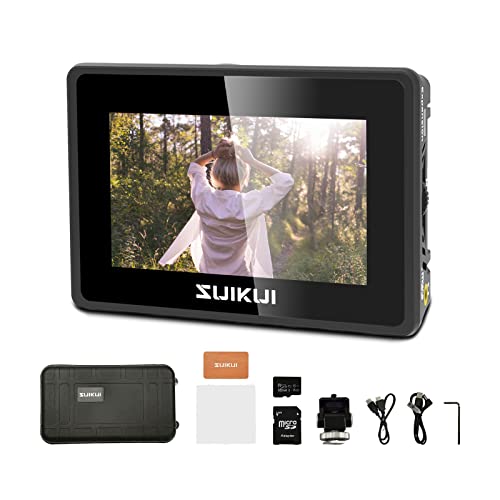
If you want camera external recorders for dslr cameras that also double as a monitor, this RH35 keeps the setup compact while adding unlimited H.264 recording from HDMI. It’s a practical pick for basic on-camera recording, with tools like focus assist, zebra, waveform, and false color to help you judge exposure and sharpness.
Best For: DSLR shooters who want a small HDMI monitor with built-in recording and exposure tools.
Pros:
- Records 1080p30 to microSD or USB flash drive without limit
- Includes peaking, zebra, waveform, focus assist, exposure assist, and false color
- 3.5-inch preview LCD keeps the rig small and lightweight
- HDMI input/output supports 1080p60 passthrough
Cons:
- Display resolution is only 800 x 480
- Recording is limited to H.264 1080p30
- Screen size may be small for users who want a larger monitor
Overall, the RH35 is best viewed as a budget-friendly utility recorder and monitor rather than a high-end production device. If you mainly need simple HDMI capture plus helpful monitoring aids, it covers the essentials well.
Compact Audio Recorder – Zoom H1n Portable Stereo Recorder
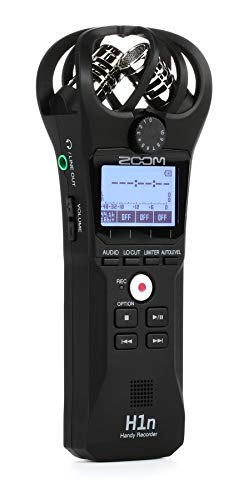
For camera external recorders for dslr cameras, the Zoom H1n is a straightforward way to improve audio without adding much size or complexity. It records to SD card, mounts to a camera, and uses built-in stereo microphones, making it useful for interviews, voiceover capture, and audio for video work.
Best For: Filmmakers and creators who need a compact camera-mountable audio recorder.
Pros:
- Built-in stereo condenser microphones in 90-degree X/Y format
- Camera-mountable and highly compact at 2.4 ounces
- Records locally to SD card and supports USB microphone use
- Includes overdubbing, playback speed control, and voice emphasize filter
Cons:
- Audio-focused device, so it does not capture HDMI video
- Uses AA batteries rather than a built-in rechargeable battery
- Battery life is about 10 hours with the built-in mic
The H1n is a strong fit when audio matters more than video recording features. If you need a simple, portable recorder for clean scratch tracks or direct sound capture, it’s an easy tool to add to a DSLR kit.
Pro On-Camera Recorder – Atomos Ninja 4K HDMI Recorder Bundle
If you’re shopping camera external recorders for dslr cameras and need a more advanced on-camera solution, the Atomos Ninja bundle brings high-end recording formats in a portable monitor-recorder. It supports up to 4Kp60 recording, and with the included 240GB SSD bundle, it’s set up for serious HDMI workflows right out of the box.
Best For: DSLR, cinema, and mirrorless users who want professional external recording with a bundled SSD.
Pros:
- Records up to 4Kp60 in Apple ProRes, Avid DNxHD, and H.265
- Supports up to 6Kp30 in Apple ProRes RAW
- Compatible with a wide range of HDMI-output cameras
- Includes a 240GB SSD and power accessories in the bundle
Cons:
- More specialized and likely overkill for simple recording needs
- Requires HDMI output from the camera
- Bundle-focused setup may be more than casual users need
In this group, the Ninja stands out as the most capable option for demanding video work. It’s a smart pick if you want professional codecs, higher-resolution capture, and a recorder that can scale with more advanced camera setups.
How We Picked the Best Camera External Recorders for Dslr Cameras
We looked for gear that solves real DSLR video problems: reliable HDMI capture, useful monitoring tools, low-latency recording, flexible storage, and compatibility with common live-streaming and editing workflows. Priority went to products that offer clear value for creators who need Camera External Recorders for Dslr Cameras rather than niche studio hardware.
Quick Comparison
Broadly, these picks fall into three groups: on-camera monitor-recorders for run-and-gun filmmaking, USB/HDMI capture devices for streaming and conferencing, and compact audio recorders for adding better sound to a DSLR rig. Some products are best for direct recording to SSD or media, while others are better suited to computer-based capture.
Key Buying Factors for Camera External Recorders for Dslr Cameras
Connection Type
Check whether your DSLR outputs clean HDMI, since that determines whether you need a monitor-recorder, a capture card, or a simple display. Make sure the unit supports your resolution and frame-rate needs, especially if you plan to work in 4K or high-frame-rate 1080p.
Recording Versus Capturing
Some models record directly to media for independent use in the field, while others send video to a computer for streaming, conferencing, or archival capture. If you want standalone footage, choose a recorder with compatible storage and solid battery or power options.
Monitoring Tools
Focus peaking, waveform, false color, touch controls, and exposure assist features can significantly improve DSLR shooting. For solo creators, a good screen is often as important as the recording function itself.
Audio Workflow
Many Camera External Recorders for Dslr Cameras are video-first, but audio quality still matters. If your setup needs better dialogue or ambient sound, consider whether you need onboard mic inputs, headphone monitoring, or a separate portable audio recorder.
Who Should Buy Which Camera External Recorders for Dslr Cameras?
Filmmakers and advanced hybrid shooters should lean toward monitor-recorders with strong codec support and camera control features. Streamers and educators usually do better with low-latency capture cards that plug into a PC or Mac. If your biggest weakness is sound, a compact recorder can be the smarter upgrade. The best choice depends on whether you need recording, monitoring, capture, or audio enhancement most.
In short, the right model should match your workflow, not just your camera. A well-chosen recorder can extend the life of a DSLR, simplify production, and make everyday shooting much easier.