Large-format resin printers make it easier to produce oversized prototypes, detailed miniatures, display models, and multiple parts in one print. The right choice depends on more than maximum build volume: resolution, workflow automation, resin handling, and operating costs matter just as much.
We compared ten standout options across professional, prosumer, and entry-level categories to help you match your workspace and projects with the right printer.
Best 10 Large Format Resin Printers Picks for 2026
Best Overall Large-Format Resin Printer
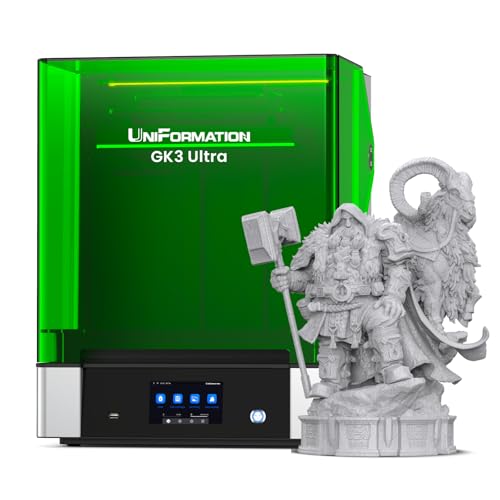
- 300 × 160 × 300mm build volume
- 16K LCD for detailed prints
- Automatic resin feeding and built-in heating
Best For: Professional and small-business production
Best Wide-Format Photo Printer
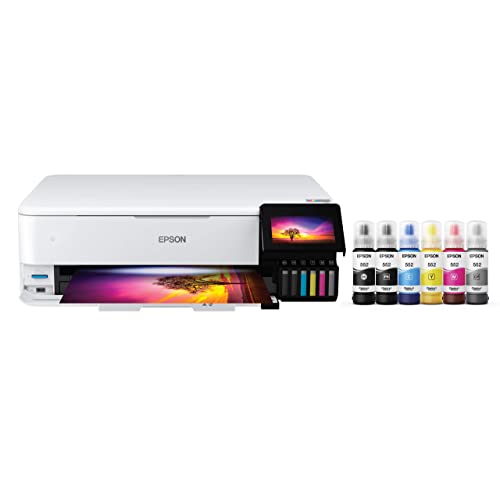
- Six-color cartridge-free ink system
- Print, scan, and copy functionality
- Up to 6,200 color pages
Best For: Wide-format photos and creative paper projects
Best for High-Volume Production

- 33 × 18.5 × 30cm printing volume
- 43μm detail from an 8K mono LCD
- Designed for fast batch production
Best For: Commercial studios and miniature production
Best for Easy Setup

- 18.3L build volume for batch production
- 14-inch 12K monochrome screen
- Auto-leveling and heated resin tank
Best For: Workshops seeking simpler large-format printing
Best for Easy, Stable Printing

- Factory-calibrated automatic leveling
- 14K detail with 16.8 × 24.8 μm pixels
- Handles resins up to 8,000 cps
Best For: Reliable setup and advanced resin use
Best for Speed and Smart Monitoring

- 16K resolution at 14 × 19 μm XY detail
- Print speeds up to 150 mm/h
- Heated tank, AI camera, and auto leveling
Best For: Fast, monitored resin printing
Large-Scale Production Pick

- 18.3L build volume for oversized or batch prints
- 14-inch 12K screen with LighTurbo 3.0
- Heated vat, auto-leveling, and AI monitoring
Best For: Print farms and engineering teams scaling resin production
Fast Workflow Pick
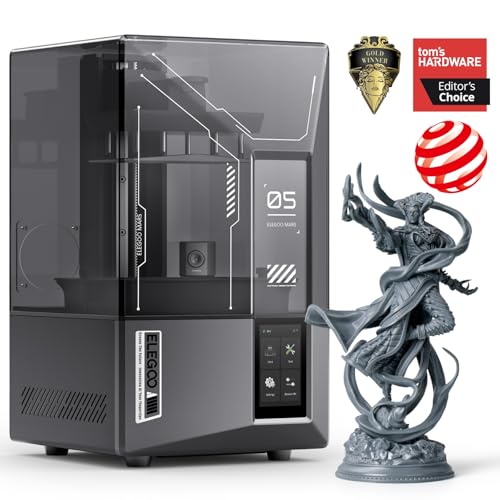
- 9K mono LCD with 18 μm XY resolution
- Up to 150 mm/h with tilt-release technology
- AI monitoring and Wi-Fi cluster printing
Best For: Detail-focused users and compact multi-printer workflows
Compact Detail Pick

- 7-inch 10K mono LCD with 17 μm XY pixels
- 153.4 × 87 × 165 mm build volume
- Beginner-friendly leveling and power-loss resume
Best For: Beginners and hobbyists prioritizing detail over capacity
Best Overall Large-Format Resin Printer – UniFormation GK3 Ultra
The UniFormation GK3 Ultra is a strong choice among large format resin printers when you need high capacity, fine detail, and dependable operation across extended jobs. Its 300 × 160 × 300mm build volume, 16K LCD, heated resin system, and automatic resin feeding support both oversized models and multi-part production.
Best For: Industrial prototyping, professional studios, small and medium-sized businesses, and high-volume model production.
Pros:
- Large 300 × 160 × 300mm build volume for bigger models or multiple parts.
- 16K LCD with 20 × 26μm pixel size supports sharp detail.
- Automatic resin feeding helps prevent failures from insufficient resin.
- Built-in heating, quick-release vat, drip hanger, and carbon filter improve workflow.
Cons:
- Its 85.8-pound weight and large footprint require dedicated workspace.
- The extensive feature set may be more than casual users need.
The GK3 Ultra stands out as a versatile production machine, combining generous capacity with temperature control and precise Z-axis movement. It is particularly compelling when reducing hands-on intervention matters as much as print size.
Best Wide-Format Photo Printer – Epson EcoTank Photo ET-8550
The Epson EcoTank Photo ET-8550 is not a resin 3D printer, but it may suit shoppers whose “large format” needs involve wide-format photos, graphics, or creative paper projects rather than 3D models. Its cartridge-free design uses six-color Claria ET Premium inks and includes printing, scanning, and copying.
Best For: Wide-format photo printing, graphics, and creative projects with lower recurring ink costs.
Pros:
- Produces lab-quality photos, graphics, and sharp text.
- Cartridge-free ink bottles can reduce replacement frequency and waste.
- Up to 6,200 color pages and up to two years of included ink support longer use.
- All-in-one functionality includes printing, scanning, and copying.
Cons:
- It is an inkjet printer, not a resin 3D printer.
- The supplied notes do not specify its maximum paper size.
The ET-8550 belongs in this roundup only as a category distinction: it is useful for wide-format 2D output, while buyers seeking large format resin printers should consider the dedicated resin models instead.
Best for High-Volume Production – Phrozen Sonic Mega 8K S
The Phrozen Sonic Mega 8K S is built for production-focused users who need to fill a large build plate with detailed parts. Its 33 × 18.5 × 30cm printing volume, 15-inch 8K mono LCD, and claimed batch capacity make it one of the more production-oriented large format resin printers in this selection.
Best For: Professional studios, miniature batches, jewelry masters, dental prototypes, and high-volume commercial work.
Pros:
- Large build plate can reportedly produce 80 1/32-scale miniatures in about 90 minutes.
- 43μm XY resolution supports fine textures and sharp edges.
- ACF film and TR300 resin are specified for faster printing and reduced suction force.
- Lift-up lid and built-in metal drip hanger suit compact, cleaner workspaces.
Cons:
- The fastest stated results depend on the specified ACF film and TR300 resin.
- Its 57.3-pound weight still calls for a stable workspace.
The Sonic Mega 8K S prioritizes throughput without abandoning detail. It is a logical pick for studios that can take advantage of batch production and compatible high-speed materials.
Best for Easy Setup – ANYCUBIC Photon P1 Max
The ANYCUBIC Photon P1 Max combines a substantial 18.3-liter build volume with automation aimed at simplifying large-format resin printing. Its 14-inch 12K screen, heated 1900ml resin tank, and Auto-Leveling 3.0 make it a practical option for users who want batch capacity without as much manual calibration.
Best For: High-volume batch production, oversized prototypes, and workshops that need easier setup and temperature-managed resin handling.
Pros:
- 285.5 × 214 × 300mm build volume accommodates large models or dense batches.
- 14-inch 12K screen with 24.8μm pixels supports smooth, detailed surfaces.
- Auto-Leveling 3.0 checks and adjusts the build plate before printing.
- Heated 1900ml tank supports resin temperatures up to 35°C.
Cons:
- The 20.08 × 20.87 × 29.53-inch footprint requires considerable space.
- At 68.9 pounds, it is not especially portable.
The Photon P1 Max is appealing when convenience is a priority. Auto-leveling, controlled vat heating, and a large build area address several common challenges of running large format resin printers in a busy workshop.
Best for Maximum Build Volume – Jupiter 2 Large 16K
For shoppers comparing large format resin printers, the ELEGOO Jupiter 2 stands out with a 302.4 × 161.98 × 300 mm build volume—large enough for bigger models or multiple smaller parts in one job. Its 16K resolution and automated workflow target detail-focused users who also want easier operation.
Best For: Large projects, batch printing, and users who want high resolution with automated resin and leveling features.
Pros:
- Very large build volume for oversized models or batch production.
- 16K resolution with 20 × 26 μm XY resolution for fine detail.
- Multi-point auto leveling, heated resin tank, and automated resin replenishment support a streamlined workflow.
- Camera monitoring, Wi-Fi, power-loss recovery, and multiple safety alarms add convenience.
Cons:
- Large 63.8-pound machine requires substantial workspace and a sturdy setup.
- Its many automated features may be more than casual users need.
The Jupiter 2 is the strongest choice here when build capacity is the priority. It combines a genuinely large platform with detailed output and extensive monitoring, making it well suited to ambitious home workshops and production-oriented printing.
Best for Easy, Stable Printing – Photon P1 14K
The Anycubic Photon P1 is a practical option among large format resin printers for users who value stability and reduced setup work. Its precision guide system, factory-calibrated auto-leveling, and 14K LCD are designed to support consistent results without extensive manual adjustment.
Best For: Creators seeking dependable setup, fine detail, and compatibility with high-viscosity industrial resins.
Pros:
- Stable ball screws and precision guide rails help minimize vibration.
- Smart Leveling 3.0 performs self-checks and provides four-corner pressure feedback.
- Wave Release Technology reduces reported release force by 60% for easier model removal.
- Supports resins up to 8,000 cps and offers 14K resolution with a 16.8 × 24.8 μm pixel size.
Cons:
- Its listed build dimensions are smaller than the Jupiter 2’s, despite its large-format positioning.
- AI inspection and resin monitoring add features that may not matter to users who prefer a simpler printer.
The Photon P1 balances detailed output with a particularly approachable setup experience. Choose it if automatic calibration, stable motion, and broad resin capability matter more than maximizing build volume.
Best for Speed and Smart Monitoring – Saturn 4 Ultra 16K
The ELEGOO Saturn 4 Ultra 16K is a compelling pick among large format resin printers when speed and convenience are equally important. It combines a 16K screen, automatic heated resin tank, tilted release technology, and a target print speed of up to 150 mm/h.
Best For: Users who want detailed models, faster production, automatic setup, and remote print monitoring.
Pros:
- 16K LCD delivers 14 × 19 μm XY resolution for intricate models.
- Automatic heating helps maintain resin temperature when it falls below 25°C.
- Tilted release technology and increased light intensity support printing speeds up to 150 mm/h.
- AI camera, automatic leveling, Wi-Fi transfer, cluster printing, and power-on resume improve oversight and workflow.
Cons:
- Its 8.33 × 4.66 × 8.66-inch print area is smaller than the Jupiter 2’s.
- The feature-rich system may be unnecessary for occasional, basic printing.
The Saturn 4 Ultra is a strong middle ground for detail-focused users who do not want to sacrifice throughput. Its heated tank, automated checks, and camera monitoring make it especially attractive for repeat printing and hands-off supervision.
Large-Scale Production Pick – ANYCUBIC Photon P1 Max
For buyers comparing large format resin printers, the ANYCUBIC Photon P1 Max stands out for its 18.3L build volume, allowing oversized models or large batches of parts in one print. Its heated resin vat, automatic leveling, and AI monitoring are aimed at reducing hands-on supervision during demanding production runs.
Best For: Print farms, engineering teams, and users who need high-volume or oversized resin printing.
Pros:
- Large 18.3L build volume supports oversized models and batch production.
- 14-inch 12K screen and LighTurbo 3.0 light engine target detailed, smooth surfaces.
- Auto-Leveling 3.0 and AI monitoring can reduce setup and failure-related supervision.
- Heated 1.9L resin tank maintains temperatures up to 35°C for more consistent resin flow.
Cons:
- Large footprint and 62.9-pound weight require substantial workspace and support.
- Its production-focused size may be excessive for occasional small prints.
The Photon P1 Max is the strongest fit here when capacity and repeatable production matter more than compactness. Its automation features complement the unusually large build area, while the heated tank may be especially useful in cooler workspaces or with higher-viscosity resins.
Fast Workflow Pick – ELEGOO Mars 5 Ultra
Among large format resin printers, the ELEGOO Mars 5 Ultra is a more compact option focused on speed, detail, and connected workflow control. Its 9K mono LCD, tilt-release technology, AI camera, and Wi-Fi cluster printing make it suited to users who prioritize efficient operation across one or more printers.
Best For: Detail-focused users and small production setups that value fast printing and networked control.
Pros:
- 9K mono LCD delivers 18 μm XY resolution for fine model details.
- Print speeds reach up to 150 mm/h with tilt-release technology.
- AI camera monitors for issues such as empty build plates and model warps.
- Wi-Fi cluster printing allows control of multiple Mars 5 Ultra printers from one device.
Cons:
- Its listed 7-inch LCD and compact dimensions indicate less capacity than a true large-volume printer.
- AI detection results may vary with the environment, models, and resin types.
The Mars 5 Ultra is best viewed as a productivity-oriented resin printer rather than a maximum-capacity machine. It offers useful safeguards and fast operation, while cluster printing can make it more practical for users expanding to multiple units.
Compact Detail Pick – ANYCUBIC Photon Mono 4
The ANYCUBIC Photon Mono 4 is a compact choice for shoppers researching large format resin printers but who do not need an unusually large machine. Its 7-inch 10K mono LCD, 17 μm XY pixel size, and 153.4 × 87 × 165 mm build volume provide detailed prints for everyday projects in a lightweight desktop format.
Best For: Beginners and hobbyists who want high-resolution resin printing in a compact setup.
Pros:
- 10K resolution and 17 μm XY pixels support highly detailed models.
- LighTurbo matrix lighting is designed to reduce layer lines and rasterization.
- Laser-engraved platform improves adhesion while keeping removal manageable.
- Power-loss resume and four-point leveling support easier day-to-day operation.
Cons:
- Its build volume is substantially smaller than dedicated large-format machines.
- Anycubic APP service is not supported for this model.
The Photon Mono 4 makes the most sense when print detail and ease of use outweigh maximum build capacity. It can handle many daily projects, but buyers specifically needing oversized models or large production batches should consider a larger-format option.
How We Picked the Best Large Format Resin Printers
We evaluated these Large Format Resin Printers by looking at the factors that most affect real-world ownership: build volume, LCD resolution, pixel size, print speed, leveling and calibration systems, resin management, software support, safety features, and overall usability. We also considered whether each model is better suited to occasional hobby printing, detailed model work, prototyping, or higher-volume production.
Advertised specifications can vary by region and firmware version, so confirm the latest manufacturer details before buying. A larger printer is not automatically better if it requires more resin, bench space, ventilation, or post-processing time than your workflow can support.
Quick Comparison
| What to Compare | Best For | Why It Matters |
|---|---|---|
| Build volume | Large parts and batch printing | Determines the maximum model size and number of parts per run. |
| Resolution and pixel size | Fine details and smooth surfaces | Higher resolution can improve small features, though exposure and resin also matter. |
| Automation | Convenient, repeatable printing | Auto-leveling, monitoring, and calibration reduce setup errors. |
| Resin handling | Frequent or long prints | Heating, tank capacity, and refill processes affect consistency and downtime. |
| Overall footprint | Home and studio users | The printer needs clearance for its cover, ventilation, and maintenance access. |
Key Buying Factors for Large Format Resin Printers
Build Volume and Intended Output
Choose a printer based on the largest objects you actually plan to make. A very large build area is valuable for helmets, statues, props, architectural models, and production batches, while a mid-size machine may be more efficient for miniatures and replacement parts. Remember that taller prints can take substantially longer and use more supports.
Resolution, Speed, and Print Quality
16K and 14K labels indicate display resolution, but they do not guarantee better results in every situation. Pixel size, optical uniformity, exposure settings, resin formulation, and model orientation all affect surface quality. Fast-print claims are most useful when paired with reliable release mechanics and consistent exposure.
Heating, Ventilation, and Maintenance
Temperature control can improve resin consistency in cooler rooms, particularly during long production runs. Resin printing still requires ventilation, gloves, eye protection, washing, curing, and careful waste disposal. Budget for cleaning supplies, replacement release films, screens, vats, and enough workspace to safely handle uncured resin.
Software and Reliability Features
Look for dependable slicing software, stable firmware, useful failure detection, auto-leveling, and a straightforward replacement-parts supply. These features can matter more than a small resolution advantage, especially for first-time users or anyone running unattended jobs.
Who Should Buy Which Large Format Resin Printers?
Choose the largest high-resolution models for oversized prototypes, props, statues, and batch production where minimizing assembly is important. A mid-size 14K or 16K printer is often the best balance for serious hobbyists who want detailed parts without the space and material demands of the biggest machines. Compact models are better for beginners, smaller workspaces, miniatures, and users who value lower upfront and operating costs.
Before ordering, verify the printer’s external dimensions, power requirements, resin compatibility, warranty coverage, and availability of consumables in your region. The best Large Format Resin Printers are the ones that fit both your projects and your complete printing workflow.