Choosing a first flash can feel confusing, but the right model makes indoor shooting, portraits, and fill light much easier to learn.
This roundup focuses on camera flashes for beginners that balance simple operation, dependable power, and useful features without overwhelming extras.
Best 10 Camera Flashes for Beginners Picks for 2026
Budget Mini Manual Flash
NEEWER Z120 SE Compact Manual Speedlite
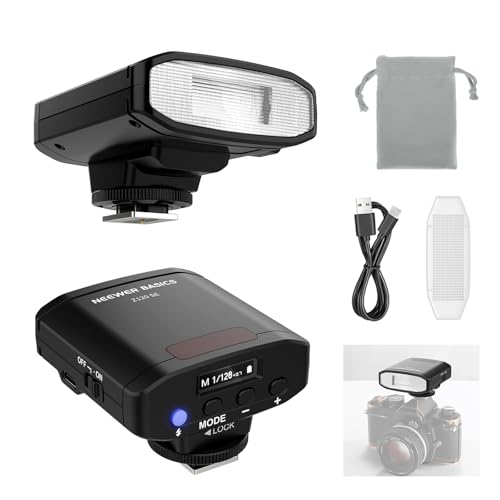
- Manual-only flash with S1/S2 modes
- Built-in battery for up to 500 flashes
- Very small, lightweight hot shoe design
Best For: New photographers who want a simple starter flash
Powerful Wireless Flash

- GN60 output with 5600K color
- Built-in 2.4G wireless master/slave support
- Tilts, rotates, and includes diffuser kit
Best For: Beginners who want a manual flash with upgrade potential
Classic Manual Speedlite

- GN33 output with 5500K daylight balance
- Manual, S1, S2, and multi-flash modes
- Includes pouch, stand, and color filters
Best For: Beginners who want a simple, traditional speedlite
Pocket Flash Pick
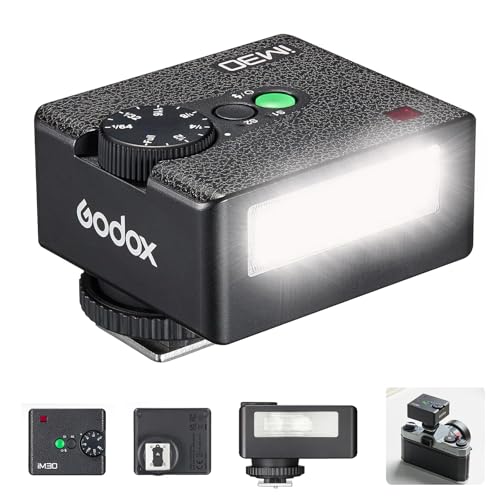
- Pocket-sized 78g flash body
- Seven manual power levels
- GN15 output with AAA battery power
Best For: Beginners who want the most portable flash option
Precision Beginner Choice

- LCD screen makes mode and power easy to read
- 22-step manual adjustment for finer lighting control
- Includes stand, pouch, and 12 color filters
Best For: Beginners who want a clearer manual flash interface
Wireless Growth Pick
Godox TT600 2.4G Wireless Speedlite

- Built-in 2.4G wireless system for off-camera use
- GN60 output with 5600K color balance
- Manual flash with no on-camera HSS
Best For: Beginners planning to expand into wireless flash
Ultra-Compact Manual Pick
ULANZI SL01 Mini Flash Speedlite

- GN8 output with 4 brightness levels
- Built-in battery supports 500+ flashes
- No TTL; single-contact hotshoe only
Best For: Beginners with compatible cameras who want a tiny manual flash
Most Beginner-Friendly Kit
Godox TT520III Universal Bounce Flash Kit

- GN33 manual flash with 8-stop adjustment
- Includes transmitter, diffuser, reflector, and bag
- 433MHz wireless off-camera triggering
Best For: Beginners who want an all-in-one manual flash kit
Budget Wireless Starter
Godox TT520II GN33 Flash Speedlite

- GN33 manual flash with 8 power levels
- 433MHz wireless transmitter included
- Comes with diffuser, filters, and stand
Best For: Beginners who want a low-cost manual flash kit
Budget Mini Manual Flash – NEEWER Z120 SE Compact Manual Speedlite
If you want camera flashes for beginners without paying for extra automation, the NEEWER Basics Z120 SE is a simple manual option to learn with. It keeps the essentials: compact size, GN12 output, 5600K light, and a built-in battery, so you can practice basic flash control on compatible hot shoe cameras.
Best For: Beginners who want an affordable, compact manual flash for learning exposure and simple fill light.
Pros:
- Very compact and lightweight for everyday carry
- Built-in 2000mAh battery with up to 500 full-power flashes
- Manual, S1, and S2 modes for straightforward learning
- Soft fill light with a translucent diffuser
Cons:
- No TTL, HSS, or automatic flash exposure
- Must be adjusted manually on the flash unit
- Works only with standard single-contact hot shoe cameras
The Z120 SE makes sense if you want an uncomplicated first flash and are comfortable learning manual settings. It is best treated as a basic practice tool rather than a feature-rich speedlite.
Powerful Wireless Flash – Godox TT600 Manual Speedlite
Among camera flashes for beginners, the Godox TT600 stands out if you want room to grow into off-camera lighting. It offers strong GN60 output, a flexible head, and Godox 2.4G wireless support, while still working as a straightforward manual on-camera flash.
Best For: Beginners who want a capable manual flash that can later expand into wireless lighting setups.
Pros:
- Strong GN60 output for more reach and versatility
- Godox 2.4G wireless system supports master and slave use
- Flexible head tilts and rotates for bounce lighting
- Includes diffuser kit, mini stand, and storage bag
Cons:
- Uses 4 AA batteries, which are not included
- HSS requires a compatible Godox trigger off-camera
- Not compatible with some listed camera models
This is a smart buy if you want a manual flash that does more than the basics. It gives beginners a path into off-camera lighting without forcing a jump to a full pro system.
Classic Manual Speedlite – PHOTOOLEX GN33 Hot Shoe Flash
The PHOTOOLEX camera flash is a practical entry point for camera flashes for beginners who want a more traditional manual speedlite. With GN33 power, three flash modes, and a simple hot shoe design, it covers the basics for learning flash timing and output control.
Best For: Beginners who want a straightforward manual flash with a bit more output than ultra-compact models.
Pros:
- GN33 guide number provides solid, stable light
- Manual, S1, S2, and multi-flash modes
- 22 levels of power output control
- Includes pouch, stand, color filters, and warranty
Cons:
- No TTL or camera menu control
- No wireless support
- Uses 4 AA batteries, which are not included
If you want a no-frills flash for learning the fundamentals, this model is easy to understand and flexible enough for simple creative use. It is best for hands-on shooters who do not need automation.
Pocket Flash Pick – Godox iM30 Mini Manual Flash
If portability matters, the Godox iM30 is one of the easiest camera flashes for beginners to carry and use. This pocket-sized manual flash is built for single-contact hot shoe cameras, with seven power levels and a lightweight body that fits easily into a small kit.
Best For: Beginners who want an ultra-compact flash for travel, casual shooting, and simple fill light.
Pros:
- Extremely small and lightweight at 78 grams
- Seven power levels for manual control
- GN15 output gives brighter fill light than many built-in flashes
- Uses two AAA batteries and is easy to pack
Cons:
- No TTL or high-speed sync
- Manual-only operation
- Requires a single-contact hot shoe camera
The iM30 is a good match if you want something tiny, simple, and easy to bring everywhere. It is not the most powerful option here, but it is one of the most convenient for first-time flash use.
Manual Starter Pick – NEEWER TT560 Manual Flash Speedlite
If you’re comparing camera flashes for beginners, the NEEWER TT560 is a straightforward manual option that keeps costs and controls simple. It offers eight power levels, a tilting and rotating head, and basic optical slave modes, but you’ll need to set exposure yourself since there’s no TTL, no HSS, and no automatic flash exposure.
Best For: Beginners who want a manual flash for learning light control on compatible DSLR and mirrorless cameras.
Pros:
- Manual flash with 8 power levels from 1/128 to 1/1.
- GN38 output with 5600K daylight-balanced color.
- Tilts 0°-90° and rotates 0°-270° for bounce lighting.
- Supports S1/S2 optical slave modes and PC sync for off-camera use.
Cons:
- No TTL or automatic flash exposure.
- No HSS, so shutter speed must stay at 1/200s or slower for reliable sync.
- Requires a standard center-contact hot shoe and is not compatible with several listed cameras.
The TT560 is a practical entry point if you want to learn flash basics without extra automation. It rewards hands-on shooters who are comfortable adjusting power, aperture, and ISO themselves.
Precision Beginner Choice – PHOTOOLEX FK310 LCD Speedlite
The PHOTOOLEX FK310 is a good middle-ground option in camera flashes for beginners who want more control without jumping into complex automation. Its LCD screen, 22-level power adjustment, and multiple modes make it easier to learn lighting step by step, while the included filters and stand help you start experimenting right away.
Best For: Beginners who want a manual flash with finer power control and an easy-to-read display.
Pros:
- LCD display shows mode, power level, and battery status clearly.
- 22-level power adjustment from 1/128 to 1/4 for finer control.
- Manual, Multi, S1, and S2 modes support creative learning and off-camera setups.
- Includes a pouch, stand, and 12 color filters.
Cons:
- Manual exposure control only, so it won’t automate flash output.
- Top power range is limited to 1/4 according to the supplied notes.
- Requires a standard single-contact hot shoe for compatibility.
For beginners who want a more readable, more adjustable flash than the most basic manual units, the FK310 offers a lot of practical value. It’s especially appealing if you want to practice portraits or simple off-camera lighting with clear feedback on the flash itself.
Wireless Growth Pick – Godox TT600 2.4G Wireless Speedlite
The Godox TT600 is one of the more capable camera flashes for beginners if you expect to grow into wireless lighting later. It’s a manual flash with a built-in 2.4G system, strong GN60 output, and broad compatibility with standard hot shoe cameras, but it does not provide HSS when used on-camera.
Best For: Beginners who want a manual flash that can expand into a Godox wireless system.
Pros:
- Built-in Godox 2.4G X system for wireless use.
- High GN60 output with stable 5600K color temperature.
- Can control up to 5 groups and 32 channels with compatible triggers.
- Fast recycling time and about 230 full-power flashes per battery set.
Cons:
- No HSS on-camera hot shoe use, even though HSS can work with a compatible TTL trigger.
- Manual-only operation, so it won’t automate exposure.
- Requires 4 AA batteries, which are not included.
If you want a beginner-friendly flash that leaves room to build a multi-light setup, the TT600 is the strongest long-term pick here. It’s simple enough to use manually now, but it also gives you a path into wireless control later.
Ultra-Compact Manual Pick – ULANZI SL01 Mini Flash Speedlite
If you’re shopping for camera flashes for beginners and want something tiny, simple, and easy to carry, the ULANZI SL01 is built around basic manual control rather than automatic features. It’s a good fit if you already know your camera has a single-contact hotshoe and you want a lightweight flash for portraits, still life, or documentary-style shooting.
Best For: Beginners who want a compact manual flash for supported single-contact hotshoe cameras.
Pros:
- Very compact and lightweight at just 0.07 lbs.
- GN8 output with 4 brightness levels for simple light control.
- USB-C charging and built-in battery support over 500 full-power flashes.
- Supports use while charging for longer shooting sessions.
Cons:
- No TTL or automatic flash control.
- Requires a compatible single-contact hotshoe camera.
- Not compatible with several listed Sony, Canon, and Fuji models.
Overall, this is a straightforward beginner option if portability matters more than advanced automation. Just verify compatibility first, because this model is intentionally limited to specific hotshoe setups.
Most Beginner-Friendly Kit – Godox TT520III Universal Bounce Flash Kit
For buyers comparing camera flashes for beginners, the Godox TT520III stands out as a manual kit that includes a diffuser, reflector, transmitter, and storage bag. It uses a standard hot shoe and offers wireless off-camera triggering, so it gives you room to learn basic flash placement without jumping into a more complex system.
Best For: Beginners who want a full manual flash kit with wireless triggering and included accessories.
Pros:
- GN33 output with 8-stop power adjustment for finer control.
- 433MHz wireless system with RT transmitter included.
- Built-in reflector, diffuser, and diffuser kit help soften light.
- Fast 1.8-second recycle time and support for 400 full-power flashes.
Cons:
- Manual flash only; not TTL.
- Uses 4 AAA batteries sold separately.
- Not compatible with Sony ZV-1F, and hot-shoe compatibility still needs checking.
This is a practical starter kit if you want flash gear that arrives ready to experiment with. The included accessories make it easier to learn bounce and off-camera lighting from day one.
Budget Wireless Starter – Godox TT520II GN33 Flash Speedlite
If you want camera flashes for beginners with a more budget-oriented setup, the Godox TT520II keeps things manual but still adds wireless triggering and useful accessories. It’s designed for DSLR shooters with compatible hotshoe cameras and gives you the basics needed to start learning flash without extra complexity.
Best For: Beginners who want an affordable manual flash with wireless triggering and included extras.
Pros:
- GN33 output with 8 power levels from 1/128 to full power.
- 433MHz wireless trigger system with RT transmitter included.
- Built-in reflector and wide panel diffuser for softer light.
- Includes diffuser, color filters, stand, bag, and manual.
Cons:
- Manual only, with no TTL automation.
- Uses wired connectivity in the listed details, so setup is less modern than newer units.
- Compatibility is limited to the listed camera groups and should be checked before buying.
As a starter flash, this model offers a lot of learning value for the price because it includes the core tools most beginners need. It’s best if you’re comfortable staying manual and want a simple entry into off-camera flash.
How We Picked the Best Camera Flashes for Beginners
We prioritized Camera Flashes for Beginners that are easy to set up, reasonably priced, and compatible with common DSLR and mirrorless systems. We also looked for clear controls, practical guide numbers, helpful recycle times, and features that support learning rather than complicating the process.
Quick Comparison
For most first-time users, the best choice depends on how you plan to shoot. Manual-only flashes can be great for learning the basics and saving money, while models with wireless triggering or bounce capability are better if you want room to grow. Compact mini flashes suit travel and casual fill light, while higher-output speedlights are better for portraits, events, and larger rooms.
Key Buying Factors for Camera Flashes for Beginners
Ease of Use
Look for straightforward buttons, a readable display, and a control layout that does not require a steep learning curve. A flash that is simple to adjust will help you understand exposure faster.
Power and Recycle Time
Guide number affects how much light the flash can produce, while recycle time determines how quickly it is ready for the next shot. Beginners usually benefit from a balance of enough output for indoor use and a recycle time that does not slow down practice.
Compatibility
Make sure the flash works with your camera brand and hot shoe type. Some flashes are broadly compatible, while others are tailored to specific systems or use single-contact connections.
Manual Vs. Wireless Features
Manual flashes are often the easiest way to learn flash exposure because they force you to adjust power yourself. Wireless flash features are useful if you want to experiment with off-camera lighting later, but they are not essential for a first purchase.
Size, Power Source, and Portability
Mini flashes are easier to carry and keep light on the camera, while larger speedlights usually offer more output. Battery type also matters; rechargeable built-in batteries can be convenient, while AA-powered options are easy to replace on the go.
Who Should Buy Which Camera Flashes for Beginners?
If you want the simplest path into flash photography, choose a compact manual flash with clear controls and broad compatibility. If you plan to learn lighting more seriously, a stronger GN-rated speedlight with wireless capability is a better long-term pick. If portability matters most, a mini flash is ideal for travel, street shooting, or light fill indoors. For budget-conscious shoppers, basic models with manual power settings can still deliver excellent learning value.
In short, the best Camera Flashes for Beginners are the ones that help you practice confidently without adding unnecessary complexity.