Choosing among resin printers for prototypes means balancing fine detail, dimensional consistency, print speed, and the cleanup demands of resin fabrication. The right machine can produce crisp visual models, functional fit-check parts, and presentation-ready iterations.
This roundup compares 10 selected printers and resin products, from compact desktop options to larger-format machines and tougher prototype materials. Use the guide below to match your priorities, workspace, and expected production volume.
Best 10 Resin Printers for Prototypes Picks for 2026
High-Detail Pick

- 7-inch 10K LCD with 17-micron X/Y pixels
- 153.4 × 87 × 165 mm build volume
- Beginner-friendly leveling and power-loss resume
Best For: Detailed prototypes and miniature models
Durable Material Pick
ELEGOO 8K Water-Washable ABS-Like Resin

- ABS-like durability for functional prototypes
- 8K detail with textures down to 35 microns
- Rinses clean with tap water
Best For: Mechanical prototypes and detailed functional parts
Fast Enclosed FDM Alternative
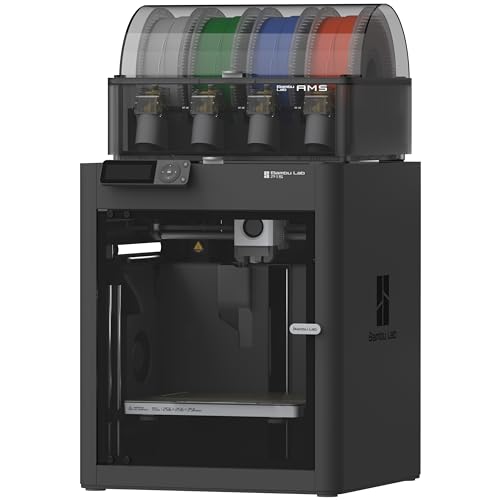
- Up to 500 mm/s printing speed
- AMS supports up to 16 colors
- Automatic leveling and enclosed design
Best For: Rapid filament-based prototype iterations
Everyday Toughness Pick

- Enhanced toughness for repeated stress
- Over 20% higher impact strength
- Low shrinkage supports accurate fits
Best For: Durable functional parts and fit-check prototypes
Best for Easy Setup

- 28µm XY resolution for fine detail
- Large 8.6 × 4.8 × 9.3-inch build volume
- Dual linear rails support alignment
Best For: Larger, highly detailed prototypes and models
Feature-Rich Speed Pick

- 16K resolution with 14 × 19µm XY detail
- Heated resin tank and automatic leveling
- AI monitoring and speeds up to 150mm/h
Best For: Intricate prototypes and streamlined repeat printing
Easy-Setup Compact Pick
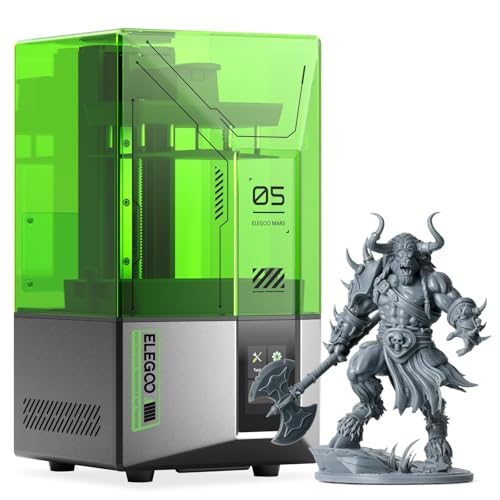
- One-click automatic leveling
- 4K mono LCD with COB light source
- Sensors and overheat protection support safer printing
Best For: Beginners and smaller detailed prototypes
Premium Precision Pick
UniFormation GK3T 16K Resin Printer

- 16K resolution with 14×19μm pixels for fine detail
- Factory pre-leveling and smart workflow features
- Built-in heating and remote print monitoring
Best For: Detailed prototypes and streamlined resin printing
Best Heavy-Duty Pick
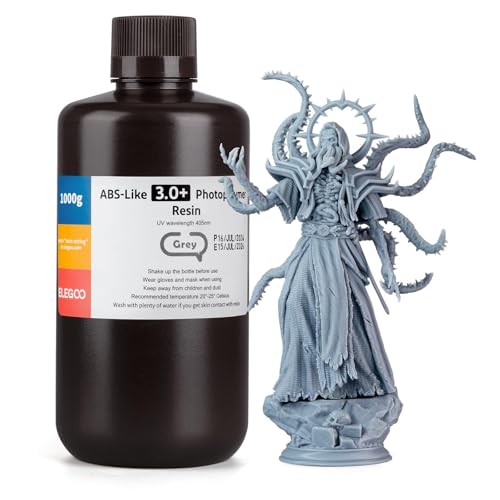
- Tough, impact-resistant material for functional parts
- Supports tapping and drilling without readily cracking
- Low shrinkage, good fluidity, and fast curing
Best For: Functional prototypes and moderately stressed parts
Rapid Prototyping Pick

- Strong, tough material for functional prototypes
- Lower viscosity supports faster flow and curing
- Compatible with many 405nm LCD and DLP printers
Best For: Fast iterations and durable mechanical prototypes
High-Detail Pick – ANYCUBIC Photon Mono 4
For resin printers for prototypes that prioritize fine surface detail, the ANYCUBIC Photon Mono 4 combines a 7-inch 10K mono LCD with a 17-micron X/Y pixel size. Its build volume is also large enough for many everyday prototype projects.
Best For: Detailed prototypes, miniatures, and makers who want a beginner-friendly resin workflow.
Pros:
- 10K resolution supports highly detailed models.
- Uniform LighTurbo illumination helps reduce layer lines and rasterization.
- Laser-engraved platform improves adhesion while keeping removal manageable.
- Four-point leveling and power-loss resume simplify operation.
Cons:
- Anycubic app service is not supported.
- Resin printing requires the usual post-processing workflow.
The Photon Mono 4 is a strong choice when prototype appearance and detail matter most. Its fixed leveling approach and power-resume feature add practical convenience for newer users.
Durable Material Pick – ELEGOO 8K Water-Washable ABS-Like Resin
For resin printers for prototypes, material choice can be just as important as printer resolution. This ELEGOO ABS-like resin is designed for functional parts, offering stated tensile strength, impact resistance, and 8K micro-detail while simplifying cleanup with water washing.
Best For: Functional prototypes, tooling, mechanical parts, and detailed models that need added durability.
Pros:
- ABS-like formula is rated at 25.27 MPa tensile strength and 32.61 kJ/m² impact resistance.
- 8K detail can reproduce textures as fine as 35 microns.
- Low viscosity supports smooth flow through intricate channels.
- Water-washable formulation avoids alcohol-based cleanup.
Cons:
- It is resin material, not a printer, so compatibility and exposure settings must be checked.
- Durability and detail may be more than needed for simple visual mockups.
This resin bridges visual quality and functional performance well. It is especially appealing when a prototype must withstand handling rather than serve only as a presentation model.
Fast Enclosed FDM Alternative – Bambu Lab P1S Combo
Although it is not a resin printer, the Bambu Lab P1S Combo is a practical alternative for prototypes when speed, automation, and larger material flexibility matter more than resin-level surface detail. Its enclosed design and AMS support suit rapid iterative work.
Best For: Fast prototype iterations, enclosed printing, and multi-color or multi-material concept models.
Pros:
- Print speeds up to 500 mm/s and acceleration up to 20,000 mm/s² support rapid iteration.
- AMS enables multi-color and multi-material printing, with support for up to 16 colors.
- Automatic bed leveling helps simplify setup and printing.
- Enclosure improves performance with advanced filaments.
Cons:
- It uses filament rather than resin, so it is not a direct resin-printer substitute.
- Multi-color printing requires the Bambu Lab AMS.
- Carbon- and glass-fiber-reinforced polymers are not recommended.
The P1S Combo makes sense for teams that value quick, repeatable prototypes and material versatility. Choose it over a resin machine when speed and enclosed FDM convenience outweigh ultra-fine resin detail.
Everyday Toughness Pick – ELEGOO Tough 2.0 Resin
For resin printers for prototypes that produce parts exposed to handling, bending, or repeated stress, ELEGOO Tough 2.0 Resin focuses on toughness and dimensional reliability. Its low-shrinkage, lower-viscosity formula is intended to support accurate and consistent functional prints.
Best For: Durable functional parts, fit-check prototypes, assemblies, and everyday-use prints.
Pros:
- Enhanced toughness helps parts withstand bending and repeated stress.
- Over 20% higher impact strength is designed to resist drops and knocks.
- Low shrinkage supports dimensional accuracy and more reliable fit.
- Lower viscosity helps reduce bubbles and layer imperfections.
Cons:
- It is a 1,000 g resin refill, not a printer.
- Its gray color may be less suitable when a prototype needs presentation-ready color variety.
This is a sensible resin for prototypes that need to survive handling and repeated fit checks. Its emphasis on toughness, flow, and low shrinkage makes it more practical for functional work than a standard display-oriented resin.
Best for Easy Setup – phrozen Sonic Mighty 8K
For resin printers for prototypes that need a generous build area and very fine surface detail, the phrozen Sonic Mighty 8K combines a 10-inch monochrome LCD with 28µm XY resolution. Its reinforced dual linear rails are designed to support consistent layer alignment across larger prints.
Best For: Larger prototypes, detailed models, miniatures, and action figures.
Pros:
- 28µm XY resolution captures fine details and high-resolution surfaces.
- 8.6 × 4.8 × 9.3-inch printing volume supports larger prototype parts.
- Dual linear rails help maintain precise layer alignment.
- Smart firmware and consistent exposure are designed to reduce failed prints.
Cons:
- Its 31.5-pound weight and tabletop dimensions require a sturdy workspace.
- The feature set is more than necessary for users focused only on small, simple prints.
The Sonic Mighty 8K is a strong fit when prototype appearance and fine detail matter, especially if you want more build volume than a compact resin printer provides.
Feature-Rich Speed Pick – ELEGOO Saturn 4 Ultra 16K
The ELEGOO Saturn 4 Ultra 16K is a compelling option among resin printers for prototypes when you want very high resolution, automated checks, and faster workflows. Its heated resin tank, automatic leveling, Wi-Fi transfer, and monitoring features are aimed at making repeat prototype printing more reliable.
Best For: Large, intricate prototypes and users who value automated monitoring and setup.
Pros:
- 16K LCD delivers 14 × 19µm XY resolution for intricate models.
- Heated resin tank helps maintain suitable resin temperature below 25°C.
- AI camera supports print monitoring, error awareness, and time-lapse recording.
- Up to 150mm/h print speed, automatic leveling, and Wi-Fi transfer streamline production.
Cons:
- At 35.4 pounds, it is a substantial tabletop machine.
- Its advanced automation may be unnecessary for occasional basic prototyping.
Choose the Saturn 4 Ultra 16K if you need exceptional detail alongside a broad set of workflow safeguards. The combination of monitoring, temperature control, and speed is especially useful for repeated prototype runs.
Easy-Setup Compact Pick – ELEGOO Mars 5
For newcomers exploring resin printers for prototypes, the ELEGOO Mars 5 emphasizes straightforward setup and print checks. One-click automatic leveling, a pre-print self-check, and residue and resin-shortage alerts reduce routine setup and monitoring tasks.
Best For: Beginners and smaller prototype projects that prioritize simple operation.
Pros:
- One-click automatic leveling reduces calibration work.
- 4K mono LCD and COB light source support detailed prints.
- Mechanical sensors detect residue, resin shortages, and leveling failures.
- Overheat protection can halt printing if LED temperature exceeds 80°C.
Cons:
- The supplied notes do not specify the printer’s build volume.
- Its 4K resolution is lower than the 8K and 16K options in this roundup.
The Mars 5 is the practical choice for users who want an approachable resin workflow with useful safeguards. It suits detailed smaller projects, while larger or resolution-critical prototypes may favor the other models.
Premium Precision Pick – UniFormation GK3T 16K Resin Printer
For resin printers for prototypes where fine detail and repeatable workflow matter, the UniFormation GK3T stands out with a 15120×6230 LCD, 14×19μm pixels, and factory pre-leveling. Its heating and monitoring features also make it practical for users who want a more streamlined printing setup.
Best For: Detailed prototypes, miniatures, and users seeking a feature-rich, beginner-friendly workflow.
Pros:
- 16K resolution and fine pixel size support highly detailed, smooth prints.
- Factory pre-leveling, smart resin feeding, and a quick-release build plate simplify setup and handling.
- Built-in heating supports resin fluidity in temperatures as low as 0°C/32°F.
- Remote monitoring, print control, and timelapse support add workflow convenience.
Cons:
- Its 52.8-pound weight and larger footprint require dedicated workspace.
- The advanced feature set may be more than needed for basic prototype work.
The GK3T is a strong choice when prototype appearance, small details, and a smoother end-to-end process are priorities. Its size and premium feature set make it best suited to a committed home workshop or studio.
Best Heavy-Duty Pick – ELEGOO ABS-Like 3.0+ Resin
For resin printers for prototypes, ELEGOO ABS-Like 3.0+ is a practical material choice when finished parts need more toughness than standard display models. The gray resin combines impact resistance, low shrinkage, and heat resistance up to 55°C for functional prototype testing.
Best For: Tough functional prototypes, drilled parts, and models exposed to moderate heat or stress.
Pros:
- High strength and impact resistance help parts withstand bending and stress.
- Printed models can be tapped and drilled without readily cracking.
- Low shrinkage supports accurate dimensions, smooth surfaces, and clear details.
- Good fluidity and fast curing can improve LCD printing efficiency.
Cons:
- Heat resistance is specified only up to 55°C, so it is not intended for high-temperature applications.
- As a 1000g resin bottle, it adds consumable storage and handling requirements.
This resin is a sensible option when prototype durability and machinability matter more than simply producing visual models. Its balanced strength, precision, and curing performance suit general-purpose functional parts.
Rapid Prototyping Pick – ELEGOO ABS-Like 3.0 Resin
If you need resin printers for prototypes that can produce durable, dimensionally stable parts efficiently, ELEGOO ABS-Like 3.0 is designed for the job. Its clear red formulation offers strength and toughness, while lower viscosity helps resin flow back quickly for faster curing and easier peeling.
Best For: Functional prototypes, mechanical parts, and industrial-style models made with compatible 405nm printers.
Pros:
- High strength, toughness, and impact resistance support functional parts.
- Low shrinkage helps preserve detail, surface quality, and dimensional accuracy.
- Lower viscosity than earlier versions can improve flow, peel performance, and print speed.
- Wide compatibility with LCD and DLP printers using 405nm UV light.
Cons:
- The clear red color may not suit every prototype or presentation requirement.
- Compatibility is tied to 405nm UV light-curing printers.
Choose ABS-Like 3.0 when rapid iteration and durable prototype performance are the main goals. Its stable formulation and broad 405nm compatibility make it a versatile consumable, especially for functional testing.
How We Picked These Resin Printers for Prototypes
We focused on factors that directly affect prototype results: projected resolution, XY detail, build volume, material compatibility, ease of operation, and the ability to produce repeatable parts. The selection includes compact printers for small components, larger machines for batch printing, and engineering-oriented resins that can better tolerate handling and fit testing.
Because resin products are included alongside printers, we also considered how material choice changes the result. Standard resin is suitable for visual models, while ABS-like and tough formulations are generally more appropriate for clips, housings, brackets, and other parts that need some impact resistance.
Quick Comparison
| Priority | What to look for | Best fit |
|---|---|---|
| Fine surface detail | High-resolution monochrome LCD and small XY pixel size | Miniatures, small mechanical features, and display prototypes |
| Larger prototypes | Generous build volume and stable Z-axis movement | Enclosures, ergonomic studies, and multi-part batches |
| Durable test parts | Tough or ABS-like resin compatibility | Snap fits, brackets, covers, and handling tests |
| Lower maintenance | Reliable leveling, assisted setup, and consistent exposure control | Frequent prototyping and shared workspaces |
Key Buying Factors for Resin Printers for Prototypes
Resolution and Dimensional Detail
A higher pixel count can reveal sharper edges and smaller features, but resolution alone does not guarantee accurate parts. Exposure settings, resin behavior, calibration, support placement, and the printer’s motion system also influence dimensional results. For detailed prototypes, prioritize a fine XY pixel size and dependable exposure controls.
Build Volume and Production Efficiency
Measure your largest expected component, including the angle needed for supports. A compact printer may be ideal for small parts and uses less resin per failed experiment, while a larger model can print assemblies or multiple iterations at once. Larger platforms can improve throughput but require more workspace, cleaning capacity, and resin handling.
Material Selection and Post-Processing
Resin printing requires washing and UV curing, and every formulation has its own exposure and finishing requirements. Water-washable resin may simplify cleanup, but it still needs careful handling and proper waste disposal. Tough and ABS-like materials are better choices when a prototype must survive repeated assembly, drops, or flexing.
Workflow, Safety, and Operating Cost
Look for features that reduce failed prints, such as dependable leveling systems, exposure monitoring, resin management, and clear setup procedures. Budget for a wash-and-cure solution, gloves, ventilation, replacement release films, build plates, and enough resin for calibration and failed iterations. Always follow the manufacturer’s safety instructions.
Who Should Buy Which Resin Printers for Prototypes?
Choose a compact, high-resolution machine if you primarily make small product concepts, detailed models, or fit-check components. Select a larger-format printer if your prototypes are enclosure-sized or you need to batch several parts in one run. For functional testing, pair a compatible printer with tough or ABS-like resin rather than relying on standard model resin.
Beginners and occasional users should favor straightforward setup and predictable calibration over headline resolution. Experienced makers, designers, and engineering teams may benefit more from a larger build area, faster iteration, and broader resin flexibility. If your work includes multiple materials or colors, confirm that the printer and workflow support them directly; resin systems generally differ from filament-based multi-color setups.