Professional 3D printing demands more than headline speed. Consistent accuracy, dependable materials handling, thermal control, automation, and a workflow that fits your production needs can matter just as much.
This roundup compares 10 capable machines across enclosed FDM, large-format, multicolor, multi-toolhead, and actively heated-chamber categories. Use the buying guide below to narrow the field by application, materials, capacity, and budget.
Best 10 3d Printers for Professionals Picks for 2026
Large-Format Professional Pick

- Large 11.8 × 11.8 × 12.99-inch build volume
- 60°C heated chamber for advanced materials
- Rigid high-speed enclosed CoreXY design
Best For: Large prototypes, engineering filaments, and architectural models
Industrial-Scale Speed Pick
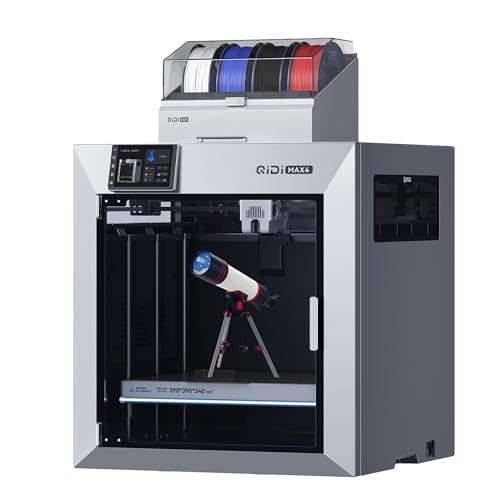
- 390 × 390 × 340mm build volume
- 65°C active heated chamber
- 800mm/s speed with hardened-steel nozzle
Best For: Large industrial parts, molds, and high-temperature materials
Multi-Material Productivity Pick

- Four independent toolheads with five-second changes
- Supports mixed materials and soluble supports
- 500mm/s CoreXY printing in a 270mm cube
Best For: Multi-material prototypes, colorful models, and small production workflows
Ready-to-Use Workflow Pick

- 500mm/s enclosed FDM printing
- Automatic bed leveling and 15-minute setup
- Up to 16 colors with optional AMS
Best For: Fast-starting workflows, enclosed printing, and multi-color projects
Industrial Multi-Material Pick

- Four independent toolheads minimize purge waste
- 65°C heated chamber supports advanced filaments
- CoreXY printing reaches up to 600mm/s
Best For: Professional engineering and multi-material production
Plug-and-Play Color Pick

- Pre-assembled for a quick start
- Supports up to 16 colors with four CFS units
- AI camera and targeted auto leveling add convenience
Best For: Fast multicolor prototyping and workshop use
Streamlined Workflow Pick

- Prints up to 600mm/s with flow compensation
- AMS 2 Pro adds color, materials, and filament drying
- Automatic calibration and AI failure detection simplify use
Best For: Fast, automated multi-color professional workflows
Large-Format Multicolor Workhorse

- 350mm cubed build volume for large models and batches
- CFS multicolor printing supports up to 16 colors
- 60°C chamber and 350°C hotend support advanced materials
Best For: Large prototypes, batch production, and engineering filaments
Streamlined Multicolor Starter
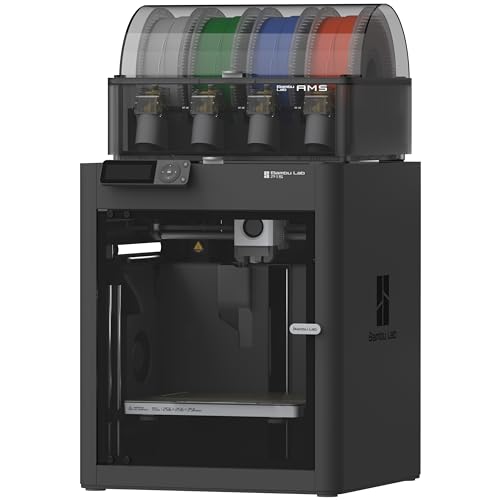
- Up to 16-color printing with the required AMS
- 500mm/s speed and automatic bed leveling
- Enclosed design and setup in about 15 minutes
Best For: Easy-to-manage enclosed multicolor printing
Professional Materials Specialist
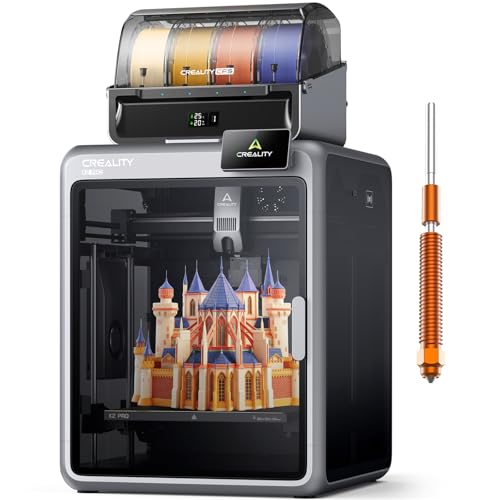
- 300mm cubed build volume for prototypes and batches
- 60°C active chamber supports advanced composite filaments
- Dual AI cameras and hardened extruder support production workflows
Best For: Professional prototyping and abrasive or heat-sensitive materials
Large-Format Professional Pick – Prusa CORE One L
For professionals seeking 3d printers for professionals, the Original Prusa CORE One L combines a large enclosed build area with a heated chamber and high-speed CoreXY motion. Its 11.8 × 11.8 × 12.99-inch build volume is suited to large parts, architectural models, and cosplay projects, while offline operation supports a more independent workflow.
Best For: Large-format prototypes, engineering materials, architectural models, and professional users who value reliable offline operation.
Pros:
- Large build volume can accommodate full-scale parts without splitting.
- Actively heated 60°C chamber supports materials such as ASA, ABS, PC, and Nylon.
- Rigid enclosed CoreXY frame is designed for high-speed dimensional accuracy.
- Automated sensors and minimal calibration simplify setup.
Cons:
- Its 68.4-pound weight and large footprint require substantial workspace.
- The feature set and large format may be more than smaller projects need.
The CORE One L is a strong choice when print size, material capability, and repeatable professional output matter more than compactness. Its enclosed, heated design gives it a clear advantage for demanding filament applications.
Industrial-Scale Speed Pick – QIDI Max4 Combo
The QIDI Max4 Combo is among the larger 3d printers for professionals, offering a 390 × 390 × 340mm build volume, active chamber heating, and high-speed motion hardware. Its closed-loop motors, high-flow hotend, and hardened nozzle are aimed at demanding prototypes and industrial-grade materials.
Best For: Large industrial parts, molds, prototypes, and users printing abrasive or high-temperature materials.
Pros:
- Large build area enables many sizable parts to be printed in one piece.
- 65°C heated chamber supports materials including ABS-CF, PC, and PPS-CF.
- 800mm/s maximum speed and 30,000mm/s² acceleration support fast production.
- AI monitoring can detect failures and pause the print.
Cons:
- At 120 pounds and 28 × 28 × 30 inches, it needs significant installation space.
- The Polar Cooler is sold separately.
- Multi-color and multi-material printing requires the separately connected QIDI BOX.
Choose the Max4 Combo when build volume and high-temperature material support are priorities. It is particularly compelling for professional workflows that can accommodate its size and add the optional accessories as needed.
Multi-Material Productivity Pick – Snapmaker U1
For professionals who need efficient multi-material production, the Snapmaker U1 stands out among 3d printers for professionals with four independent toolheads and a five-second automatic tool change. It supports mixed materials, soluble supports, and multi-color parts while retaining a 270mm cube build volume and CoreXY speeds up to 500mm/s.
Best For: Functional prototypes, multi-material parts, colorful models, and workshops seeking less purge waste.
Pros:
- Four toolheads enable true multi-color and mixed-material printing without repeated purging.
- Five-second tool changes can improve productivity and reduce material waste.
- Supports materials ranging from PLA and PETG to TPU, PA, PC, and soluble PVA.
- Automatic calibration, AI monitoring, and remote control simplify operation.
Cons:
- The 270 × 270 × 270mm build volume is smaller than the large-format options here.
- It weighs 57.9 pounds and has a substantial 22.6-inch dimension.
- It includes a one-year warranty, which may be shorter than some buyers expect for professional equipment.
The U1 is best suited to teams that frequently switch between colors or material types. Its toolhead approach can reduce waste and manual intervention, making it a practical productivity-focused option for prototypes and finished models.
Ready-to-Use Workflow Pick – Bambu Lab P1S
The Bambu Lab P1S is a compact, ready-to-use option for professionals who want fast setup and automated printing. Among 3d printers for professionals, it offers a fully enclosed design, automatic bed leveling, speeds up to 500mm/s, and optional support for up to 16 colors when paired with Bambu Lab AMS.
Best For: Fast-starting professional users, enclosed PLA and PETG workflows, and multi-color projects with the optional AMS.
Pros:
- Designed to be set up in about 15 minutes.
- 500mm/s speed and 20,000mm/s² acceleration support quick production.
- Enclosure improves print performance with advanced filaments.
- Automatic bed leveling helps simplify reliable printing.
Cons:
- Multi-color printing requires the separately connected Bambu Lab AMS.
- Carbon- and glass-fiber-reinforced polymers are not recommended.
- Its build volume is less suited to very large parts than the large-format models.
The P1S makes the most sense for professionals who value convenience, speed, and a relatively compact footprint. It supports a useful range of everyday and advanced filaments, but demanding fiber-reinforced materials are outside its recommended use.
Industrial Multi-Material Pick – Creator 5 Pro
For professionals evaluating 3d printers for professionals, the FLASHFORGE Creator 5 Pro stands out for industrial multi-material and color work. Its four independent toolheads, 65°C active heated chamber, and CoreXY platform support demanding materials and fast production while reducing purge waste.
Best For: Engineering teams and production users printing advanced materials, multi-color parts, and functional prototypes.
Pros:
- Four toolheads and a 7-second changer reduce flushing and material waste.
- Active heated chamber supports ABS, PC, and PA printing.
- CoreXY mechanics deliver speeds up to 600mm/s with vibration-control features.
- HEPA 13 and activated carbon filtration help manage particles and fumes.
Cons:
- Its 39-pound, enclosed industrial design may require a dedicated workspace.
- The feature set is likely more than needed for basic single-material printing.
The Creator 5 Pro is a strong choice when operating cost, material range, and production control matter as much as speed. Automated calibration, a chamber camera, and remote monitoring further suit a professional workflow.
Plug-and-Play Color Pick – Creality K2 Combo
The Creality K2 Combo is a practical option among 3d printers for professionals who want fast setup, multicolor capability, and automated monitoring. Its included CFS supports up to four connected units and 16 colors, while the 260mm cubed build volume covers many prototyping needs.
Best For: Professionals wanting an easy-to-deploy multicolor printer for prototypes, models, and general workshop production.
Pros:
- Pre-assembled design supports a quick, plug-and-play start.
- CFS can scale to up to 16 colors when four units are connected.
- Smart auto leveling targets the print area for faster, more precise setup.
- AI camera monitoring can watch for spaghetti failures and idle states.
Cons:
- The included combo has one CFS unit, so 16-color printing requires additional units.
- Its 260mm cubed build volume is smaller than some industrial-format printers.
With a sturdy frame, step-servo motors, and support for materials including PLA, PETG, ABS, and PLA-CF, the K2 Combo balances accessibility with professional-oriented control. Silent Mode is also useful for shared workspaces.
Streamlined Workflow Pick – Bambu Lab P2S Combo
The Bambu Lab P2S Combo targets professionals seeking a streamlined route from setup to finished parts. It combines printing up to 600mm/s with automatic calibration, AI failure detection, adaptive airflow, and the AMS 2 Pro for multi-color or multi-material printing with filament drying.
Best For: Professionals who value quick setup, reliable workflow automation, and multi-color printing in a connected ecosystem.
Pros:
- Designed to be ready to print in about 15 minutes.
- Active flowrate compensation and a servo extruder support consistent detail.
- AMS 2 Pro provides multi-color or multi-material printing and drying up to 65°C.
- Adaptive airflow can maintain a chamber temperature up to 50°C for engineering materials.
Cons:
- Multi-color printing requires the Combo version with AMS 2 Pro.
- The 18-by-22-by-18-inch footprint may require substantial desk or bench space.
The P2S Combo is well suited to teams that want speed without a complicated setup process. Its carbon filter, smart airflow, failure detection, and integrated Bambu software ecosystem make it a particularly workflow-focused choice.
Large-Format Multicolor Workhorse – Creality K2 Plus Combo
For professionals seeking 3d printers for professionals, the Creality K2 Plus Combo combines a large build volume, fast operation, multicolor printing, and automated monitoring. Its enclosed, actively heated chamber and hardened-steel hotend make it suited to demanding materials and larger production runs.
Best For: Large prototypes, batch production, and users printing advanced engineering filaments.
Pros:
- 350 × 350 × 350mm build volume accommodates large models and batch jobs.
- CFS supports multicolor printing, with up to 16 colors using four connected units.
- Active chamber heating up to 60°C and a 350°C hardened-steel hotend support materials such as ASA and PPA.
- Dual AI cameras, automatic leveling, and 18 smart sensors help monitor and refine prints.
Cons:
- At 70.4 pounds, this is a substantial printer that requires dedicated space.
- The large feature set may be more than smaller projects need.
The K2 Plus Combo is the strongest fit here when build size and material flexibility matter most. Its automation and high-speed system can improve productivity, while the large footprint and premium feature set should be considered before purchase.
Streamlined Multicolor Starter – Bambu Lab P1S Combo
The Bambu Lab P1S Combo is a practical option among 3d printers for professionals who want enclosed printing, multicolor capability, and a quick setup. Its automatic bed leveling and 500mm/s speed make it a convenient choice for repeatable everyday work.
Best For: Professionals who prioritize easy setup, enclosed printing, and multicolor projects.
Pros:
- AMS integration enables multicolor or multimaterial printing with up to 16 colors.
- Enclosed design supports improved performance with advanced filaments.
- Automatic bed leveling helps simplify setup and improve first-layer consistency.
- Set-up is designed to take about 15 minutes, with speeds up to 500mm/s.
Cons:
- AMS is required for the advertised multicolor printing capability.
- Carbon- and glass-fiber-reinforced polymers are not recommended.
- Its supported material range is narrower than the Creality models in this roundup.
The P1S Combo emphasizes convenience over maximum material range or build size. It is a sensible professional desktop choice for users who want quick setup, reliable automation, and color printing without moving to a larger machine.
Professional Materials Specialist – Creality K2 Pro Combo
The Creality K2 Pro Combo is designed for professionals who need 3d printers for professionals with strong material support, high throughput, and remote oversight. It combines a 300mm cubed build volume with active chamber heating, CFS multicolor printing, and hardened components for abrasive filaments.
Best For: Professional prototyping, composite filaments, and efficient batch printing.
Pros:
- 300 × 300 × 300mm build volume supports large prototypes and multiple smaller parts.
- CFS provides up to 16-color or multimaterial printing with filament identification and storage.
- Active chamber heating up to 60°C supports materials including ASA, PPA-CF, and PET-CF.
- Dual AI cameras, remote control, power-loss recovery, and automatic leveling support unattended operation.
Cons:
- At 61.6 pounds, it is not especially portable.
- The professional material and monitoring features may be unnecessary for basic PLA printing.
The K2 Pro Combo offers a balanced professional package: a sizable build area, fast motion, active heating, and hardened extrusion hardware. It is particularly compelling for users working with abrasive or temperature-sensitive materials who also want workflow automation.
How We Picked the Best 3d Printers for Professionals
We focused on machines with features that support repeatable, production-oriented work rather than occasional hobby use. Our comparison considers build volume, enclosure design, chamber heating, tool or filament changing, print speed, automation, material compatibility, monitoring, and overall workflow efficiency.
Because professional requirements vary widely, no single specification determines the ranking. A compact printer may be the better choice for rapid prototyping, while a large-format system or heated-chamber model may be more suitable for engineering polymers and demanding functional parts.
Quick Comparison
| Best For | Prioritize | Most Relevant Features |
|---|---|---|
| Rapid prototyping | Speed and ease of use | High-speed motion, automatic calibration, reliable software |
| Large functional parts | Capacity and thermal stability | Large build volume, enclosure, heated chamber |
| Multicolor production | Material management | AMS or CFS systems, tool changers, purge reduction |
| Engineering materials | Temperature control | Heated chamber, high nozzle temperature, durable platform |
| Small-batch production | Repeatability and uptime | Monitoring, auto-leveling, recovery features, serviceability |
Key Buying Factors for 3d Printers for Professionals
Build Volume and Machine Footprint
Measure the parts you actually plan to produce, not just the printer’s maximum dimensions. A larger build area can consolidate assemblies, but it also requires more floor space, energy, and time to heat.
Materials and Chamber Temperature
PLA and PETG are relatively forgiving, while ABS, ASA, nylon, and reinforced composites benefit from an enclosed and thermally stable environment. If warping or layer adhesion is a recurring concern, active chamber heating may justify the added cost.
Speed Versus Quality
Advertised maximum speed is only one part of throughput. Acceleration, cooling, extrusion consistency, input shaping, and the slicer’s profiles determine how quickly a finished part can be produced at an acceptable quality level.
Multicolor and Multimaterial Workflow
Automatic filament systems are convenient for color changes and soluble supports, but they can add purge waste and maintenance. Tool changers generally reduce filament swapping, although they may increase mechanical complexity and purchase price.
Automation and Reliability
Automatic bed leveling, first-layer checks, filament sensors, remote monitoring, cameras, and print recovery can reduce supervision. For professional use, dependable operation and easy maintenance are often more valuable than a slightly higher peak specification.
Who Should Buy Which 3d Printers for Professionals?
- Choose the Prusa CORE One L if you want an enclosed CoreXY platform with a professional, reliability-focused workflow and room for larger parts.
- Choose the QIDI Max4 if build volume and a heated chamber are priorities for engineering materials.
- Choose the Snapmaker U1 or FLASHFORGE Creator 5 Pro if fast tool changes and multi-material or multicolor work are central to your operation.
- Choose a Bambu Lab P1S or P2S system if you value a ready-to-use workflow, automation, and convenient multicolor printing.
- Choose a Creality K2, K2 Pro, or K2 Plus system if you want high-speed printing, automatic calibration, multicolor capability, and options ranging from compact to large-format production.
Before buying, confirm material support, replacement-part availability, software compatibility, electrical requirements, and the manufacturer’s service options. The best professional printer is the one that consistently produces your required parts with the least intervention.