Choosing your first 3D printer can be surprisingly simple when you focus on setup, safety, print quality, and the kinds of projects you want to make. The best beginner models reduce calibration work while still leaving room to learn and grow.
We compared 10 approachable options, from compact enclosed printers for kids to faster multicolor systems and more capable machines for creative homes, classrooms, and hobby workshops.
Best 10 3d Printer for Beginners Picks for 2026
Best Beginner-Friendly Pick

- Automatic calibration simplifies setup
- Fast, quiet printing
- Optional AMS lite multicolor support
Best For: Beginners, kids, and home users seeking easy, quiet printing
Best Native Multicolor Option

- Built-in four-color printing
- 49-point automatic leveling
- Large 260mm cubed build volume
Best For: Beginners, schools, and makerspaces wanting multicolor printing
Best Budget-Style Starter

- Simple assembly and auto leveling
- 250mm/s maximum print speed
- Direct drive supports PLA, PETG, and TPU
Best For: First-time users printing everyday single-material projects
Best Enclosed Multicolor Upgrade
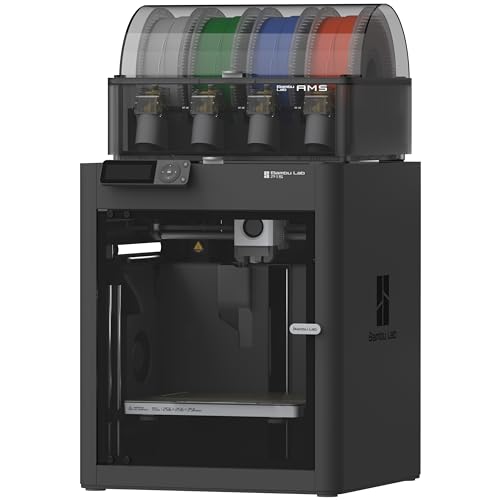
- Enclosed design for advanced filaments
- Up to 16-color AMS printing
- Fast setup with automatic leveling
Best For: Beginners wanting an enclosed, fast, expandable printer
Best Kids’ Pick

- Enclosed, leveling-free design for family use
- AI tools and 12,000+ ready-to-print models
- Includes eight PLA rolls and starter accessories
Best For: Kids and families starting with small creative projects
Best Fast Starter

- Automatic leveling simplifies first-layer setup
- CoreXY system offers speeds up to 600mm/s
- Quick-change nozzle and remote app monitoring
Best For: Beginners who prioritize speed and straightforward operation
Best Multicolor Option

- CANVAS system supports four-color printing
- Auto calibration and 22 sensors reduce manual adjustments
- CoreXY platform reaches speeds up to 500mm/s
Best For: Beginners who want colorful, automated printing
Best Plug-and-Play Pick

- Fully assembled with five-minute guided setup
- WiFi app includes 3,500+ models and 25+ projects
- Compact, quiet design with auto leveling
Best For: Families and STEM learners seeking simple app-guided printing
Best Fast WiFi Pick

- Up to 250mm/s printing with 40-second hotend heating
- WiFi app access to 3,500+ models and 25+ modules
- Auto leveling, dual Z-axis, and PEI build plate
Best For: Classrooms and makers seeking speed, connectivity, and flexibility
Best Beginner-Friendly Pick – Bambu Lab A1
The Bambu Lab A1 is a strong choice if you want a 3d printer for beginners that minimizes setup and calibration. Its automatic calibration, simplified touchscreen, quiet operation, and quick-swap nozzle make it approachable for new users, while its high speed and optional multicolor support leave room to grow.
Best For: Beginners, kids, and home users who prioritize easy setup, quiet printing, and the option to add multicolor printing later.
Pros:
- Full-auto calibration handles Z-offset and bed leveling.
- Fast printing with acceleration up to 10,000 mm/s².
- Quiet operation and a simple touchscreen interface.
- AMS lite support enables multicolor printing when purchased separately or included in the A1 Combo.
Cons:
- AMS lite is required for multicolor printing and is not included with every configuration.
- The supplied notes do not indicate an enclosed design for advanced filament printing.
For most first-time users, the A1 offers a particularly smooth path from unboxing to reliable prints. Choose the multicolor configuration if you already know you want color-changing projects.
Best Native Multicolor Option – Anycubic Kobra X
The Anycubic Kobra X is a capable 3d printer for beginners who want multicolor printing from the start. It includes native four-color capability, automatic 49-point calibration, app-based monitoring, and a relatively large build volume, although filament must be purchased separately.
Best For: New users, schools, and makerspaces looking for built-in multicolor capability, remote monitoring, and room for larger models.
Pros:
- Native four-color printing can expand to up to 19 colors with compatible ACE 2 Pro units.
- LeviQ 3.0 provides 49-point auto bed leveling.
- Large 260mm x 260mm x 260mm build volume.
- Supports PLA, PETG, TPU, PVA, and ASA with a nozzle temperature up to 300°C.
Cons:
- Filament is not included.
- ACE 2 Pro and ACE Pro accessories are not interchangeable.
- Its broad feature set may be more than a basic first-time user needs.
The Kobra X stands out when multicolor output and flexible material support matter more than keeping the printer as simple as possible. Its calibration and app features help offset the added complexity.
Best Budget-Style Starter – Creality Ender 3 V3 SE
The Creality Ender 3 V3 SE is a practical 3d printer for beginners who want straightforward assembly and automatic first-layer assistance. It combines auto leveling, a direct-drive extruder, and a quiet 32-bit mainboard with speeds suitable for prototypes and everyday projects.
Best For: First-time users who want a simple setup, dependable everyday filament feeding, and a printer that supports PLA, PETG, and TPU.
Pros:
- Simple assembly with CR Touch auto leveling and automatic Z-offset calibration.
- Print speeds up to 250mm/s.
- Sprite direct-drive extruder supports PLA, PETG, and TPU.
- Flexible PC spring steel plate makes print removal easier.
Cons:
- The supplied notes do not mention multicolor printing capability.
- The open-style design may be less suitable for users seeking an enclosed printer.
The Ender 3 V3 SE is a sensible starting point for learning core FDM printing without giving up useful automation. It is especially appealing for everyday single-material projects and flexible filament experiments.
Best Enclosed Multicolor Upgrade – Bambu Lab P1S Combo
The Bambu Lab P1S Combo is a powerful 3d printer for beginners who want a more complete, enclosed setup with multicolor capability. It is ready to set up in about 15 minutes, includes automatic bed leveling, and supports a broad range of materials, including several advanced filaments.
Best For: Beginners who want fast printing, an enclosed body, and included AMS-based multicolor or multimaterial capability.
Pros:
- Enclosed design improves print performance with advanced filaments.
- Up to 500mm/s printing speed and 20,000mm/s² acceleration.
- AMS connection enables up to 16 colors or multimaterial printing.
- Automatic bed leveling and approximately 15-minute setup reduce initial effort.
Cons:
- Its 40.8-pound weight makes it substantially less portable than smaller options.
- Carbon- or glass-fiber-reinforced polymers are not recommended.
- AMS is required for multicolor printing.
The P1S Combo is the better fit when you want beginner-friendly automation without outgrowing the machine quickly. Its enclosure and material range make it a more versatile long-term choice than a basic open printer.
Best Kids’ Pick – AOSEED AI 3D Printer
For families seeking a 3d printer for beginners, the AOSEED AI 3D Printer emphasizes simple, guided creativity. Its enclosed design, one-tap app printing, built-in camera, and library of more than 12,000 models make it approachable for children and parents.
Best For: Kids and families who want an easy, enclosed printer for toys, decorations, and beginner STEM projects.
Pros:
- One-tap printing, AI-assisted design tools, and a beginner-friendly model library simplify the creative process.
- Enclosed, pinch-resistant construction, quiet operation, and a leveling-free platform support family use.
- Includes eight PLA rolls, tools, a magnetic build plate, and DIY stickers for an out-of-box start.
- Built-in camera enables remote progress monitoring and time-lapse sharing.
Cons:
- Supports single-color printing only; multicolor designs require separate parts and assembly.
- Its compact format is primarily suited to smaller projects.
This is a particularly accessible choice for young beginners because the software, safety-focused enclosure, and included materials reduce setup friction. Adults should note the single-color workflow when evaluating projects.
Best Fast Starter – FLASHFORGE Adventurer 5M
The FLASHFORGE Adventurer 5M is a strong 3d printer for beginners who want automated setup without giving up speed. Fully automatic leveling, a direct-drive extruder, quick heating, and app monitoring help make everyday printing more convenient.
Best For: New makers who want fast prototyping, reliable first layers, and room to explore different nozzle sizes and materials.
Pros:
- Automatic bed leveling removes a common beginner setup task.
- CoreXY motion reaches up to 600mm/s travel speed with 20,000mm/s² acceleration.
- Quick three-second nozzle changes and a 35-second warm-up to 200°C streamline printing.
- Dual-sided PEI platform and remote app monitoring add practical convenience.
Cons:
- At 22 pounds, it is less portable than compact entry-level printers.
- Additional nozzle sizes are optional rather than included.
The Adventurer 5M balances beginner-friendly automation with performance that can support more demanding projects later. Its 220 x 220 x 220mm print area provides a useful starting point for prototypes and general-purpose models.
Best Multicolor Option – ELEGOO Centauri 2 Combo
The ELEGOO Centauri 2 Combo stands out as a 3d printer for beginners who specifically want multicolor results. Its CANVAS system supports four-color printing, while full auto calibration, pre-print checks, and real-time sensors reduce the amount of manual tuning.
Best For: Beginners and creators who want an automated CoreXY printer for colorful, detailed models.
Pros:
- Four-color CANVAS printing offers a simpler route to vibrant multicolor models.
- Full auto calibration and 22 intelligent sensors help monitor the printing process.
- CoreXY motion reaches up to 500mm/s with a rigid aluminum frame for stable movement.
- Touchscreen controls, remote management, and automatic workflow tools support easier operation.
Cons:
- At 33 pounds, its large footprint and weight require dedicated space.
- The feature-rich ecosystem may be more than beginners need for basic single-color projects.
For shoppers drawn to multicolor printing, the Centauri 2 Combo offers the most specialized feature set of these options. Auto calibration and workflow software make its advanced capabilities more approachable, though its size suits a permanent workspace.
Best Plug-and-Play Pick – Entina Tina2C
If you want a compact 3d printer for beginners with minimal setup, the Entina Tina2C is a practical starting point. It arrives fully assembled, includes auto leveling, and can guide first-time users through setup with the Poloprint app.
Best For: Families, home users, and STEM learners who want simple app-guided printing and a compact desktop footprint.
Pros:
- Fully assembled with guided setup designed to get users printing in about five minutes.
- WiFi and Poloprint app access to more than 3,500 models and 25+ DIY projects.
- Auto leveling, power-loss recovery, a flexible magnetic bed, and quick-swap nozzle simplify operation and maintenance.
- Compact, quiet design with a 3.9 x 3.9 x 3.9-inch build volume.
Cons:
- The small build volume is better suited to miniatures, toys, and learning projects than large parts.
- WiFi connectivity requires a 2.4GHz network.
The Tina2C emphasizes convenience over large-scale capacity. Its ready-to-print model library and automatic features make it especially approachable for beginners, while Cura and Simplify3D compatibility leave room to explore more advanced workflows.
Best Complete Starter Kit – Fully Assembled Mini 3D Printer
This fully assembled mini printer is a useful 3d printer for beginners who want the basic supplies included. The starter kit provides a test roll of PLA filament, an SD card, and automatic functions intended to make the first setup less intimidating.
Best For: Kids, beginners, and school or home users who want a ready-to-use package with straightforward physical controls.
Pros:
- Fully assembled and supplied with test PLA filament, an SD card, and additional accessories.
- One-button auto leveling and one-touch filament loading reduce setup steps.
- Automatic nozzle cleaning and a PEI heated bed support routine printing and model removal.
- Advertised print speeds reach 250mm/s, with stated precision of 0.01mm.
Cons:
- The supplied test filament is not a full 1kg spool; using 1kg filament requires printing the included spool holder.
- The notes do not mention WiFi or app-based control, so the workflow centers on the included SD card.
This model focuses on an accessible out-of-box experience rather than a connected ecosystem. Its included starter materials and automated setup features can help new users begin quickly, while the stated warranty and lifetime technical support add reassurance.
Best Fast WiFi Pick – Entina Tina2 Plus
The Entina Tina2 Plus is a capable 3d printer for beginners who want faster printing and room to grow. It arrives assembled with preloaded models, combines WiFi app control with TF card and USB options, and adds features such as a PEI plate and dual Z-axis structure.
Best For: Beginners, educators, and makers who want quick project turnaround, app-based model access, and flexible connectivity.
Pros:
- Fully assembled with preloaded models for printing within minutes.
- Print speeds up to 250mm/s and a ceramic hotend that heats in about 40 seconds.
- Poloprint Cloud provides more than 3,500 models, 25+ DIY modules, and WiFi control.
- Auto leveling, dual Z-axis construction, and a PEI spring steel build plate support print stability.
Cons:
- The partially enclosed frame is more suitable for supervised use around children than unsupervised operation.
- At 10.03 pounds, it is less lightweight than some mini desktop alternatives.
The Tina2 Plus is a strong choice when speed and connectivity matter as much as ease of use. Its multiple input methods and open-source positioning make it more adaptable for classrooms and developing makers, while automatic setup keeps the learning curve manageable.
How We Picked the Best 3d Printer for Beginners
We focused on the features that make a first printer easier to use: dependable auto-leveling, straightforward assembly, intuitive software, reliable print performance, and accessible support. We also considered build volume, print speed, enclosure design, connectivity, multicolor capability, and overall value.
A beginner-friendly printer should not require constant manual tuning before every project. However, it should still provide useful learning opportunities as your skills develop. The models in this roundup cover several experience levels and budgets rather than assuming every new user needs the same machine.
Quick Comparison
| Priority | Look For | Best Fit |
|---|---|---|
| Lowest setup effort | Fully assembled frame and automatic calibration | Kids, families, and first-time users |
| Multicolor printing | Integrated or bundled color-management system | Decorative models and visual projects |
| Speed | High acceleration, automatic leveling, and a direct-drive extruder | Frequent makers and larger print queues |
| Safety | Enclosed design and sensible temperature controls | Classrooms and supervised home use |
| Value | Useful automation without unnecessary extras | Budget-conscious beginners |
Key Buying Factors for a 3d Printer for Beginners
Setup and Calibration
Auto-leveling is one of the most valuable beginner features because it helps compensate for small differences in the print surface. A fully assembled printer can also shorten the path from opening the box to making a first print. Confirm whether the printer includes filament and whether software setup is required.
Build Volume and Materials
Build volume determines the maximum size of a single model. Compact machines save space but limit larger projects. Most entry-level printers use PLA, which is easy to print and widely available. If you expect to use tougher materials, check the hot-end temperature, heated-bed design, enclosure, and recommended filament compatibility.
Speed, Noise, and Connectivity
High advertised speeds can be useful, but real-world results depend on the model, layer height, and material. Wi-Fi or app control makes file transfer convenient, while quieter operation matters in bedrooms, offices, and classrooms. A simple USB or microSD workflow may be perfectly adequate for occasional use.
Safety and Maintenance
Printers use hot surfaces and moving parts, so children should use them with adult supervision. An enclosure can help contain heat and reduce access to the print area. Regardless of price, expect occasional nozzle cleaning, bed-surface care, and filament storage.
Who Should Buy Which 3d Printer for Beginners?
Choose a compact, fully assembled model if convenience, limited desk space, or family use is the priority. A basic auto-leveling printer is often the best value for adults who want to learn the fundamentals without paying for advanced automation.
Choose a multicolor bundle if you regularly make decorative figures, signs, gifts, or educational models and prefer not to paint them afterward. For frequent printing, a faster machine with dependable calibration can save time, while an enclosed option is more suitable for supervised classrooms or homes where added protection matters.
Before buying, confirm the printer’s dimensions, operating noise, supported materials, replacement-part availability, and software compatibility. The best 3d Printer for Beginners is the one that matches your space and projects closely enough that you will keep using it after the first successful print.