Choosing among the best 3D printers for prototypes means balancing dimensional accuracy, material flexibility, build volume, speed, and operating cost. The right machine can help you validate form, fit, function, and appearance before committing to expensive tooling.
This roundup compares 10 options across FDM, resin, multicolor, large-format, and specialty-material categories, so you can match a printer to your prototype workflow rather than simply choosing the fastest specification.
Best 10 3d Printers for Prototypes Picks for 2026
Fast Multicolor Workhorse

- Up to 600 mm/s with active flowrate compensation
- AMS 2 Pro supports multi-color printing and filament drying
- Adaptive airflow supports varied filament requirements
Best For: Rapid functional prototypes and multicolor concept models
Ultra-Detailed Resin Specialist

- 14K mono LCD delivers fine model detail
- Automatic leveling and AI monitoring support reliability
- Handles resins up to 8,000 cps
Best For: Detailed resin prototypes and small precision parts
Enclosed Multicolor Performer
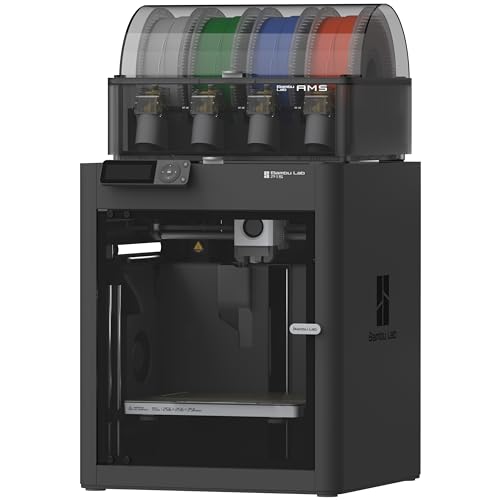
- Prints at up to 500 mm/s with high acceleration
- Enclosed design supports advanced filament printing
- AMS enables up to 16-color and multimaterial projects
Best For: Fast enclosed prototypes and multicolor presentation models
Adjustable Soft-Part Material

- Adjustable 65A-82A hardness through temperature control
- Active foaming can reduce printed-part weight by up to 50%
- Designed for flexible wearables, grips, and lightweight prototypes
Best For: Soft functional prototypes and lightweight flexible parts
Best Multicolor Prototyping Printer

- Four independent toolheads with fast automatic switching
- Supports rigid, flexible, engineering, and soluble-support materials
- 500 mm/s CoreXY printing with smart calibration
Best For: Mixed-material and multicolor functional prototypes
Best Large-Format Prototyping Printer
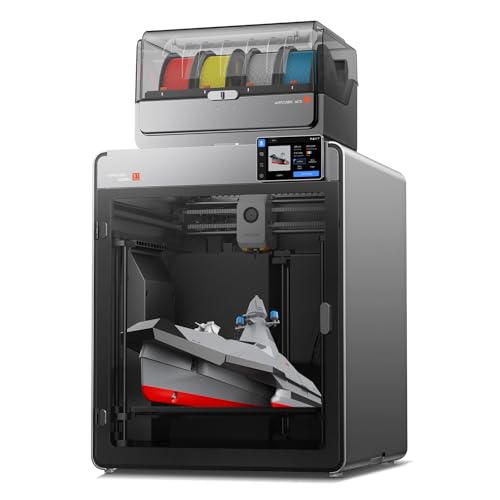
- 350 × 350 × 350 mm build volume for large one-piece prototypes
- 65°C heated chamber and 350°C hotend for advanced materials
- Up to 600 mm/s printing with automatic leveling
Best For: Large enclosures, industrial prototypes, and tall models
Best Durable Resin for Prototypes

- Heat-cured formula delivers ABS-like toughness
- Drillable and tappable for functional components
- Compatible with most 385–405 nm resin printers
Best For: Functional resin prototypes, fixtures, brackets, and threaded parts
High-Capacity Multicolor Prototyping
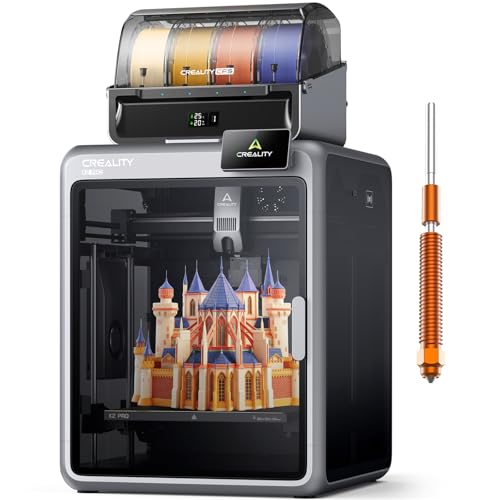
- 300 × 300 × 300mm build volume
- Up to 16-color CFS printing
- 60°C chamber heating and AI monitoring
Best For: Large, fast, professional prototypes
Beginner-Friendly Multicolor Prototyping

- Four-color CANVAS printing
- Full auto calibration and 22 sensors
- 500mm/s CoreXY printing
Best For: Accessible multicolor prototyping
Fast Compact Prototyping

- 600mm/s CoreXY printing
- Four-color support and auto leveling
- 220 × 220 × 220mm build volume
Best For: Fast, space-conscious prototype iterations
Fast Multicolor Workhorse – P2S Combo
For makers who need speed, repeatability, and flexible material options, the Bambu Lab P2S Combo is a strong choice among 3d printers for prototypes. It reaches speeds up to 600 mm/s, includes automatic calibration and AI failure detection, and pairs the printer with the AMS 2 Pro for multi-color and multi-material work.
Best For: Rapid functional prototypes, multicolor concept models, and users who want a streamlined setup with filament drying.
Pros:
- Up to 600 mm/s printing with active flowrate compensation for sharp, consistent layers.
- Automatic calibration, quick-swap nozzles, and AI failure detection support an easy workflow.
- AMS 2 Pro enables multi-color and multi-material printing while drying filament up to 65 °C.
- Adaptive airflow can cool overhangs or maintain a 50 °C chamber for engineering-grade materials.
Cons:
- The complete setup is relatively large and heavy at 47.5 pounds.
- Multi-color printing requires the Combo version; the standalone P2S does not support it.
The P2S Combo is particularly compelling when prototype turnaround and presentation quality matter. Its automation and material-management features reduce routine setup work, while the enclosed airflow system gives you more flexibility for advanced filament projects.
Ultra-Detailed Resin Specialist – Photon P1 14K Resin Printer
The Anycubic Photon P1 is designed for highly detailed resin work and is a focused option among 3d printers for prototypes. Its 14K mono LCD, 16.8 x 24.8 micrometer XY pixel size, automatic leveling, and AI monitoring are aimed at accurate, repeatable model production.
Best For: Detailed resin prototypes, small parts, and advanced users working with high-viscosity industrial resins.
Pros:
- 14K resolution supports crisp reproduction of fine details and features as small as a 0.3 mm aperture.
- Factory-calibrated Smart Leveling 3.0 performs automatic checks and pressure feedback.
- Wave Release Technology reduces release force by 60% to help lower print failures.
- Supports ultra-high-viscosity resins up to 8,000 cps with pre-configured Anycubic resin settings.
Cons:
- Resin printing is a more specialized workflow than standard FDM printing.
- The printer is relatively tall, measuring 24.41 inches in depth according to the supplied details.
The Photon P1 stands out when surface detail and dimensional reproduction are more important than general-purpose filament convenience. Its leveling, monitoring, and release features are useful for reducing common resin-printing interruptions.
Enclosed Multicolor Performer – P1S Combo
The Bambu Lab P1S Combo combines a fast enclosed FDM platform with an AMS system, making it a practical choice among 3d printers for prototypes. It offers speeds up to 500 mm/s, automatic bed leveling, a 15-minute setup, and multi-color or multi-material capability when connected to the included AMS.
Best For: Fast enclosed prototypes, multicolor presentations, and users printing common materials such as PLA, PETG, TPU, PVA, PET, ABS, and ASA.
Pros:
- 500 mm/s speed and 20,000 mm/s² acceleration support quick prototype iterations.
- Enclosed construction improves printing performance with advanced filaments.
- Automatic bed leveling and a 15-minute setup simplify routine operation.
- AMS connectivity enables designs with up to 16 colors and multiple materials.
Cons:
- Carbon- and glass-fiber-reinforced polymers are not recommended.
- PA and PC are listed as capable rather than ideal materials.
- The Combo weighs 40.8 pounds, so it is not especially portable.
The P1S Combo is a balanced option for teams that want quick FDM iterations without giving up an enclosed build environment or color capability. Its material guidance is clearest for everyday prototype filaments rather than reinforced composites.
Adjustable Soft-Part Material – Flex TPU Air Filament
Siraya Tech Flex TPU Air is filament rather than a printer, but it can expand what compatible FDM 3d printers for prototypes can produce. Its active foaming formula lets you adjust hardness from 65A to 82A and create lightweight, flexible parts for testing fit, comfort, and handling.
Best For: Soft functional prototypes, wearable components, grips, protective cases, RC parts, and lightweight sports or cosplay pieces.
Pros:
- Temperature-adjustable foaming provides a 65A-82A hardness range.
- Active foaming can make prints up to 50% lighter while retaining elasticity and toughness.
- Rigid unactivated filament supports reliable, clog-free feeding and flow rates up to 12 mm³/s.
- One-kilogram spool provides material for continuous printing and larger projects.
Cons:
- It requires an FDM printer and suitable TPU-printing capability.
- Results depend on temperature control because heat changes the material’s hardness and foaming behavior.
- This is specialized flexible filament, not a general-purpose rigid prototype material.
Flex TPU Air is a useful add-on for prototyping parts where flexibility, comfort, or weight matters. Its adjustable foaming behavior gives designers more control than a fixed-hardness TPU, provided the printer can process the material consistently.
Best Multicolor Prototyping Printer – Snapmaker U1
The Snapmaker U1 is a versatile choice among 3d printers for prototypes, especially when a project benefits from multiple colors or materials in one build. Its four independent toolheads, 270 × 270 × 270 mm build volume, automatic calibration, and CoreXY motion system support fast, repeatable prototyping with less filament waste.
Best For: Makers, workshops, small businesses, and professionals creating functional prototypes, mixed-material parts, and detailed multicolor models.
Pros:
- Four toolheads switch automatically in about five seconds, reducing manual changes and purge waste.
- Supports mixed materials, including rigid, flexible, engineering, and water-soluble support filaments.
- Smart calibration features help produce accurate first layers with less setup.
- 500 mm/s CoreXY printing and a 270 mm cubed build volume support productive iteration.
Cons:
- Its 57.9-pound weight and sizable footprint may require a dedicated workspace.
- Advanced four-material capabilities may be more than needed for simple single-filament prototypes.
Choose the U1 when material flexibility and efficient multicolor printing matter as much as speed. It is particularly compelling for prototypes that combine flexible sections, soluble supports, or contrasting materials in a single print.
Best Large-Format Prototyping Printer – Anycubic Kobra S1 Max Combo
The Anycubic Kobra S1 Max Combo stands out among 3d printers for prototypes when large parts need to be printed in one piece. Its 350 × 350 × 350 mm build volume, enclosed CoreXY frame, heated chamber, and high-speed operation are suited to sizable enclosures, industrial prototypes, and fitting components.
Best For: Engineers and makers producing large prototypes, enclosures, tall models, and advanced-material parts without splitting them into smaller sections.
Pros:
- Large 350 mm cubed build volume can accommodate substantial parts in a single print.
- Fully enclosed CoreXY construction is designed to stay stable during high-speed printing.
- A 65°C heated chamber and 350°C hotend support materials such as ABS, ASA, TPU, and PETG.
- Includes four-color printing and can expand to as many as 16 colors with additional ACE 2 Pro boxes.
Cons:
- At 77.8 pounds, it is a heavy machine that needs considerable space.
- The large format and advanced chamber features may be excessive for small prototype parts.
The Kobra S1 Max Combo is a strong fit when prototype scale is the main constraint. Its large enclosed workspace can reduce assembly work, while automatic leveling and flow calibration help simplify repeatable production.
Best Durable Resin for Prototypes – Tough Engineering Resin
This tough engineering resin is a material option for resin 3d printers for prototypes that need more than a smooth appearance. After a one-hour cure at 110°C, it is designed for durable, drillable, and tappable parts suitable for brackets, jigs, fixtures, threaded components, and other functional testing.
Best For: Engineers and makers producing durable resin prototypes, functional fixtures, brackets, gears, and parts that may need machining or metal inserts.
Pros:
- Heat curing delivers a reported 68 J/m impact strength and 65% elongation at break.
- Cured parts can be drilled, tapped, threaded, and machined without readily chipping or cracking.
- Designed to resist creep, aging, and low-temperature brittleness during extended use.
- Works with most 385–405 nm LCD, DLP, and MSLA printers and supports 0.03–0.1 mm layer heights.
Cons:
- Requires an additional one-hour heat-curing step at 110°C to unlock its full performance.
- It is intended for resin printers, so it is not a direct option for filament-based machines.
Consider this resin when prototype strength, post-processing, and long-term dimensional performance are priorities. The added heat-curing step takes planning, but it expands the usefulness of resin prints beyond display models.
High-Capacity Multicolor Prototyping – K2 Pro Combo
For demanding 3d printers for prototypes projects, the Creality K2 Pro Combo combines a 300 × 300 × 300mm build volume with high-speed printing, active chamber heating, and CFS multicolor support. Its larger workspace suits oversized prototypes or batch production, while automated leveling and AI monitoring help reduce setup and oversight.
Best For: Professionals and ambitious creators who need large, fast, multicolor prototypes and broad material support.
Pros:
- Large 300 × 300 × 300mm build volume supports big prototypes and batch printing.
- Supports up to 16 colors and multiple materials with the CFS system.
- Active chamber heating up to 60°C supports materials such as ASA and PPA-CF.
- Dual AI cameras, auto leveling, and a hardened-steel direct-drive extruder add monitoring and material flexibility.
Cons:
- At 61.6 pounds, it is substantially heavier than the other listed options.
- Its larger feature set may be more than beginners need for simple prototypes.
The K2 Pro Combo is the strongest fit when prototype size, engineering materials, and production-oriented automation matter more than a compact footprint. Its combination of chamber heating, hardened components, and high throughput gives it a distinctly professional focus.
Beginner-Friendly Multicolor Prototyping – Centauri 2 Combo
The ELEGOO Centauri 2 Combo is a practical choice among 3d printers for prototypes if you want multicolor capability without a complicated setup. Its full auto calibration, smart pre-print checks, and 22 sensors are designed to make repeatable printing easier, while the CoreXY system delivers speeds up to 500mm/s.
Best For: Beginners and experienced makers who want streamlined, colorful prototype printing with remote workflow tools.
Pros:
- CANVAS supports four-color printing with RFID recognition and automatic refill.
- Full auto calibration and 22 intelligent sensors reduce manual adjustment.
- CoreXY motion reaches up to 500mm/s with vibration compensation and extrusion control.
- Touchscreen controls, remote management, and simplified maintenance support an easy workflow.
Cons:
- The supplied notes do not specify the printer’s build volume or supported material range.
- Four-color printing is less extensive than the K2 Pro Combo’s stated 16-color capability.
The Centauri 2 Combo prioritizes ease of use and workflow consistency. It is especially appealing for users who want to move from idea to multicolor prototype with fewer calibration steps and accessible software and controls.
Fast Compact Prototyping – AD5X Multi-Color
The FLASHFORGE AD5X is a compact option among 3d printers for prototypes, pairing a 220 × 220 × 220mm build volume with CoreXY speeds up to 600mm/s. Its four-color support, one-click auto leveling, direct-drive extruder, and remote monitoring features make it well suited to quick iterations and small batch work.
Best For: Makers and teams that need rapid, detailed prototypes in a smaller footprint with optional multicolor printing.
Pros:
- CoreXY design reaches up to 600mm/s with 20,000mm/s² acceleration for rapid prototyping.
- Supports up to four colors with automatic filament feeding and retraction.
- One-click auto leveling and power-loss resume simplify operation.
- 300°C direct-drive extruder and four nozzle sizes support varied detail and print-speed needs.
Cons:
- The 220 × 220 × 220mm build volume is smaller than the K2 Pro Combo’s workspace.
- Its multicolor system supports four colors, fewer than the K2 Pro Combo’s stated maximum.
The AD5X balances speed, convenience, and footprint effectively. It is a sensible pick for rapid prototype cycles when most parts fit within its medium build volume and you value straightforward calibration and remote control.
How We Picked the Best 3d Printers for Prototypes
We evaluated these machines and materials around the demands of practical prototyping: repeatable prints, useful material support, manageable setup, reliable first layers, and enough resolution for functional or presentation models. We also considered build volume, tool-changing or multicolor capabilities, enclosure and chamber features, automation, and the availability of compatible consumables.
Because prototype needs vary widely, the list includes both filament and resin systems. FDM printers are generally better suited to durable functional parts and larger assemblies, while resin printers can produce finer surface detail for small models, housings, and visual validation.
Quick Comparison
- Fast multicolor prototyping: Look at the Bambu Lab P2S Combo, Bambu Lab P1S Combo, Snapmaker U1, ELEGOO Centauri 2, or FLASHFORGE AD5X.
- Fine detail: The ANYCUBIC Photon P1 14K is a resin-focused choice for highly detailed smaller parts.
- Large prototypes: The Anycubic Kobra S1 Max Combo offers a 350 × 350 × 350 mm build volume.
- Advanced functional work: The Creality K2 Pro Combo adds high speed, active chamber heating, and automated multicolor printing.
- Specialty materials: Siraya Tech Flex TPU Air is intended for flexible prototypes, while Tough Engineering resin is designed for heat-curable UV resin workflows.
Key Buying Factors for 3d Printers for Prototypes
Accuracy and Repeatability
Check layer resolution, motion hardware, automatic bed leveling, calibration tools, and temperature control. A printer that produces the same dimensions repeatedly is more useful for fit checks than one that only advertises a high maximum speed.
Material Compatibility
PLA is easy to print, but prototypes may require PETG, ABS, ASA, nylon, TPU, or engineering resin. Confirm nozzle temperature, heated-bed capability, enclosure design, drying requirements, and whether the slicer includes suitable profiles.
Build Volume and Part Orientation
Measure your largest expected component, then allow room for brims, supports, and orientation changes. A large build volume is valuable for one-piece prototypes, while a smaller machine may deliver faster iteration and easier environmental control.
Speed Versus Finish Quality
High-speed printing can shorten iteration cycles, but it does not eliminate cooling, support, or material limitations. Prioritize reliable acceleration and good calibration over headline speed when surface quality and dimensional accuracy matter.
Workflow and Operating Costs
Consider slicer quality, remote monitoring, automatic calibration, multicolor waste, replacement nozzles, resin washing and curing, ventilation, and ongoing material prices. These factors can matter more than the initial printer price over a long development project.
Who Should Buy Which 3d Printers for Prototypes?
Choose a Bambu Lab, Snapmaker, ELEGOO, or FLASHFORGE system if you want a streamlined FDM workflow, quick iterations, and optional multicolor presentation models. Choose the ANYCUBIC resin printer when small-part detail is more important than large build volume or simple cleanup.
Choose the Anycubic Kobra S1 Max Combo or Creality K2 Pro Combo for larger parts, ambitious assemblies, or demanding production-style workflows. Choose flexible TPU filament for gaskets, grips, hinges, and soft-touch concepts, and use engineering resin when detailed prototypes need greater heat resistance than standard resin can provide.